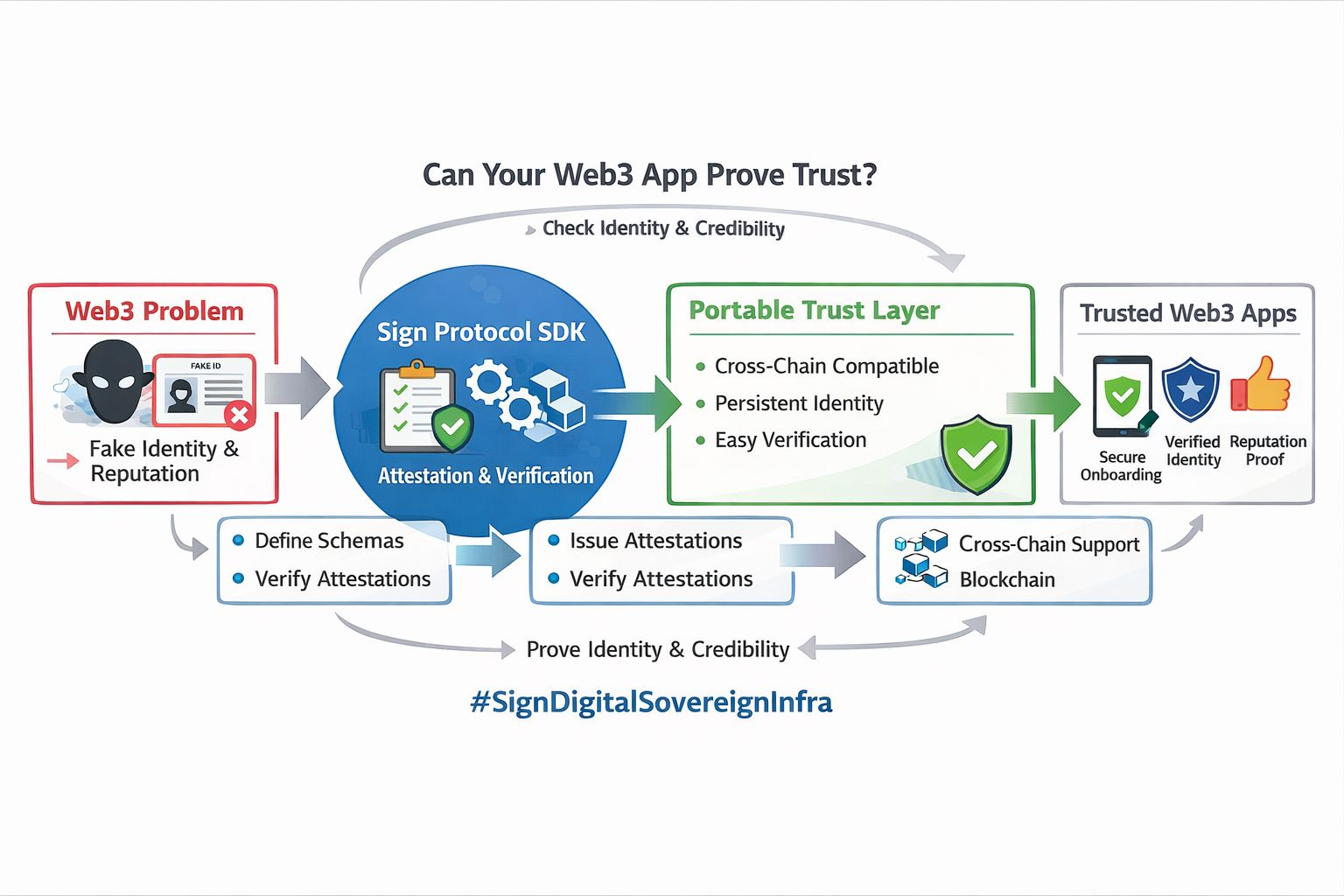
Web3 apps aren't failing because they don't have enough features; they're failing because people don't trust them.
I noticed this gap again when I was looking into decentralized platforms. When you switch chains, your identity, reputation, or proof of ownership often resets. That's where @SignOfficial makes a difference.
I see Sign Protocol as more than just a tool; it's the framework for proving truth. With the Sign Protocol SDK, developers can make apps where users don't just enter data; they also prove it.
Think about a hiring platform that checks work history on-chain or a marketplace that automatically shows how trustworthy a seller is. DAOs can also use reputation instead of token balance to control governance.
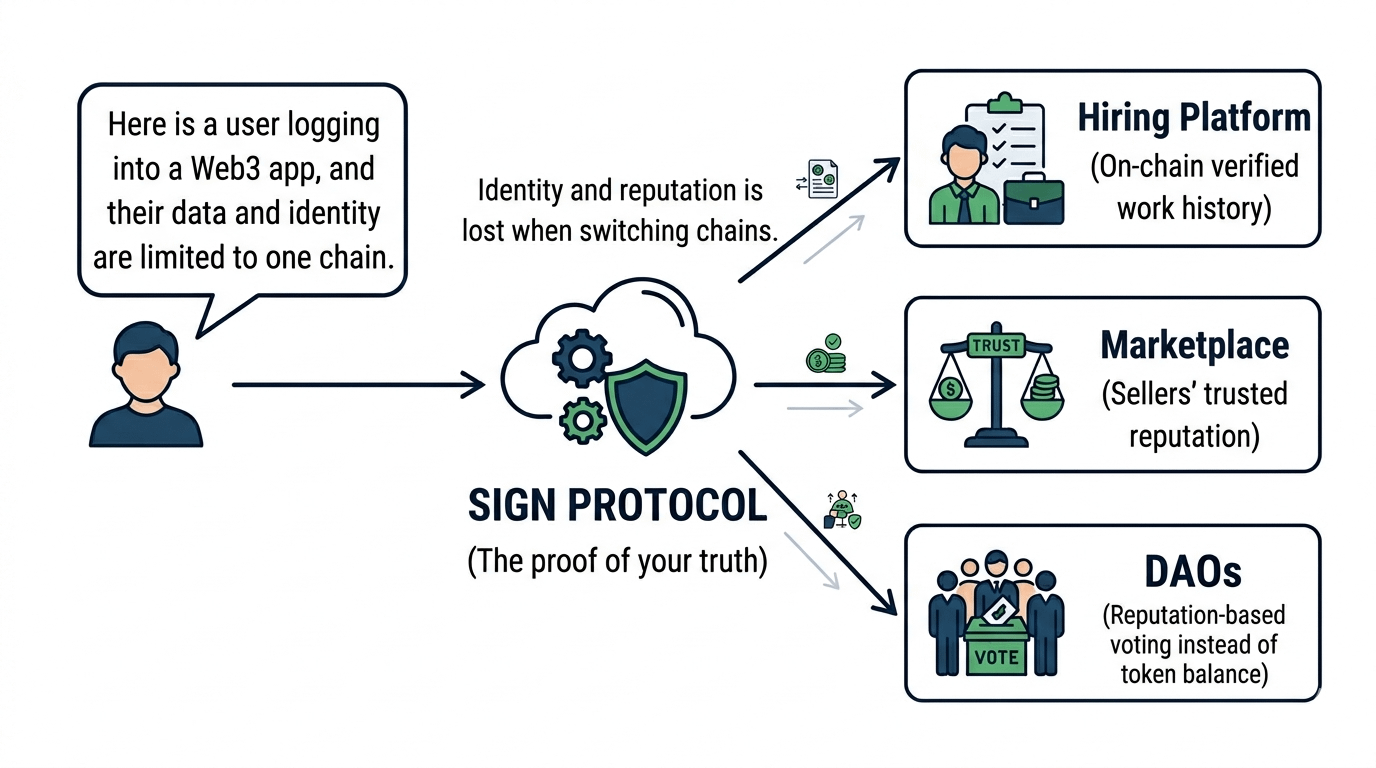
What stands out to me is how this changes the environment. Trust becomes portable, long-lasting, and easy to check. With SDK features, you can create schemas, issue attestations, and check them on more than one chain.
Developers can spend less time rebuilding verification systems and more time making experiences.
I find this point of view interesting: the next big change in crypto might not be faster chains or cheaper transactions.
It might be apps that people can really trust. That trust won't be in interfaces; it'll be in cryptographic attestations that use $SIGN .
The fact that developers are getting more interested and that early integrations are happening show that this is more than just a trend.
The first apps that use persistent, portable trust layers are starting to show up. That could change how people sign up, prove their identity, and build their reputation across the whole Web3 ecosystem.
So the question is: in a world where trust is easy to move around, check, and use on any blockchain, will it matter if your app can't prove trust?
#SignDigitalSovereignInfra #Web3