
#SignDigitalSovereignInfra @SignOfficial $SIGN 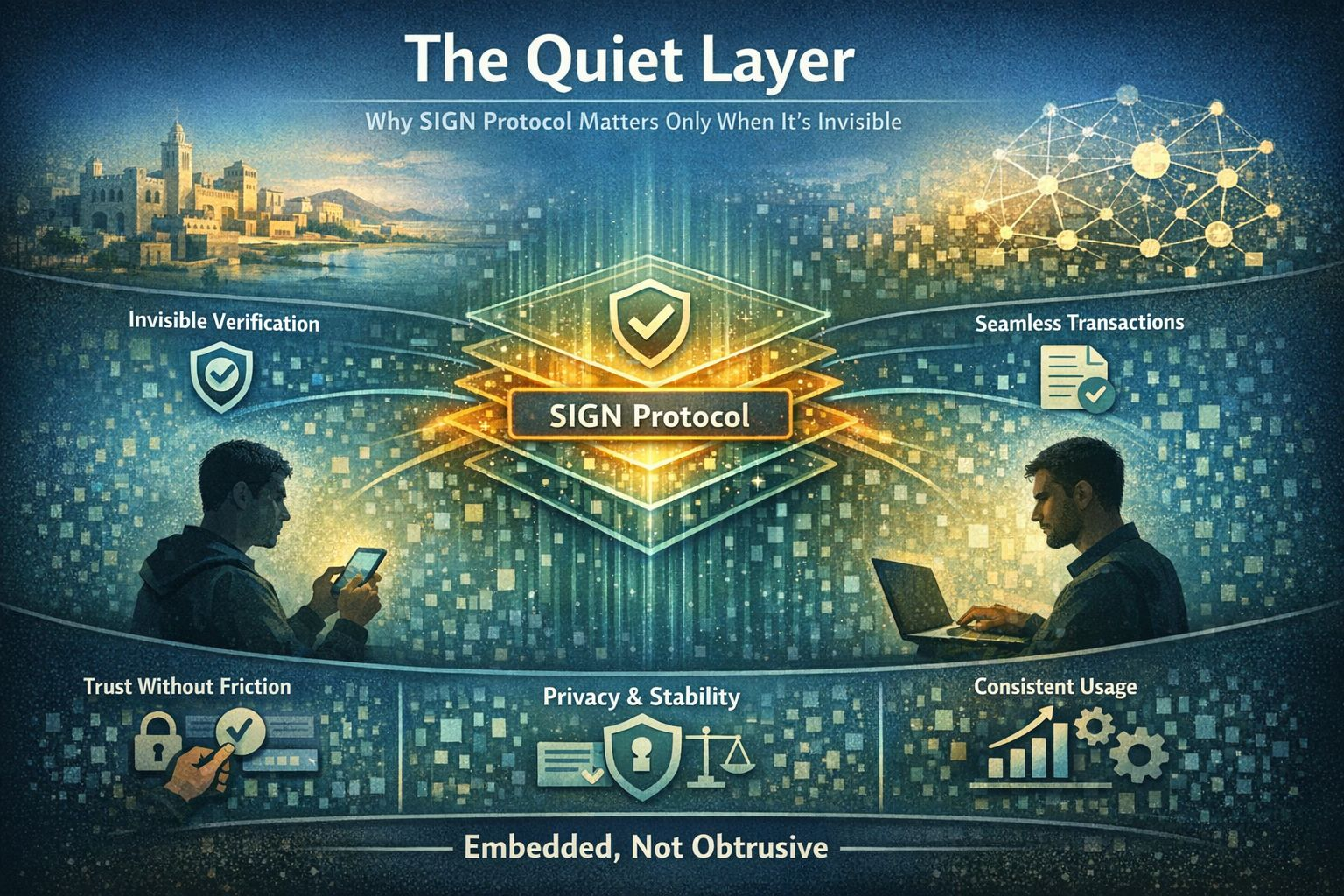 I’ve spent enough time in crypto chasing narratives that felt structurally inevitable. Identity layers were one of them. They made perfect sense on paperclean solutions to trust, compliance, and coordinationbut in practice, they rarely showed up where it mattered: inside repeated user behavior. They lived in documentation, not in execution. That gap has stayed with me. It’s why when I look at identity-driven infrastructure like SIGN Protocol, I’m less interested in whether it’s conceptually sound and more focused on whether it quietly embeds itself into the moments where decisions actually happen.
What stands out to me is how identity behaves once it moves from being an external checkpoint to becoming part of the transaction itself. When identity sits outside the flow, it feels like an interruptiona step I complete and then forget. But when it’s embedded directly into the transaction layer, something shifts. I stop thinking about counterparties in explicit terms. The system begins to carry that burden for me. Trust stops being something I evaluate manually and becomes something the infrastructure assumes on my behalf. That transition doesn’t feel dramatic. It feels subtle, almost invisible, but it changes how I move through the system.
In practice, this only works if identity verification operates quietly. The moment it becomes visible or repetitive, it introduces hesitation. I’ve noticed that users don’t resist verification itselfthey resist being reminded of it. SIGN Protocol seems to lean into this by pushing verification into the background. When it works, I don’t notice it at all. Transactions feel consistent, and consistency matters more than speed. I’ve used systems that are technically fast but feel unreliable because outcomes vary slightly each time. That variability creates doubt, and doubt slows everything down more than latency ever could.
There’s also a delicate balance between privacy and verifiability that becomes apparent only through repeated use. If verification exposes too much, it feels intrusive. If it hides too much, it undermines confidence. The systems that feel stable are the ones where I can act without needing to inspect the verification layer, but still trust that it exists. SIGN Protocol, at its best, seems to aim for that middle groundwhere identity is present but not performative. It’s not something I engage with directly; it’s something I rely on indirectly.
The psychological impact of this design becomes clearer over time. When identity is tied to financial interaction, behavior changes in small but meaningful ways. I’ve noticed fewer redundant checks, fewer moments of second-guessing. But I’ve also seen the opposite when implementation is inconsistent. If verification triggers unpredictably or behaves differently under load, users start compensating. They retry transactions, delay actions, or split activity across accounts. These aren’t conscious strategies; they’re responses to friction. It’s a reminder that identity doesn’t just enforce trustit shapes behavior.
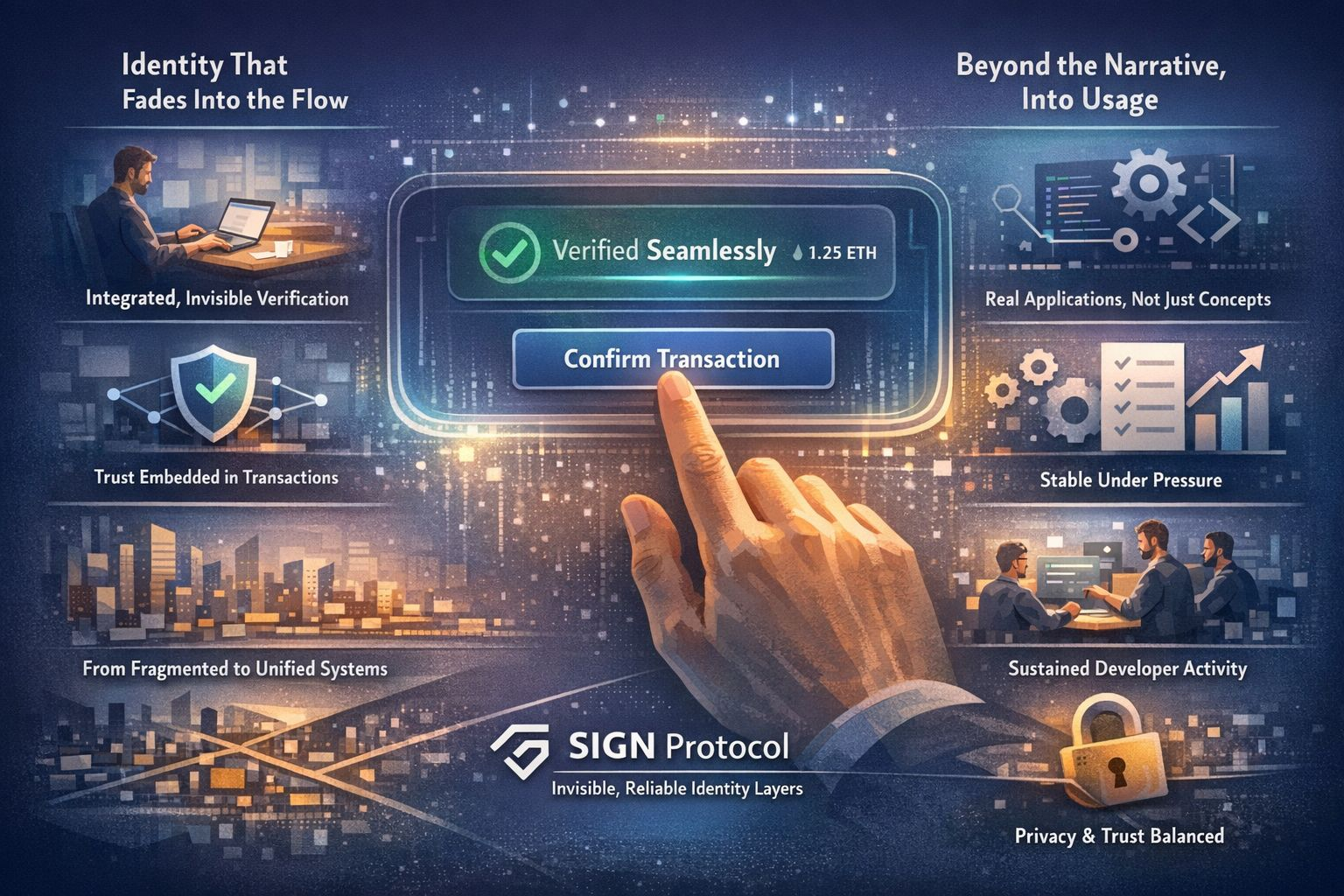
Looking at regions undergoing rapid digital transformation, like parts of the Middle East, the implications feel more structural than technical. When identity and financial systems evolve separately, inefficiencies accumulate quietly. Verification becomes fragmented, duplicated across platforms, and difficult to coordinate. Integrating identity directly into transaction layers offers a different pathone where trust is standardized at the infrastructure level rather than negotiated repeatedly at the application level. That kind of coordination doesn’t just affect trading; it extends into payments, logistics, and public services. But it only works if the system is used consistently, not just introduced.
At the market level, I’ve seen how easily attention can be mistaken for adoption. Identity-driven infrastructure often attracts strong narratives because it feels necessary. But necessity in theory doesn’t translate into usage. The signals that matter are quieter. Are users interacting with identity layers repeatedly without thinking? Are applications making identity essential to function, rather than optional? Is developer activity sustained after the initial wave of interest fades? These are harder to measure, but they’re more telling.
For me, the real test of something like SIGN Protocol isn’t whether it solves identity. It’s whether it disappears into the workflow. Infrastructure proves itself through repetition. If I find myself relying on it without noticing, that’s when it starts to matter. If I only encounter it during onboarding or edge cases, it remains an ideacompelling, but not embedded.
What would increase my confidence is simple, but not easy to achieve: consistent usage across real applications, not isolated integrations; identity becoming a requirement rather than an option; stable behavior under pressure; and continued development that suggests long-term commitment rather than short-term positioning. What would reduce it is just as clear: variability in execution, visible friction, or reliance on narrative to explain gaps in usage.
I’ve learned to separate what sounds necessary from what becomes necessary. The difference isn’t in how well the idea is articulated. It’s in whether users return to it, again and again, without needing to think about it.
#SignDigitalSovereignInfra @SignOfficial $SIGN
