
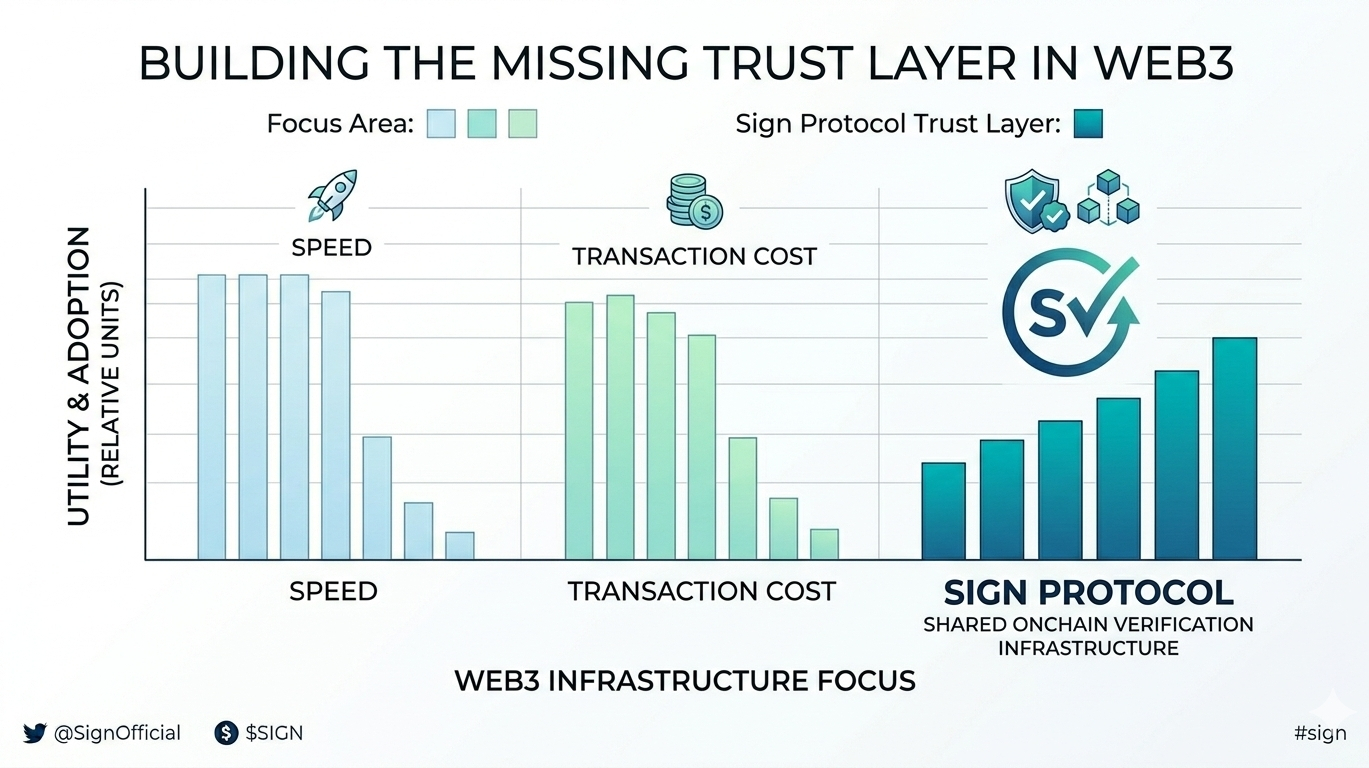
I didn’t really think much about the idea of a “trust layer” in Web3 before. Most of the conversations I see are about faster chains, cheaper transactions, or new ecosystems. But the more time I spend exploring different projects, the more I notice something else that feels slightly unresolved.
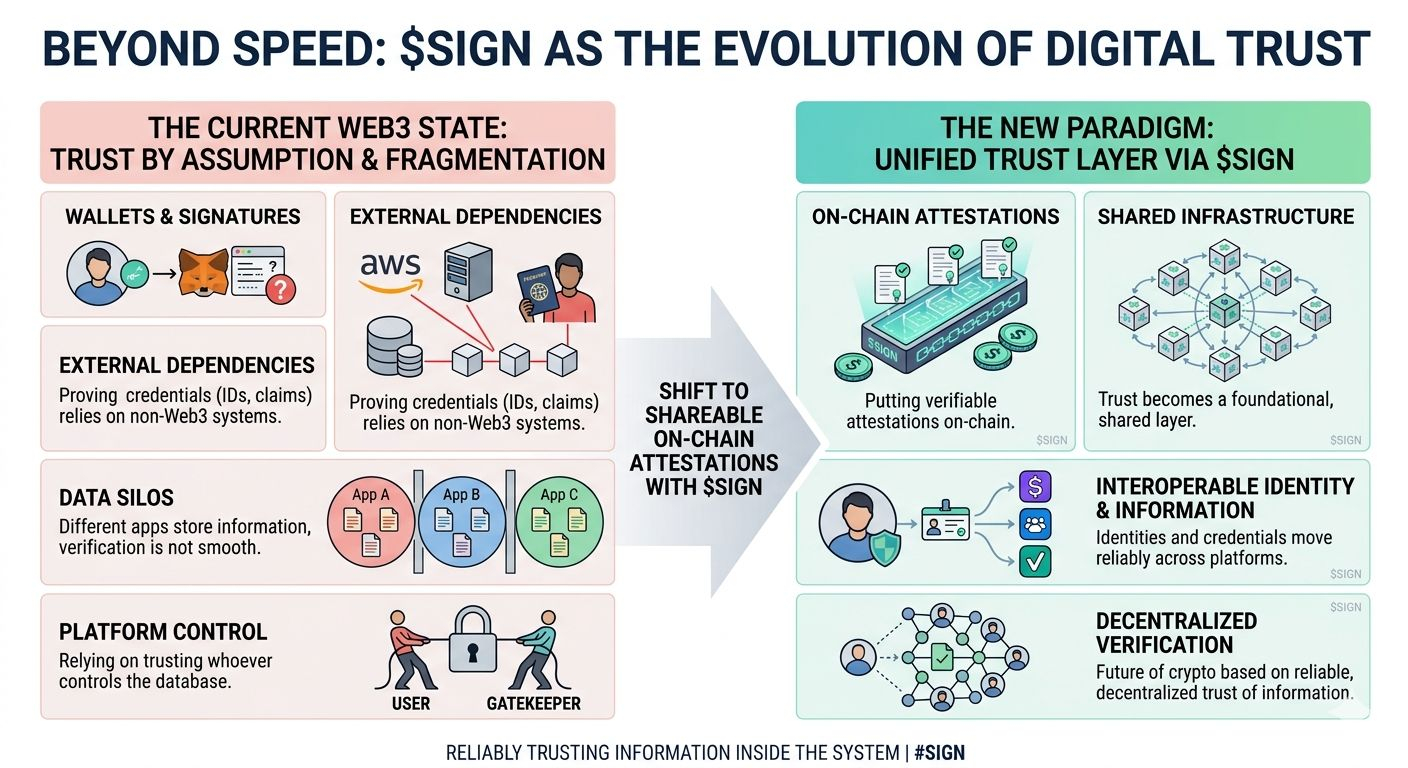
A lot of things in crypto still rely on assumptions. We interact with wallets, sign transactions, and connect to different platforms, yet proving something as simple as a credential, a claim, or even a piece of data often depends on systems that sit outside the chain.
The more I think about it, the more it feels a bit fragmented. Different apps store different pieces of information, and verifying them across platforms isn’t always smooth. Sometimes it ends up relying on trusting whoever controls the database.
While thinking about this, I started paying closer attention to what @sign is working on. The idea behind $SIGN isn’t just about putting attestations onchain. What’s interesting here is how it changes the way verification itself can work.
Instead of trust being locked inside individual platforms, it becomes something that can exist as shared infrastructure. That small shift in design could quietly change how identities, credentials, and information move across Web3.
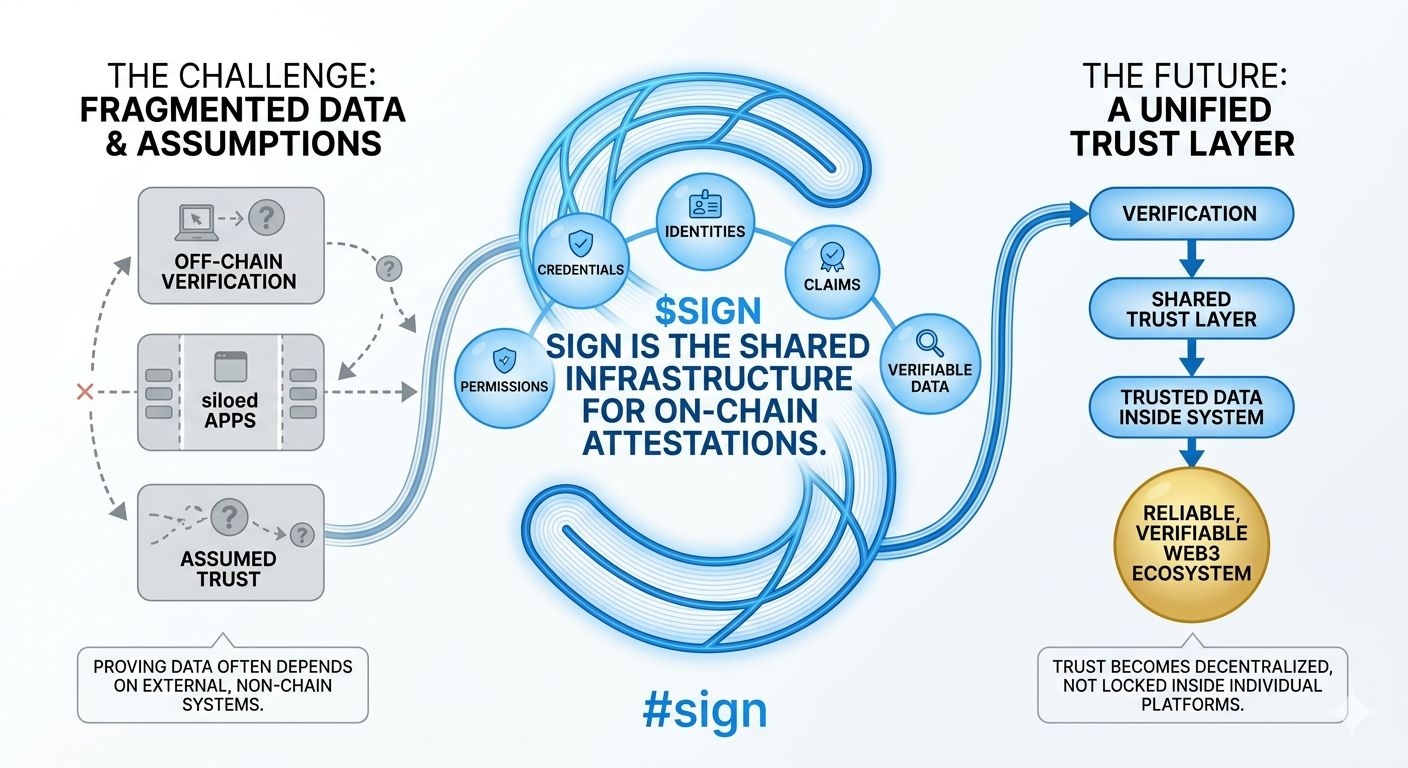
And the more I reflect on it, the more it feels like the future of crypto might depend less on speed and more on how reliably we can trust the information inside the system.