

“My wallet knows my balance better than my best friend knows my life… but somehow, it still doesn’t know who I am.”😂
I remember laughing about this with a friend over chai one evening. We were both deep into crypto—tracking wallets, checking balances, jumping between chains—but something always felt incomplete. He showed me his portfolio with pride, scrolling through tokens like they were achievements in a game. But then he paused and said, “Funny thing is, none of this proves anything about me.” That moment stuck with me. Because in a space built on transparency and ownership, identity still feels like a missing layer. We can prove what we hold, but not who we are—or what we’ve done.
The more I thought about it, the more I realized how strange this actually is. In traditional systems, identity comes first. Your credentials, your history, your verification—they define how you interact with the system. But in crypto, it’s flipped. Wallets are anonymous by default. Your address becomes your identity, but it’s shallow. It tells the world what assets you hold, but nothing about your credibility, your reputation, or your intent. I have seen people with massive balances struggle to access opportunities simply because they couldn’t prove anything beyond numbers. It’s like walking into a bank with a bag of cash but no ID—powerful, yet strangely powerless.
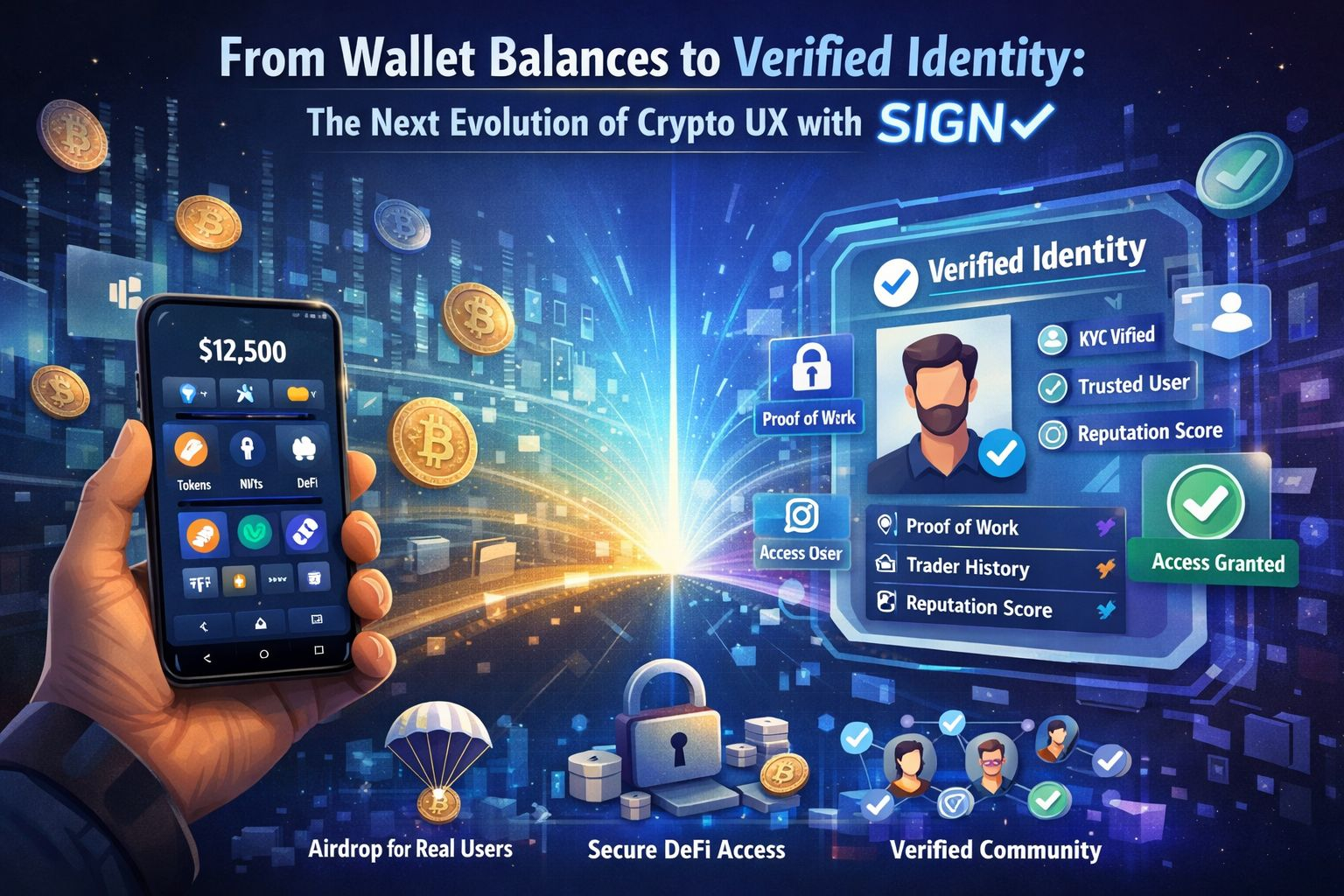
That’s where something like SIGN begins to feel less like an upgrade and more like a necessary evolution. I’ve been thinking about this shift—from wallet-based identity to proof-based identity—and it changes everything. Instead of asking, “How much do you have?” the system starts asking, “What can you prove?” And that’s a completely different experience. Imagine opening a dApp not just with your wallet, but with a layer of verified credentials attached to it. Your contributions, your history, your trustworthiness—all encoded as proofs, not just assumptions. It’s subtle, but powerful. Because suddenly, interactions become more meaningful, not just transactional.
I once imagined what onboarding would look like in that world. No more endless forms, no repetitive KYC uploads, no awkward moments of proving the same thing again and again. With SIGN, your identity doesn’t live in one place—it travels with you, verifiable wherever you go. A developer could prove past work. A trader could prove track record. A user could prove eligibility without exposing private data. I think that’s the part that excites me the most—the idea that privacy and verification don’t have to fight each other anymore. You don’t need to reveal everything to prove something. You just need the right proof.
$SIGN Market Snapshot
Price: ~$0.048 – $0.050
Market Cap: ~$75M – $85M
24h Volume: ~$20M – $40M
Ranking: Around #260–#320 globally.@SignOfficial #SignDigitalSovereignInfra 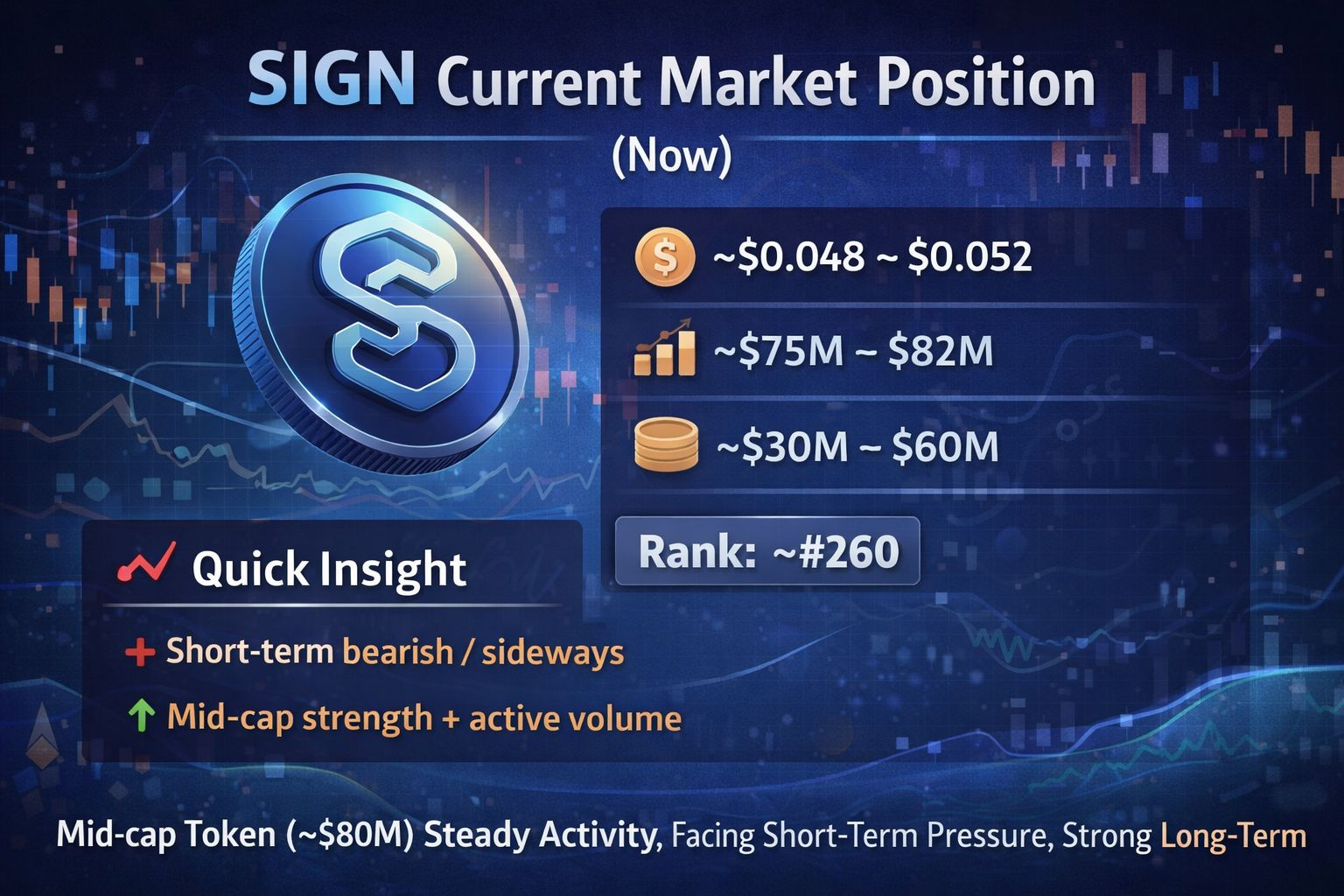
And if you zoom out, this isn’t just about convenience—it’s about unlocking entirely new kinds of experiences. Airdrops that reward real users instead of bots. Communities built on verified participation rather than speculation. Financial systems that evaluate credibility, not just collateral. I’ve seen how broken some of these systems are today—Sybil attacks, fake accounts, shallow engagement. But when identity becomes verifiable, those cracks start to close. Trust stops being a guessing game and starts becoming something structured, almost programmable.
The more I explore this idea, the more I feel like we’re standing at the edge of a quiet shift in crypto UX. Wallets won’t disappear—but they won’t be enough anymore. The future feels like a combination of ownership and identity, balances and proofs, assets and meaning. And maybe that’s the real evolution—not just making crypto easier to use, but making it more human. Because at the end of the day, technology shouldn’t just know what we have… it should understand what we’ve earned, what we’ve done, and what we can prove. And with $SIGN , it finally feels like we’re getting closer to that reality.