

There’s a small grocery store near my neighborhood that still runs on a handwritten ledger. Every purchase on credit is recorded in a notebook behind the counter. It works, but only because everyone involved—shopkeeper and customers alike—shares a quiet understanding of trust. When the shop gets busy or when someone disputes a past entry, the system starts to show strain. Pages are flipped, numbers are questioned, and occasionally, mistakes are simply accepted because verifying them would cost more time than they’re worth. The system survives not because it’s perfect, but because the scale is small and the relationships are stable.
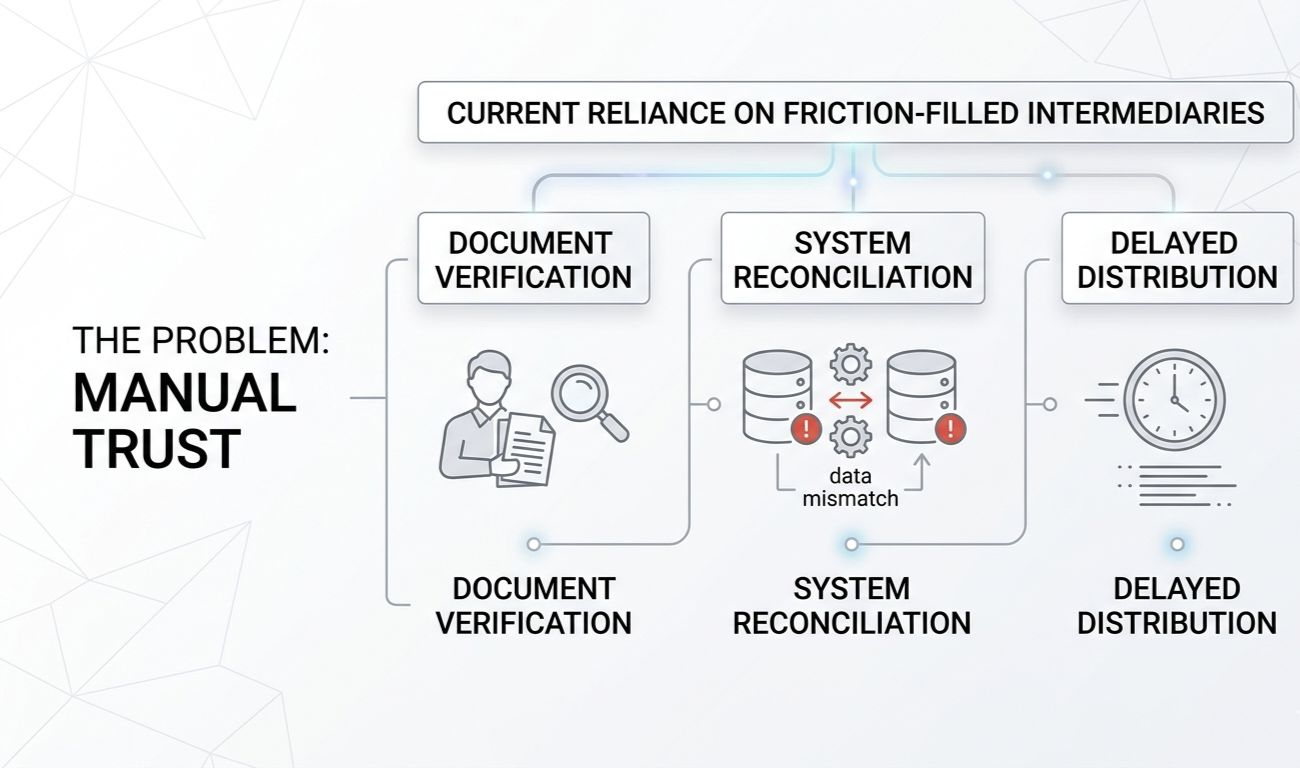
I often think about that ledger when I look at crypto. At its core, crypto tries to replace trust with verification. Instead of relying on relationships or institutions, it leans on code and consensus. In theory, this should make systems more robust. In practice, it has created a different kind of mess—one where verification exists, but meaning, coordination, and accountability often do not.
Most crypto systems today are extremely good at answering a narrow question: “Did this transaction happen?” They are far less effective at answering the questions that actually matter in real-world systems: “Should this have happened?” “Was it legitimate?” “Can it be reversed if something goes wrong?” These are not edge cases. They are the everyday reality of finance, logistics, governance, and any system that interacts with humans.
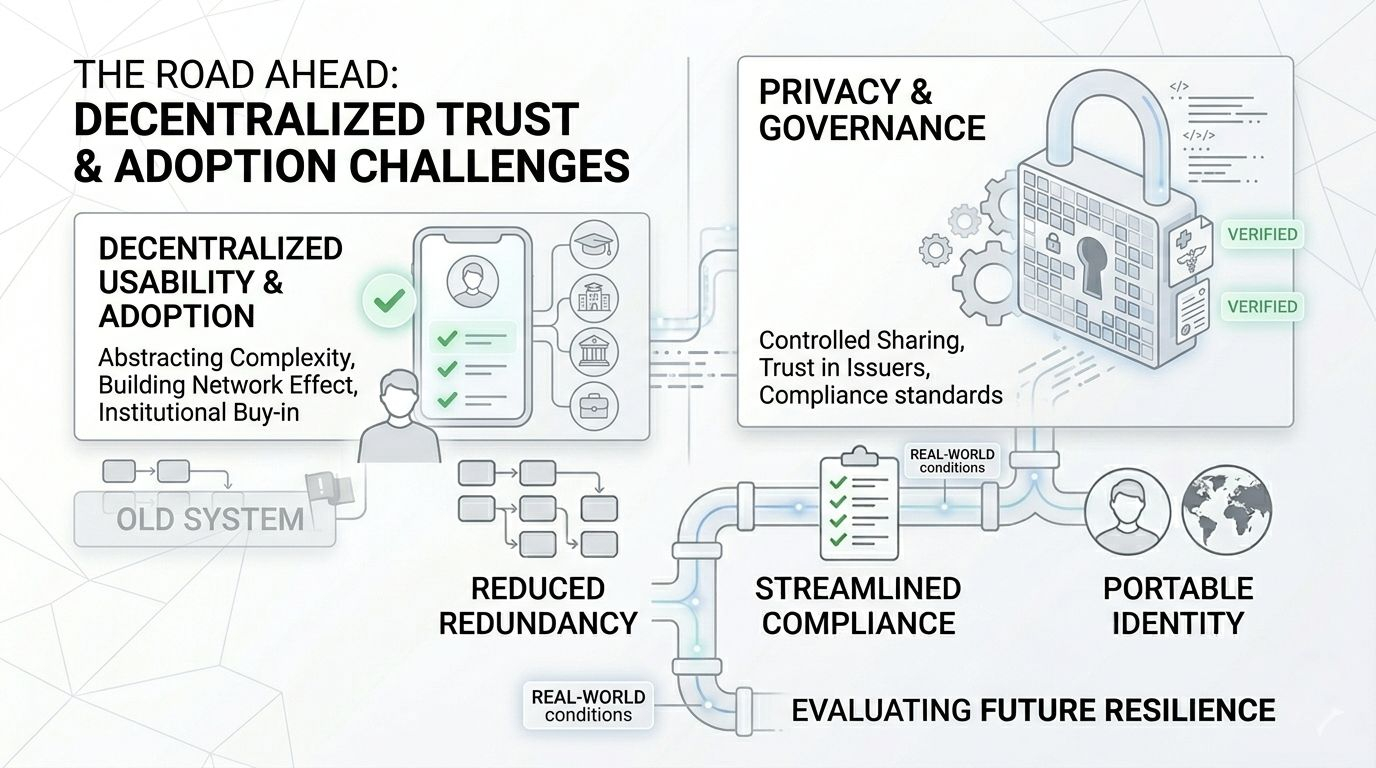
This is where a project like SIGN becomes interesting to me—not because it promises to “fix crypto,” but because it appears to be asking a more grounded question: what does it actually take to verify something meaningful in the real world?
From what I can tell, SIGN is trying to build infrastructure around attestations—structured claims that something is true, signed by entities that take responsibility for that claim. On the surface, this sounds simple. But it shifts the focus away from transactions and toward statements of fact. That’s a subtle but important difference.
In traditional systems, attestations are everywhere. A shipping company confirms delivery. A bank verifies identity. A government issues licenses. These are not just data points; they are commitments backed by accountability. If something goes wrong, there is a chain of responsibility. Crypto, for all its sophistication, has largely avoided this layer. It records actions, but it struggles to interpret or validate them in context.

SIGN seems to be trying to formalize this missing layer. Instead of just moving tokens, it enables entities to make verifiable claims that others can rely on. In theory, this could allow more complex systems to emerge—systems where trust is not eliminated, but structured and made transparent.
But this is also where my skepticism begins.
The first question I ask is about incentives. Why would anyone issue an attestation, and why should others trust it? In the real world, attestations are backed by reputation, regulation, or economic consequences. A bank verifies identity because it is required to, and because failure has legal and financial costs. A logistics company confirms delivery because its business depends on it.
If SIGN is to work, it needs to replicate or approximate these incentive structures. Otherwise, attestations risk becoming cheap signals—easy to produce, difficult to rely on. Without meaningful consequences for false claims, the system could degrade into noise.
The second issue is verification. It’s one thing to record that an attestation exists; it’s another to ensure that it reflects reality. This is the classic “oracle problem” in a different form. If someone attests that a shipment arrived, how do we know it actually did? If an identity is verified, what standards were used?
In physical systems, verification often involves friction—inspections, audits, redundancies. These are costly, but they are necessary. Crypto systems tend to minimize friction, which is efficient but also risky. If SIGN reduces the cost of making claims without proportionally increasing the cost of verifying them, it could create an imbalance that bad actors exploit.
Then there’s the question of adoption. Systems like this only work if they are used by entities that matter. A beautifully designed attestation protocol is not useful if the people issuing attestations have no credibility, or if the people relying on them have no reason to care.
This is where many crypto projects struggle. They build infrastructure first and hope usage follows. In reality, adoption tends to be driven by necessity. Businesses adopt systems that solve immediate problems. Institutions adopt systems that align with their incentives and constraints. Without a clear path to integration into existing workflows, even well-designed systems remain theoretical.
There’s also operational risk to consider. Once attestations are used in critical systems—finance, supply chains, identity—failures become costly. What happens if an attestation is incorrect? Can it be revoked? Who is responsible? How are disputes resolved?
Traditional systems handle these questions through layers of governance, legal frameworks, and human intervention. Crypto systems often try to encode rules in advance, but real-world situations are rarely predictable. A system that cannot adapt to exceptions may work in ideal conditions but fail under stress.
What I find most compelling about SIGN is not that it solves these problems, but that it acknowledges them implicitly. By focusing on attestations, it shifts the conversation from pure transaction processing to something closer to institutional infrastructure. It’s a step toward recognizing that verification is not just a technical problem, but a social and economic one.
At the same time, I don’t think this approach is enough on its own. Attestations are only as strong as the systems around them. Without credible issuers, meaningful incentives, and mechanisms for accountability, they risk becoming another layer of abstraction that looks useful but doesn’t hold up under pressure.

If I compare this to the grocery store ledger, SIGN feels like an attempt to formalize trust without fully replacing it. It’s as if the shopkeeper upgraded from a notebook to a digital system that records every entry immutably—but still relies on the same people to write accurate numbers in the first place. The system becomes more transparent, but not necessarily more reliable.
My overall view is cautiously interested. I think SIGN is asking a more relevant question than many crypto projects, and that alone sets it apart. It’s trying to address the gap between on-chain activity and real-world meaning, which is where most of crypto’s unresolved problems lie.

But I don’t see it as a solution yet. I see it as a piece of infrastructure that could become useful if it is paired with strong incentives, credible participants, and real-world integration. Without those, it risks becoming another elegant system that works in theory and struggles in practice.
In the end, I don’t think crypto is a mess because it lacks technology. It’s a mess because it underestimates how much of the world runs on trust, accountability, and imperfect human systems. SIGN moves slightly closer to that reality. Whether it can operate within it is still an open question—and that’s what I’ll be watching.
That’s what makes it interesting to me—not what it promises, but what it will be forced to prove.
@SignOfficial #SignDigitalSovereignInfra $SIGN
