
I’ll be honest most projects today are still playing the short-term attention game. Hype, narratives, quick liquidity. But when you zoom out, the real question is: who’s building the rails everything else will run on?
That’s where @SignOfficial caught my attention.
Sign isn’t trying to be another DeFi protocol or meme narrative. It’s going deeper focusing on digital sovereign infrastructure. In simple terms, it’s about creating a system where identity, credentials, and trust are verifiable on-chain without relying on centralized authorities.
Why does that matter?
Because right now, digital systems are fragmented. Your identity is scattered, verification is slow, and trust is often outsourced to intermediaries. That creates friction especially in regions pushing for rapid digital transformation.
Take the Middle East as an example. There’s massive growth, strong government backing for tech, and a clear push toward digital economies. But scaling that requires infrastructure that is secure, transparent, and interoperable.
This is where Sign fits.
Instead of patching broken systems, it rebuilds the foundation:
• On-chain verification instead of manual checks
• Programmable trust instead of blind reliance
• Scalable identity layers instead of fragmented data
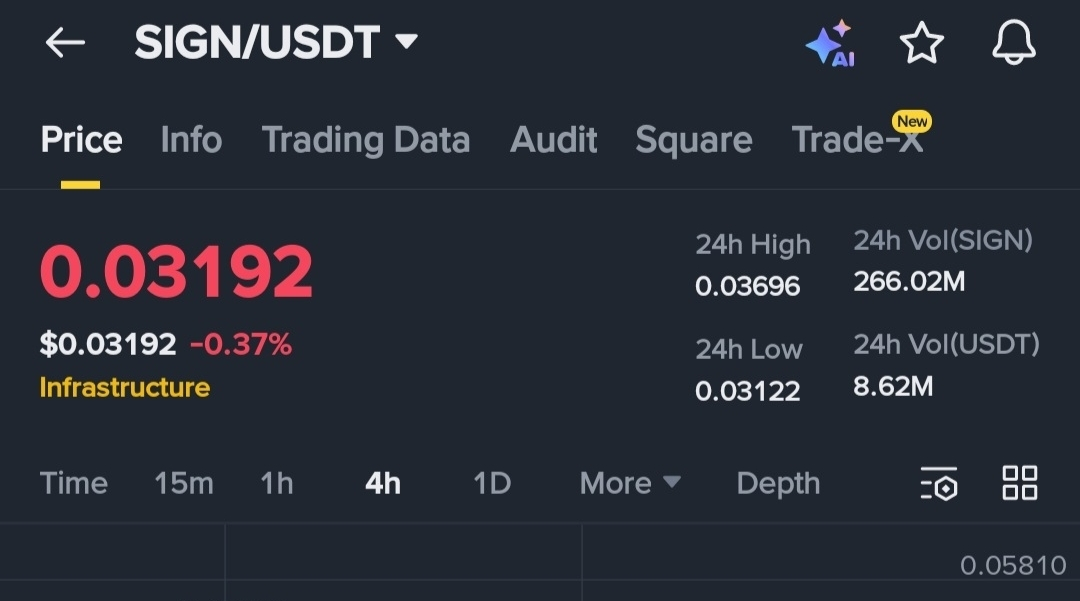
Now let’s talk about $SIGN .
From what I see, it acts as the coordination mechanism within the ecosystem. It aligns incentives, powers interactions, and connects users to the network itself. That’s a much stronger narrative than just “price speculation.”
Personally, I think this is where Web3 is heading.
Less noise. More infrastructure.
Projects that solve trust and identity at scale will outlast everything else and @SignOfficial is positioning right at that intersection.
If this plays out, $SIGN won’t just be another token.
It’ll be part of the backbone of digital economies.
