

I’ve been paying closer attention to identity layers in crypto lately, not the loud narratives, but the quiet friction points that keep repeating across different ecosystems. One thing becomes obvious after a while: we’ve built incredibly efficient systems for moving value, but we still struggle with proving who is eligible to receive that value. That gap is where something like Sign starts to make more sense.
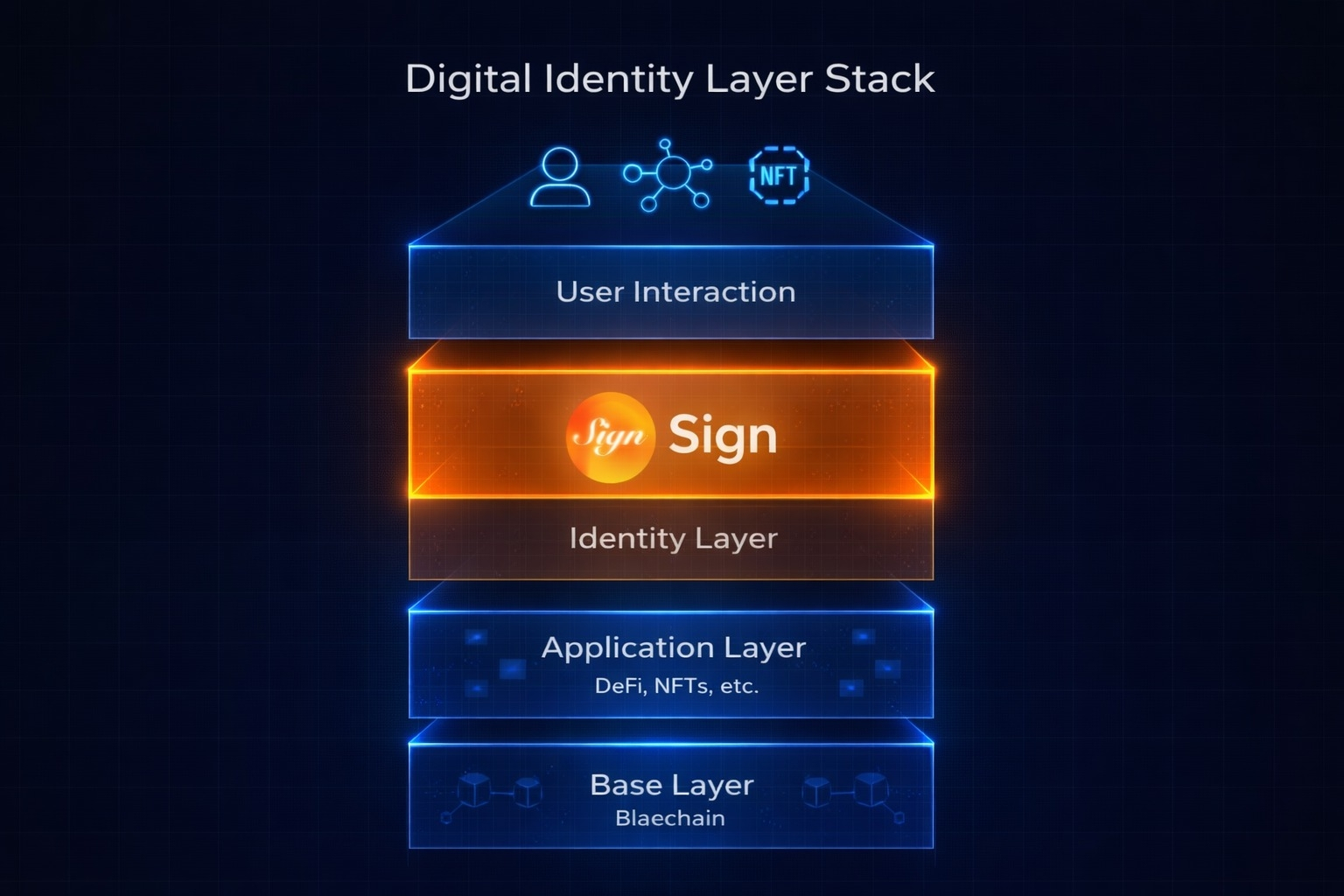
From my perspective, Sign sits in a category that isn’t always easy to label. It’s not purely DeFi, not strictly infrastructure in the traditional Layer 1 sense, and not just another airdrop tool. It feels more like a coordination layer for trust. The kind of system that doesn’t attract attention when it works well, but becomes painfully visible when it doesn’t exist.
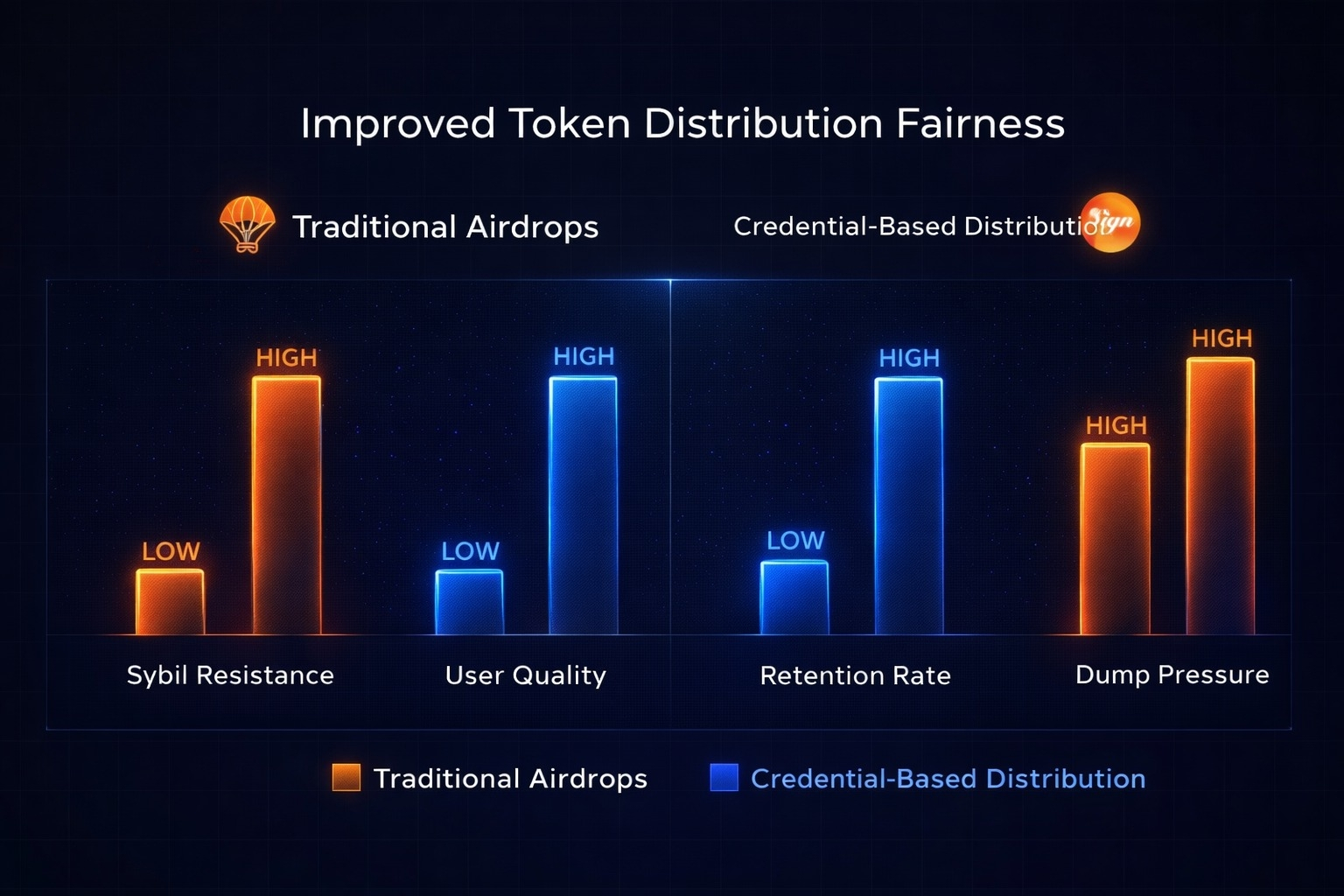
What I find interesting is the timing. Over the past cycle, distribution became chaotic. Airdrops turned into sybil wars, incentive programs got gamed, and “community” often meant wallets optimized for extraction rather than participation. At the same time, institutions and governments, especially in regions pushing digital growth, started needing systems that could verify credentials without relying on centralized databases. That overlap creates a very specific demand: programmable identity that can be trusted without being controlled.
That’s where I see the role of @SignOfficial becoming clearer.
Instead of thinking about identity as a static KYC checkpoint, Sign frames it more like a dynamic credential layer. In simple terms, it allows information about a user, whether that’s participation, eligibility, or verification, to be issued, stored, and later proven on-chain without exposing unnecessary details. It’s closer to how a passport or certificate works in the real world, except programmable and interoperable across platforms.
What most people overlook is how often this is needed. Every time a project wants to distribute tokens fairly, every time a platform wants to gate access based on real criteria instead of wallet size, every time a region wants to onboard users with some form of verified identity without compromising privacy, this problem shows up again.
The architecture itself doesn’t feel overly complex when broken down. There are issuers who create credentials, users who hold them, and verifiers who check them. The key difference is that this process doesn’t rely on a single authority holding all the data. Instead, proofs can be generated that confirm something is true without revealing everything behind it. That subtle shift changes how systems can be designed.
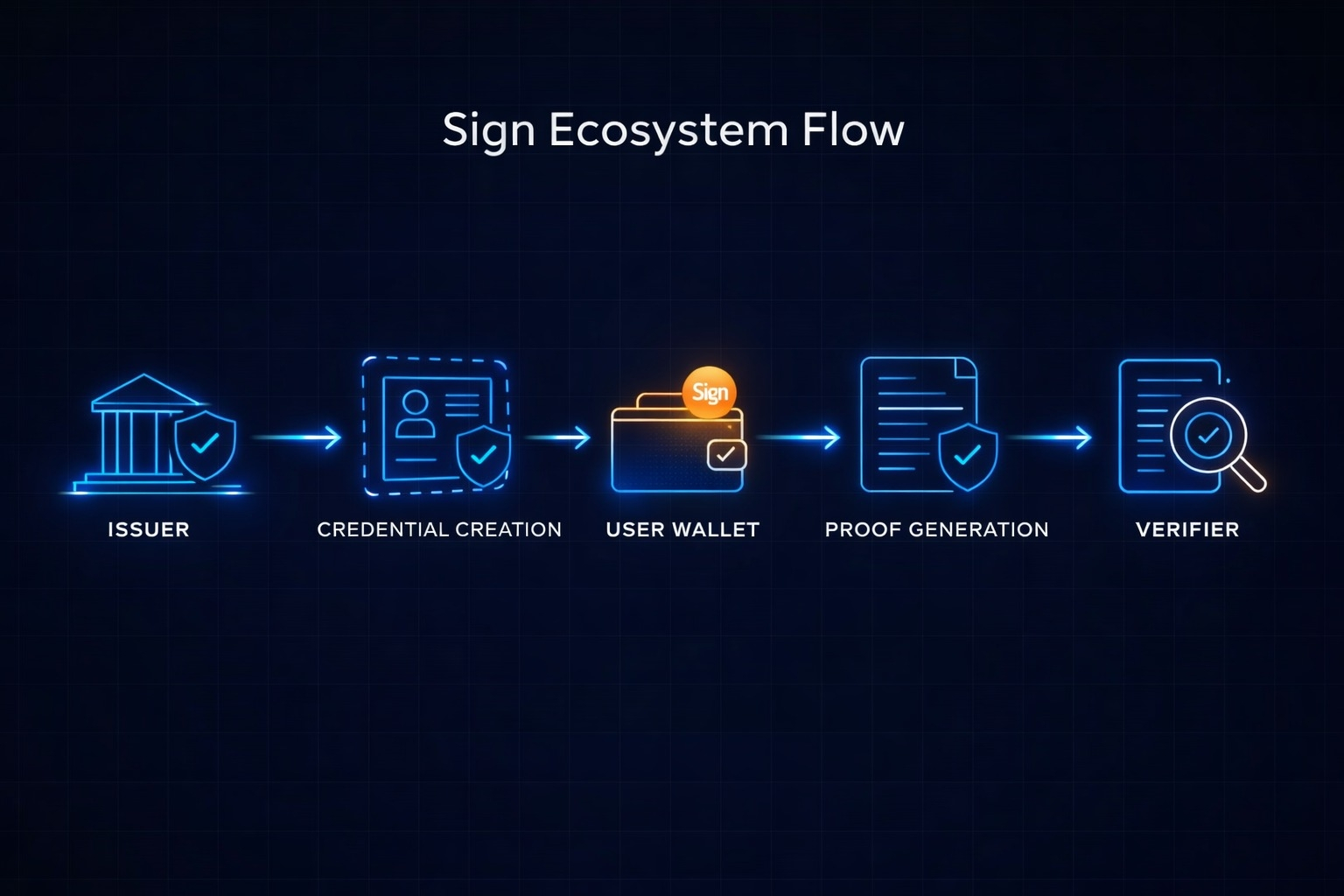
From a user perspective, interaction is almost invisible when done right. You complete some action, maybe participate in a campaign or verify a condition, and you receive a credential. Later, when interacting with another platform, you don’t repeat the entire process. You simply prove you already meet the requirement. Over time, this builds a kind of portable reputation layer, but without the usual baggage of centralized profiles.
For traders, this has indirect but important implications. If distribution becomes more efficient and less exploitable, token allocation starts reflecting actual participation rather than automation. That alone can change how early price action behaves. Fewer mercenary wallets dumping immediately, more alignment between users and protocols. It doesn’t eliminate volatility, but it changes its texture.
The role of $SIGN within this system is something I’ve been thinking about more carefully. Tokens tied to infrastructure layers often struggle with clarity. In this case, the value seems to come from usage of the network itself, credential issuance, verification processes, and potentially governance around how these systems evolve. The more ecosystems rely on this layer, the more relevant the token becomes. But that also means adoption matters far more than narrative.
There are also trade-offs that shouldn’t be ignored. Identity, even in decentralized form, carries philosophical and practical risks. If too many systems start relying on the same credential standards, you introduce a different kind of centralization, not of data storage, but of validation logic. There’s also the question of how resistant these systems are to sophisticated manipulation over time. Nothing stays sybil-proof forever; it just raises the cost.
Another limitation is that this layer only becomes valuable when integrated. On its own, it doesn’t create demand in the way a trading protocol or yield platform might. It needs other systems to plug into it. That makes growth slower, but potentially more durable if it reaches critical mass.
Looking at recent activity, there’s a noticeable push toward regions where digital infrastructure is evolving quickly, particularly in areas exploring sovereign digital identity frameworks. The idea of Sign as a digital sovereign infrastructure isn’t just branding. It aligns with a broader shift where countries and ecosystems want control over identity systems without relying entirely on external providers. If that direction continues, projects positioned at this intersection could quietly become foundational.
In terms of market cycle positioning, this doesn’t feel like a peak-phase narrative. It’s not something that retail immediately rallies around. It’s more aligned with mid-cycle or even early infrastructure accumulation phases, where attention is still fragmented and the focus is on building rather than speculation. That usually means slower recognition, but also less noise.
If I try to connect all of this, what stands out is that Sign is not solving a loud problem. It’s solving a persistent one. The kind that keeps reappearing under different names, in different contexts, across different cycles.
And those are often the systems that end up mattering the most.
I’m not fully convinced yet how quickly this layer will scale or how widely it will be adopted, but I do think the direction is difficult to ignore. If crypto is moving toward real-world integration and broader participation, then identity, in some form, has to evolve with it. The question isn’t whether this problem gets solved, but which approach becomes the standard.
Right now, Sign feels like one of the more thoughtful attempts at answering that question, even if the market hasn’t fully decided what to do with it yet.
