
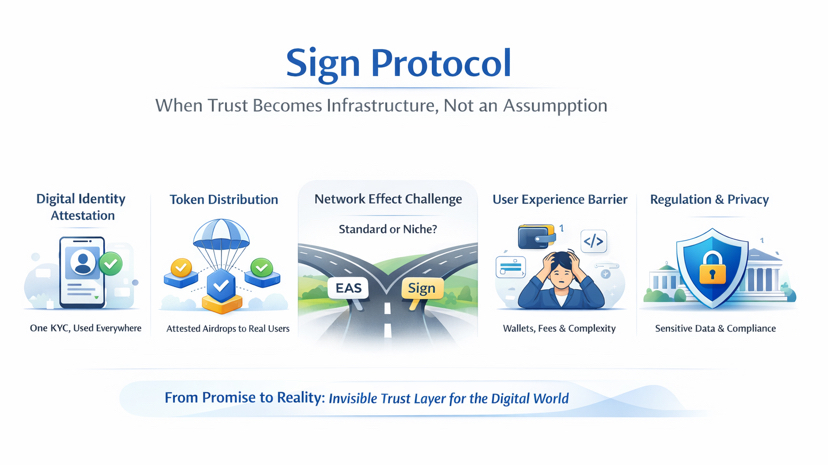
There is something I’ve started to notice more clearly after moving through different parts of Web3. We talk a lot about decentralization, but rarely about where real trust actually comes from.
> Not from wallets.
> Not from chains.
But from data and how that data is verified.
That’s when I began looking more closely at @SignOfficial
At first it was just EthSign, a simple on-chain signing tool. But over time, it has evolved into something much bigger a layer where information can be attested, verified, and used across multiple chains.
The idea is straightforward: you verify once, and use it everywhere.
It sounds simple, but in today’s fragmented Web3 landscape, that’s still an unsolved problem.
What stands out about Sign is not just one strong use case, but how broadly it can extend into real-world scenarios.
Take digital identity as an example.
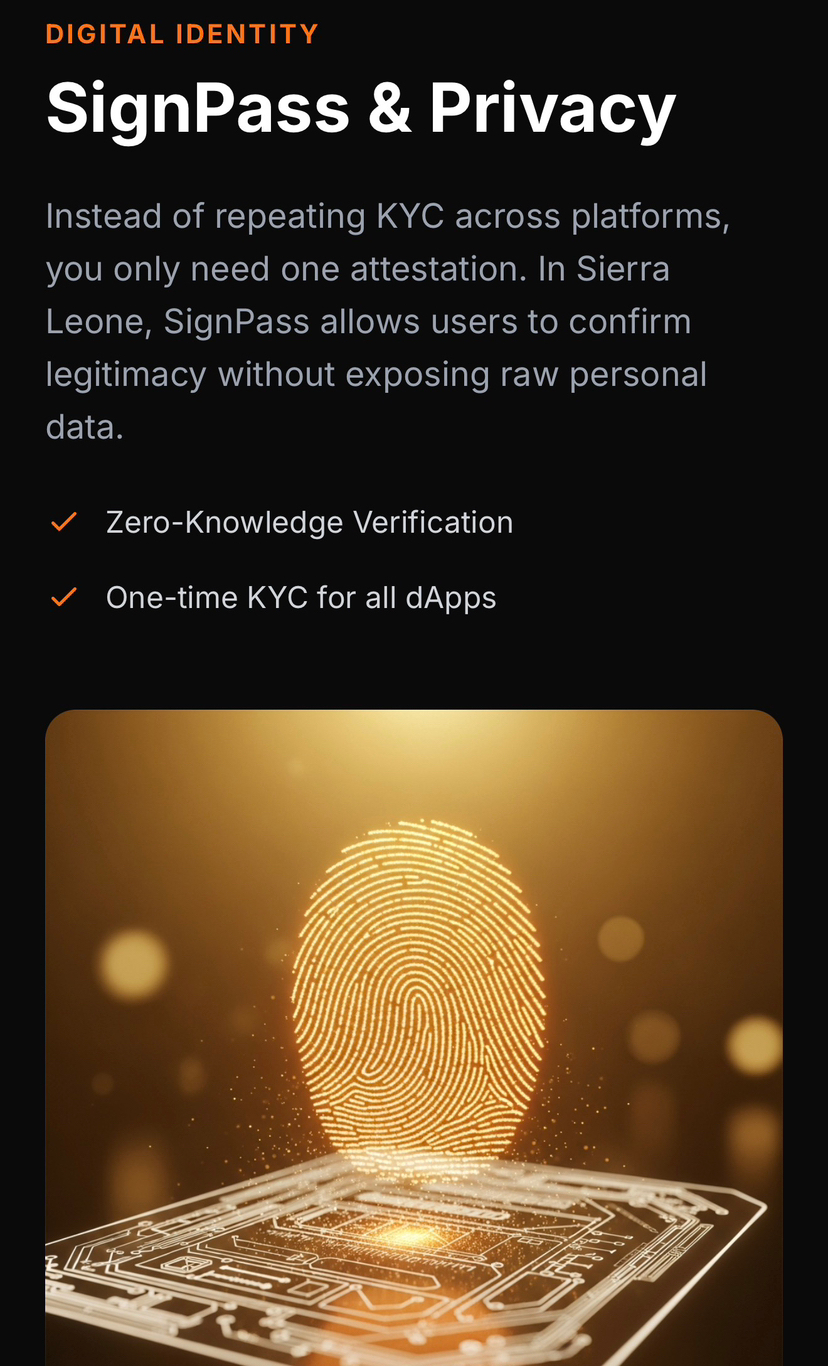
Instead of repeating KYC across platforms, you only need one attestation that confirms you are verified. The raw data remains private, while the verification status becomes publicly checkable.
In Sierra Leone, this approach is already being applied through SignPass. Users don’t expose their personal data, but the system can still confirm their legitimacy.
That balance is something Web2 never really solved.
Or look at token distribution.
The biggest issue has never been “how to distribute tokens,” but how to distribute them to the right people.
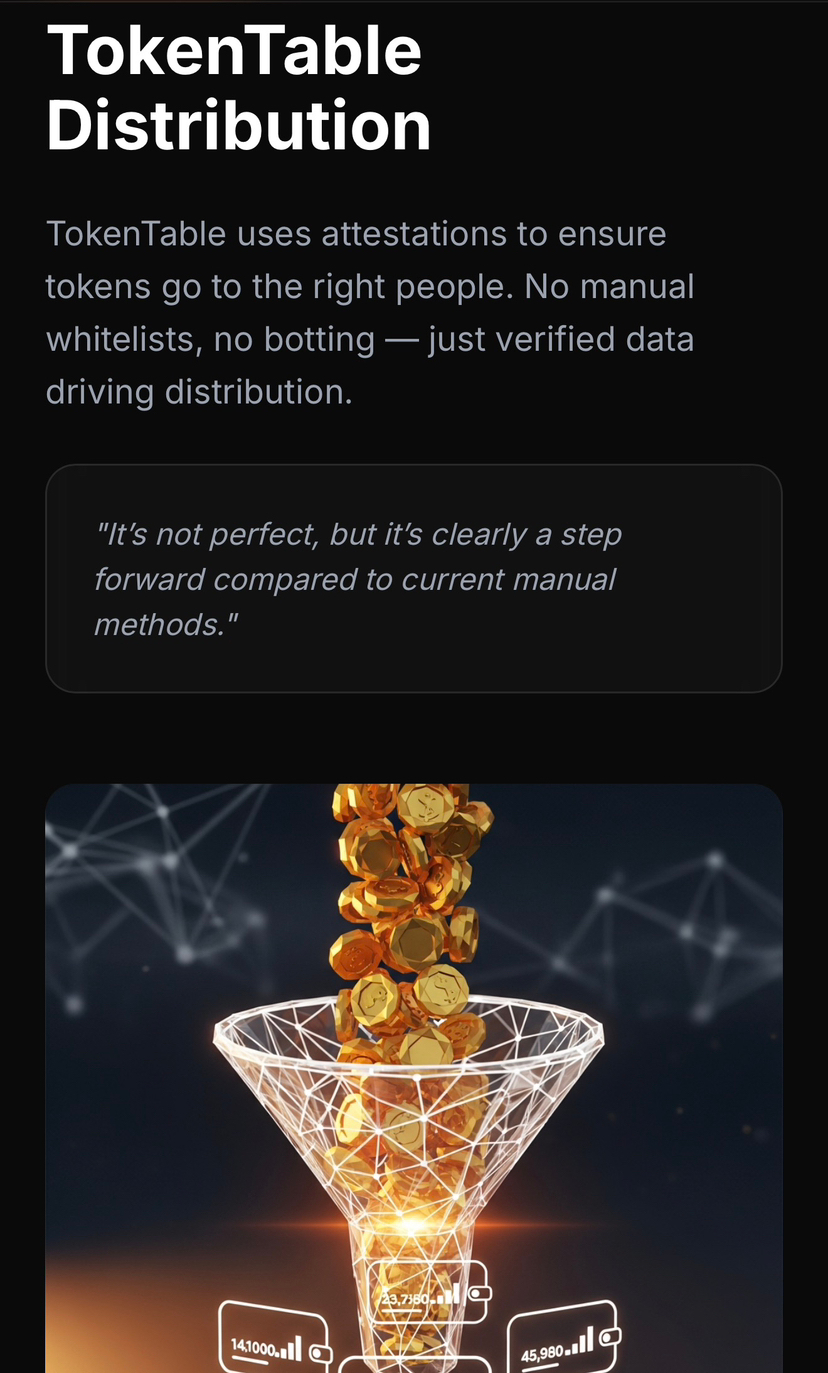
Sign’s TokenTable uses attestations to solve exactly that. No manual whitelists, no guessing who is real or fake just verified data.
It’s not perfect, but it’s clearly a step forward compared to current methods.
That said, Sign is still far from becoming a default standard.
And that might be its biggest weakness.
Many dApps still rely on internal solutions or existing systems like EAS. Not because Sign is worse, but because network effects are not strong enough yet.
In Web3, better technology does not guarantee adoption. Standards are defined by usage, not optimization.
Sign understands this, but becoming the default choice is a long journey.
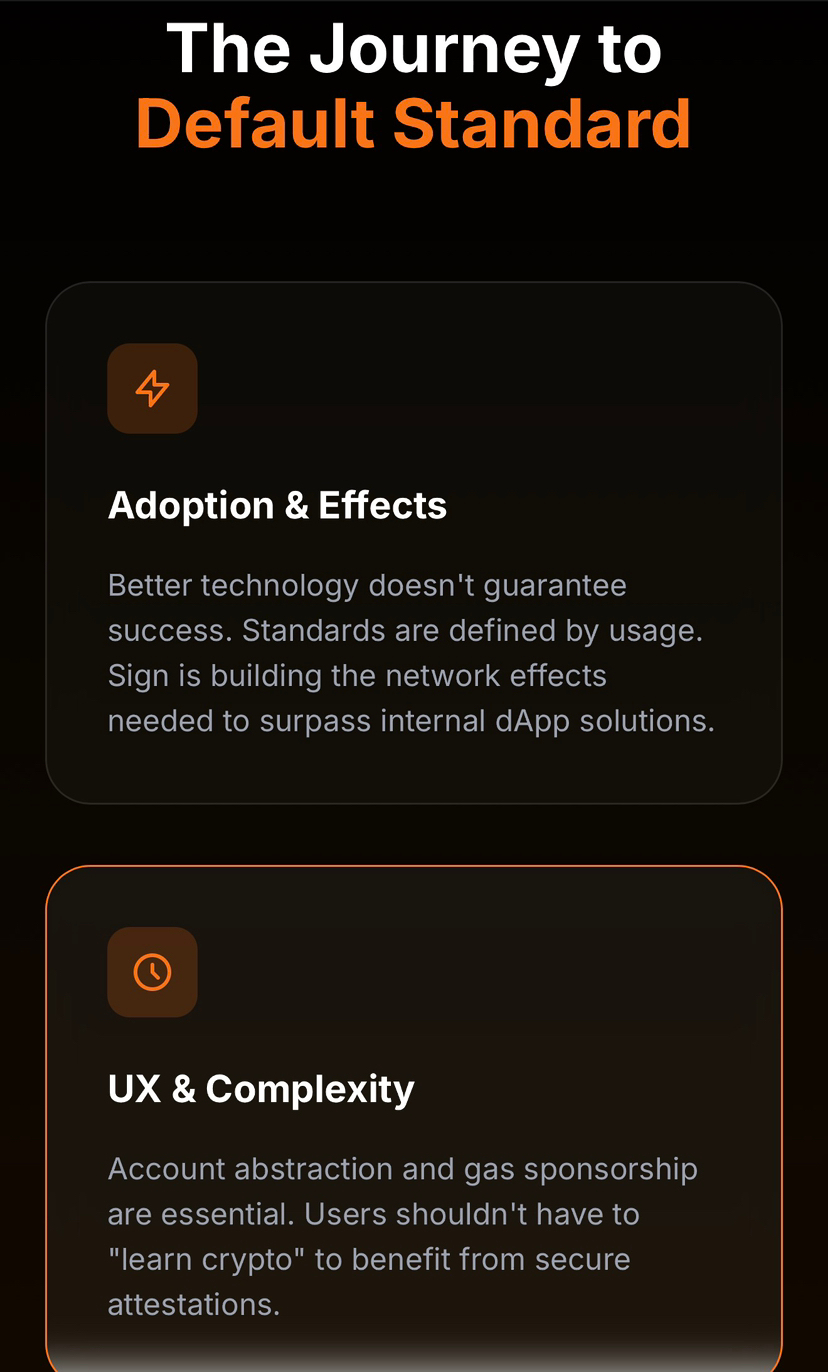
Another challenge is user experience.
zkAttestations sound powerful, but for everyday users, the system is still too complex.
> Wallets.
> Gas fees.
> Blockchain concepts.
These are real barriers.
If Sign wants to scale into governments and enterprises, it cannot expect users to “learn crypto” first.
Account abstraction, gas sponsorship, and no-code interfaces are not optional they are essential.
Tokenomics also remains a question.
With a large supply and gradual unlocks, the long-term value of $SIGN depends on whether the protocol can generate real revenue.
If attestations remain just a promising concept, the token may struggle to hold value.
But if it becomes real infrastructure something used daily by millions of users and institutions then the story changes entirely.
Then there is regulation.
When you work with digital identity, CBDCs, and national-level data, you are not just building technology you are entering a highly sensitive space.
Privacy is no longer a feature.
It becomes a responsibility.
And sometimes, blockchain’s transparency needs to be carefully controlled rather than maximized.
Still, I think Sign is moving in the right direction.
Not because it has the most advanced technology.
But because it is trying to solve a real problem: how to make trust in the digital world no longer depend on intermediaries.
If Sign can improve adoption, simplify the experience, and prove real economic value, it has a strong chance of becoming more than just a project.
It could become an invisible layer of infrastructure something people use every day without even realizing it.
And maybe that’s exactly what a true trust layer should feel like.
#SignDigitalSovereignInfra @SignOfficial $SIGN