


I see it as a kinda harsh, but most countries are still running their digital economies on paper promises and centralized databases that leak, lag, and get gamed the moment pressure hits. passports, degrees, tax records, welfare eligibility all the things that decide who gets access, who gets paid, who gets to participate are still trapped in systems that can’t scale without a middleman holding the keys. nations talk sovereignty all day, but in practice they’re outsourcing the rails of their future to whoever controls the login screen. that changes the day verifiable claims stop being a crypto experiment and start functioning like actual national currency.
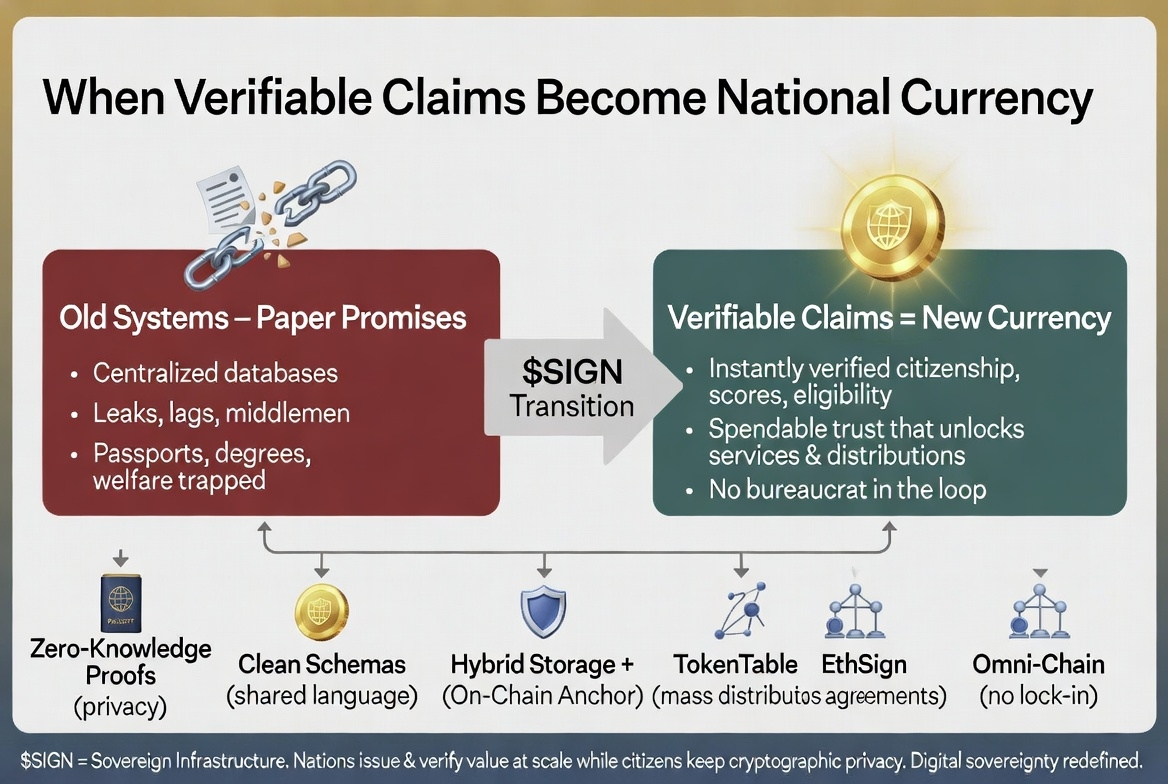
I think a lot about it & then I claim that can be instantly verified citizenship status, contribution score, income bracket, completed public service becomes more than proof. it becomes spendable. it becomes the new unit of trust that unlocks services, triggers token distributions, enforces contracts, and powers entire digital economies without needing a bureaucrat in the loop. governments don’t want another database. they want infrastructure that lets them issue, verify, and distribute value at nation scale while keeping control of the rules and protecting citizen data. the ones that get this right won’t just digitize their old systems they’ll redefine what economic participation even means in the next decade.
$SIGN is engineered exactly for that transition. it isn’t positioning itself as another consumer app layer or flashy DeFi gadget. it’s built as sovereign infrastructure: zero-knowledge proofs so a citizen can prove eligibility without exposing their full history, clean schema definitions so every ministry and every partner reads the same claim the same way, and hybrid storage that keeps the heavy personal data off-chain while anchoring the immutable truth on-chain. TokenTable turns those verified claims into mass distributions that actually reach millions without collapsing under sybils or manual review. EthSign locks the agreements themselves so the rules of the digital nation can’t be rewritten overnight. the whole stack travels omni-chain so a small nation doesn’t get locked into one blockchain’s politics or fees.
this is why l quiet deployments matter more than the hype cycles. when a country integrates SIGN into its national digital identity program, it’s not testing a toy it’s wiring the new rails for how its economy will reward work, distribute aid, issue licenses, and settle disputes in the digital age. the attestation layer becomes the shared language of trust. the infrastructure layer becomes the boring-but-unbreakable plumbing that governments can actually rely on under real pressure. and because it’s designed neutral from the ground up, nations keep the final say on schemas and policies instead of handing sovereignty to a VC-backed protocol.
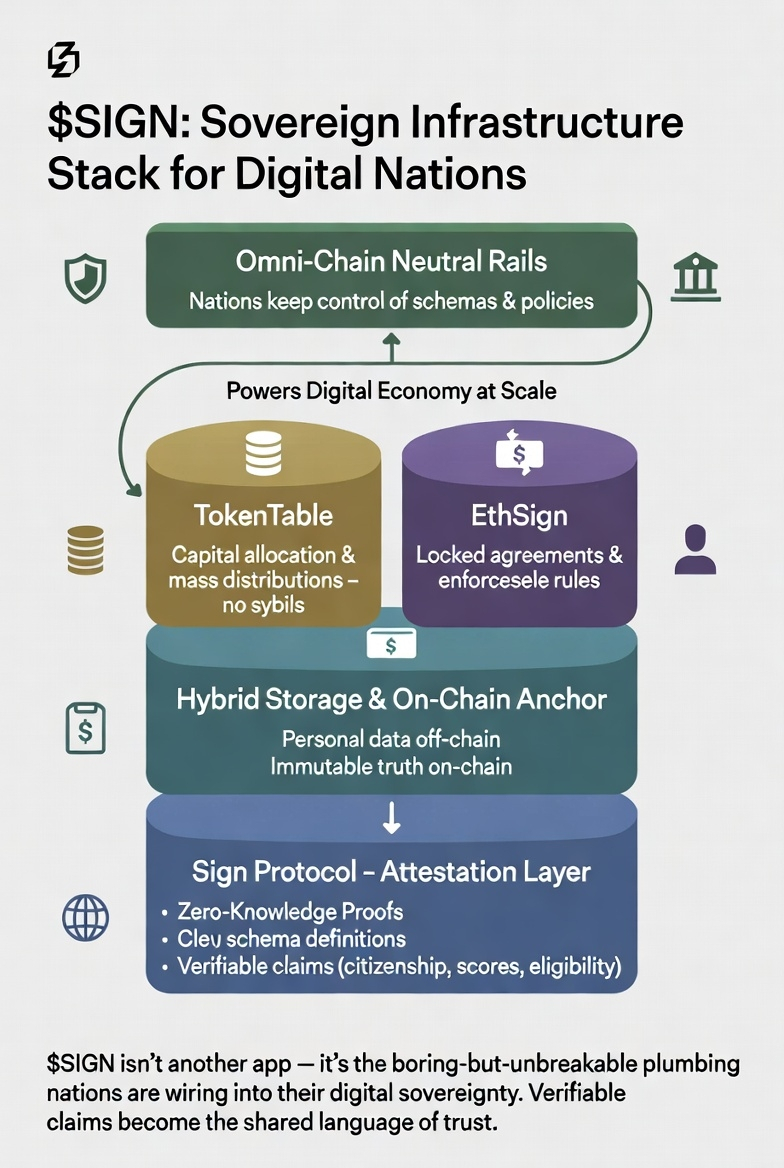
of course the tension I'm feeling is real. the same power that lets verifiable claims function as national currency can also concentrate it if the wrong actors control the schemas. that’s why @SignOfficial bet isn’t on being the loudest voice in crypto it’s on being the neutral layer that nations can adopt without fearing they’re trading one central authority for another. it gives governments the tools to build digital sovereignty while giving citizens the cryptographic right to prove what matters without surrendering everything else.
most of the market is still watching price action and narrative flips. meanwhile the next phase of digital nations is already being wired in the background: verifiable claims as the new currency, issued and settled on infrastructure that was purpose-built for scale, privacy, and permanence. the countries that move first won’t be chasing trends they’ll be defining the rules of the game for everyone else.
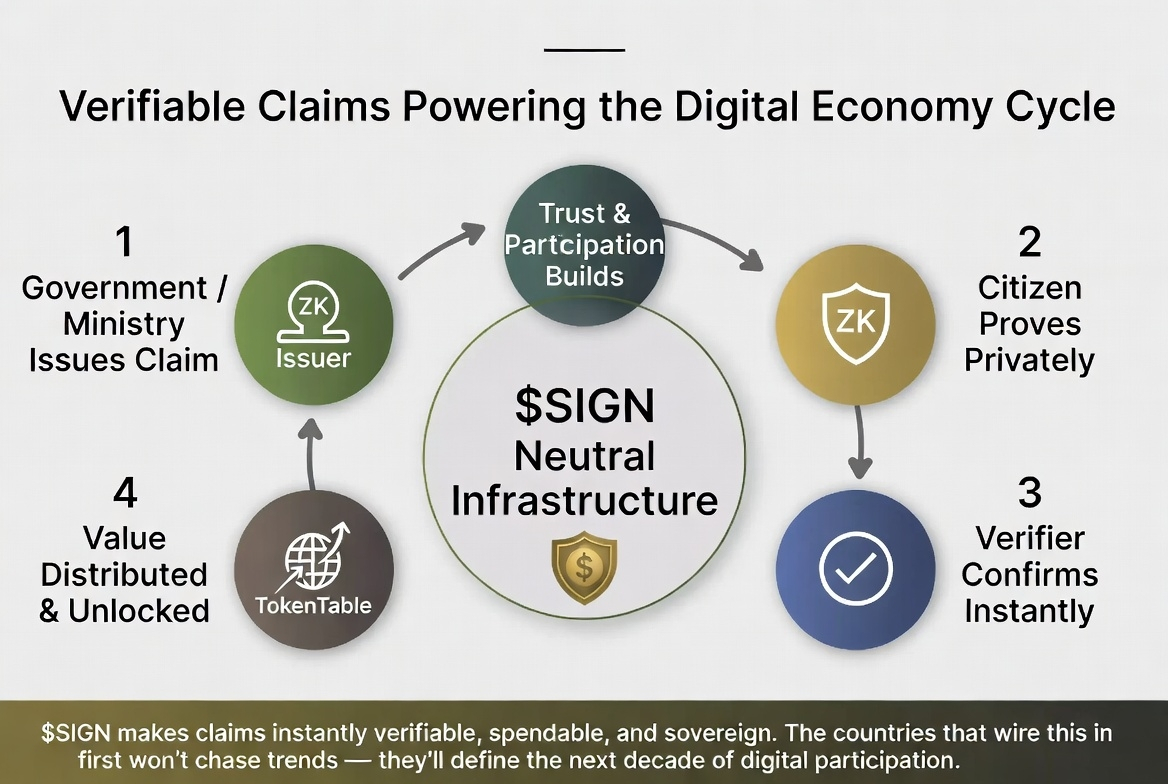
$SIGN isn’t selling the future. it’s laying the rails nations are already choosing to ride into