
I was going through the $SIGN whitepaper again…and I had this assamption in my head.
If a Government builds its own blockchain…it probably becomes isolated.
Closed system.
Local use only.
But then i read this part about global access… and it kind of flipped that idea.
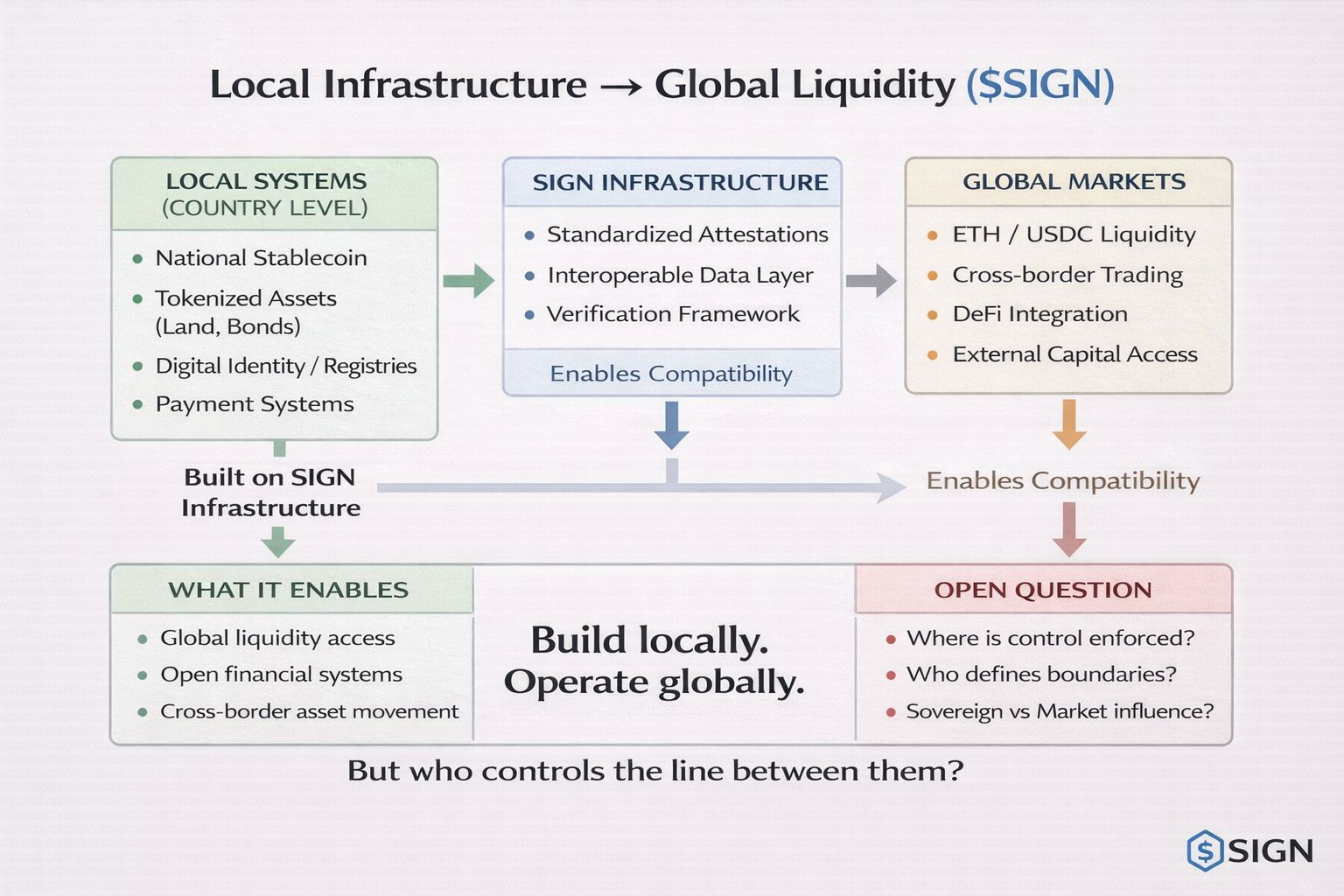
because instead of isolating… they’re actually designing it to Connect.
Like… if a Country issues a StableCoin or tokenizes assets on this Infrastructure,those assets don’t just stay inside. They can actually move out.
Trade against things like ETH, USDC …
basically plug into global liquidity.
And that’s where I paused.
Because that changes how I was thinking about it.
This isn’t just “national blockchain” anymore.
It’s more like:
build locally… but Operate globally. And then I started connecting the dots.
If you have:
– national stablecoins
– tokenized land or assets
– digital registries
– even payment systems
all sitting on the same base… And they’re all compatible with global markets… then you’re not just digitizing systems.
You’re kind of opening them up.
But then Again… something feels unfinished in my head.
Because if everything becomes globally tradable…
who actually controls the boundaries?
Like… where does “sovereign control” end
and “global market influence” start?
I don’t have a clean answer yet.
But it definitely doesn’t feel like the old model anymore.
Feels more like a system that’s trying to be both:
Independent… and connected at the same time. Still figuring this one out.