

We’ve all heard the pitch: "Put the house on the blockchain."
It usually comes with a slick 3D render of a glass skyscraper and a promise that one day, we’ll buy a home with a single click. But in the real world, the "one click" isn't the problem. The problem is the ghost in the machine. You can put a token on a chain and call it a "deed," but if that token doesn’t know how to prove it represents a real piece of dirt, with a real roof and a clean history, it’s just a digital sticker.
Buying a home right now is a test of endurance. It’s a mountain of paperwork, a dozen middle-men, and a "title search" that feels like hiring a private investigator to dig through 19th-century basement files. We do it because we have to. Because in a world of paper, trust is expensive and slow.
The Problem of the Invisible History
The reason real estate feels so archaic isn’t that we lack the tech to go digital; it’s that we lack the tech to keep the history attached to the asset.
When a house is sold, the "memory" of that house stays locked in a dusty government office or a title company’s private database. The next buyer has to pay to unlock that memory all over again. Was the roof replaced in 2024? Is there a lien from a contractor who didn’t get paid three years ago? Is the person selling it actually the person who owns it?
Right now, we answer these questions with screenshots, scanned PDFs, and "trust me" emails. It’s a space built around high-value ownership where everyone is treated like a stranger. Every transaction is a reset. Every deed is a new introduction.
Enter the Attestation Layer
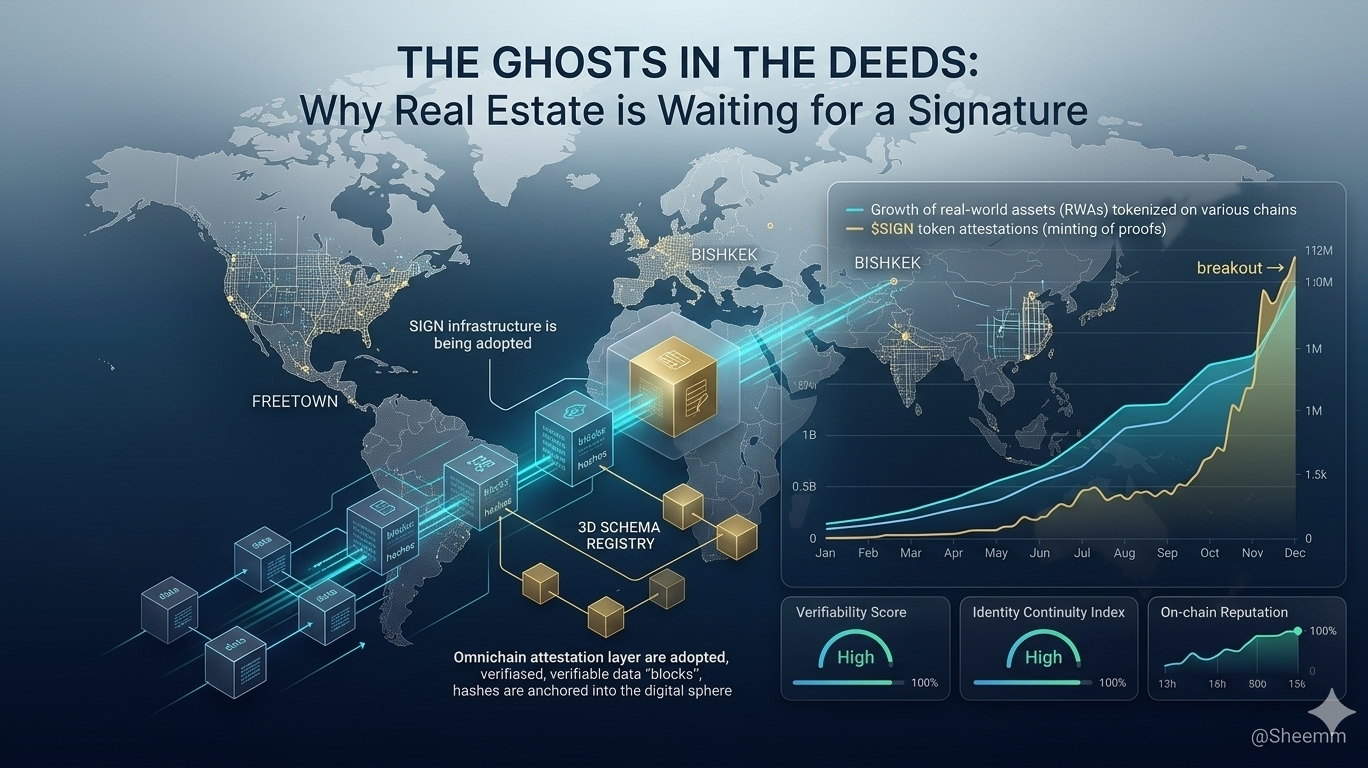
This is where the conversation around Sign Protocol and SIGN shifts from "internet tech" to "real-world gravity."
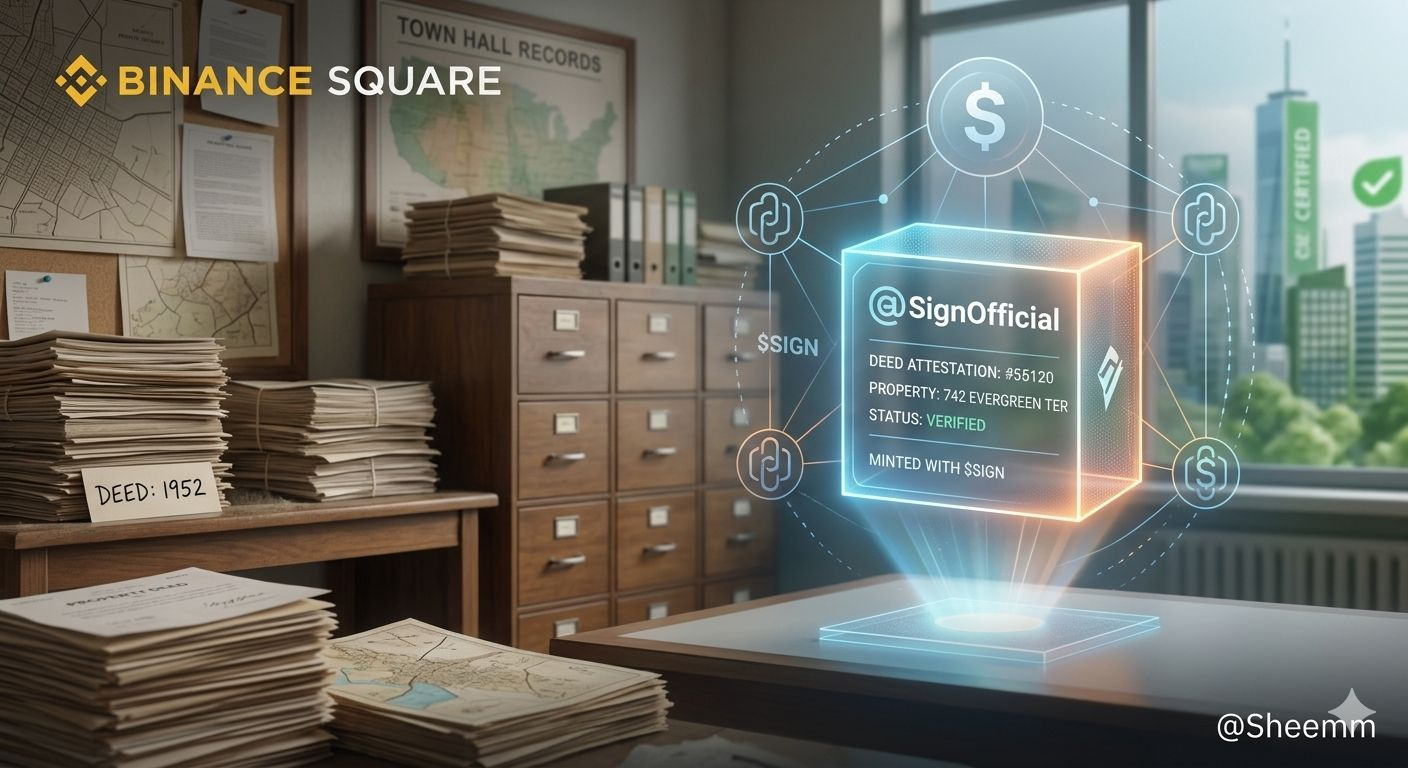
Instead of just tokenizing a house, we are starting to attest to its life. When a government office signs a digital deed using a Sign Protocol schema, that deed isn't just a file—it’s a living piece of proof. It carries the signature of the authority, the history of the land, and the verification of the previous owner, all in a format that doesn't need to be "searched" because it’s already there.
In 2026, we’re seeing the rise of Real-World Assets (RWA) that actually have a pulse. If a property title has a chain of SIGN attestations, you don’t need an army of auditors to verify it. The "truth" is built into the asset itself. It follows the property, lightly, without needing to be re-proven every time the keys change hands.
Sovereign Property
The most interesting part is what this does for the "unbanked" or the emerging markets. In many parts of the world, property rights aren't a given; they’re a struggle. If your paper deed is lost or the local registry is corrupt, your wealth vanishes.
But with a sovereign infrastructure like Sign Network, a community can build its own registry of truth. It becomes a layer that doesn't ask for permission to exist. It’s not just about efficiency; it’s about permanence. It’s the idea that a farmer’s land or a family’s home shouldn't be a disposable record that can be deleted. It should be a trace that lingers, recognized by a system that doesn't forget you.
The Feeling of a Clean Slate
We talk a lot about the mechanics—the $SIGN utility, the gas, the schemas. But the real shift is the feeling.
It’s the moment you realize that the most expensive purchase of your life doesn't have to be a blind leap of faith. It’s the shift from "hoping" the paperwork is right to "knowing" the signatures are real. It’s moving into a world where a property, much like a person, has a history that counts.
No more filing cabinets. No more re-introducing the same piece of land to the same bank. Just a world where the dirt we stand on finally has a memory.