
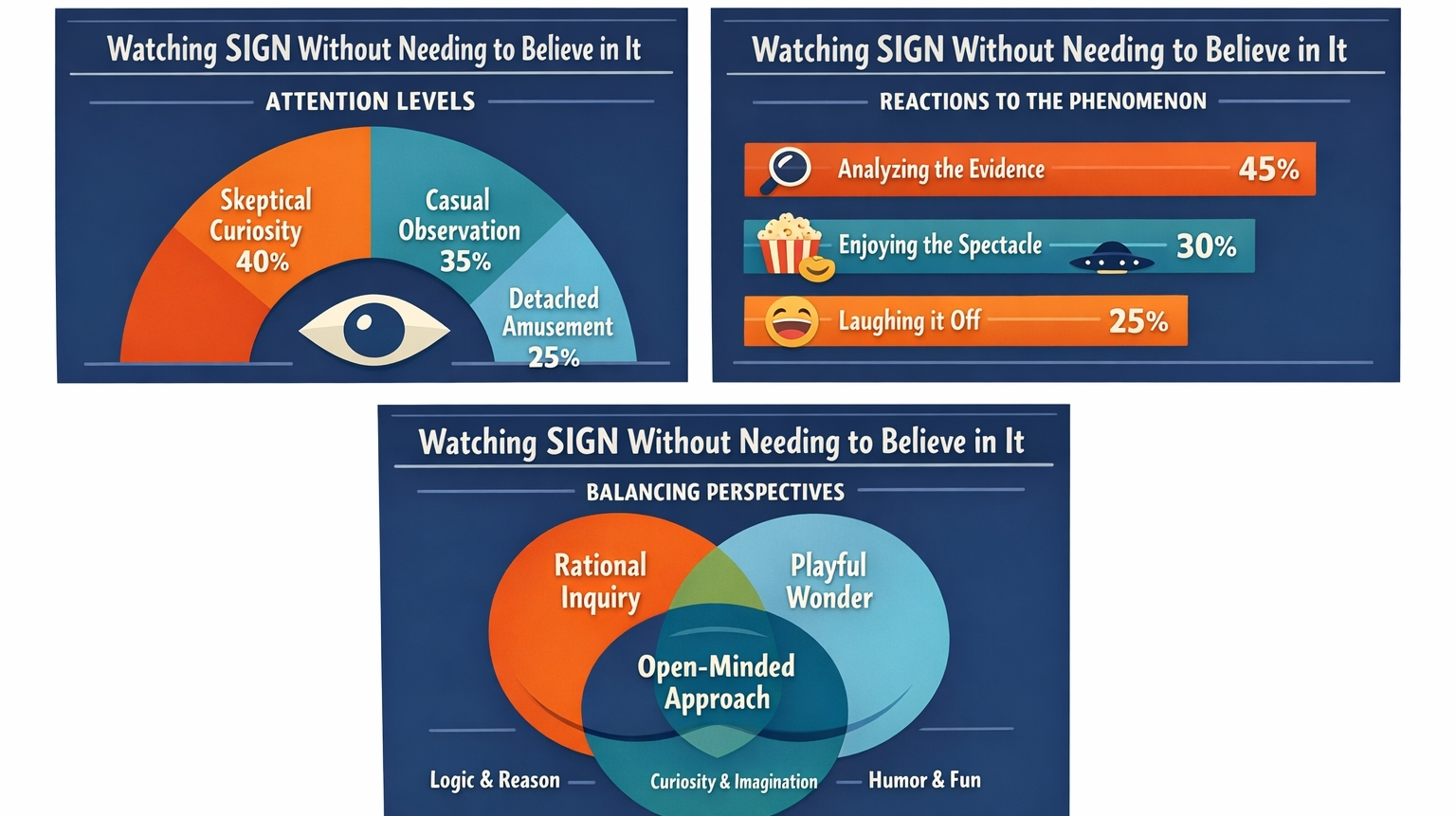
SIGN has been on my screen long enough now that I’ve stopped reacting to the wording and started thinking about the weight behind it. The whole idea of being a global layer for credential verification and token distribution sounds clean, almost too clean, like something that fits perfectly into a pitch but still has to prove it belongs in real workflows. I’ve seen projects like this before where the concept feels right because the problem is obvious, but the execution never quite earns the same confidence.
What makes this one harder to dismiss is that it’s not chasing something abstract. Credentials, access, eligibility, distribution… these are things every ecosystem keeps rebuilding from scratch, usually in messy and inconsistent ways. There’s always some workaround, some manual check, some centralized patch pretending to be decentralized enough. It works until it doesn’t, and then everyone just repeats the process somewhere else. That cycle has been running for years, and nobody really questions it anymore.
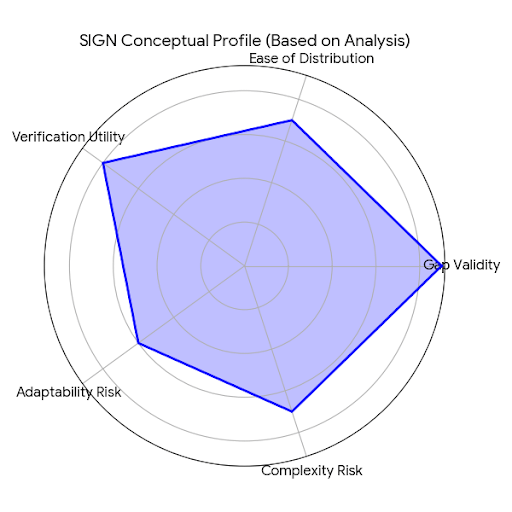
So when something like SIGN positions itself as infrastructure for that layer, I don’t immediately get excited, but I do pay attention. Not because it sounds big, but because it sounds necessary if it actually works. The gap it’s aiming at is real. The question is whether it closes that gap or just maps it better.
I keep thinking about how this would feel in actual use. Not in demos or threads, but in the middle of something slightly chaotic where things don’t line up perfectly. If verification becomes faster, quieter, less intrusive, that matters. If distribution becomes cleaner without adding extra steps or hidden complexity, that matters too. But if it introduces another layer people have to think about, another system they need to trust without fully understanding, then it starts to look like the same problem wearing a sharper design.
There’s also a pattern in crypto where infrastructure gets talked about like it’s instantly universal. Everyone wants to be the base layer for everything, but most projects don’t survive the moment they meet real diversity in use cases. What works for one ecosystem breaks in another. What feels simple at small scale becomes rigid at larger scale. I don’t know yet where SIGN sits in that spectrum. It could end up being adaptable enough to matter, or specific enough that it only solves a narrow slice of the problem.
The token side doesn’t distract me as much as it used to, but it’s still there in the background shaping behavior. Distribution systems can look successful early because they create visible movement, but that movement doesn’t always translate into lasting relevance. I’ve seen too many cases where participation is driven by short-term incentives rather than actual need. When that fades, what’s left is the real test. Does anything break if the system disappears, or does everything just move somewhere else without much resistance?
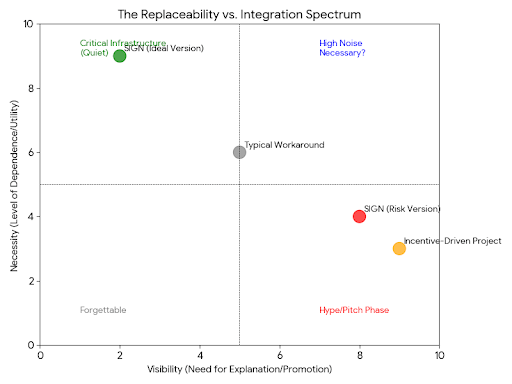
That’s probably where my attention stays the longest. Not on how polished the idea is, but on how replaceable it feels. If SIGN becomes something that projects quietly depend on, something that reduces friction without asking for attention, then it’s doing its job. If it stays visible, constantly needing explanation or reinforcement, then maybe it hasn’t really embedded itself where it needs to.
There’s a version of this where it becomes part of the background, the kind of thing people don’t talk about but rely on anyway. And there’s another version where it remains a well-structured concept that never fully crosses into necessity. Both outcomes feel possible right now, and I don’t think the difference will come from how it’s described, but from how it holds up when nobody is trying to promote it.
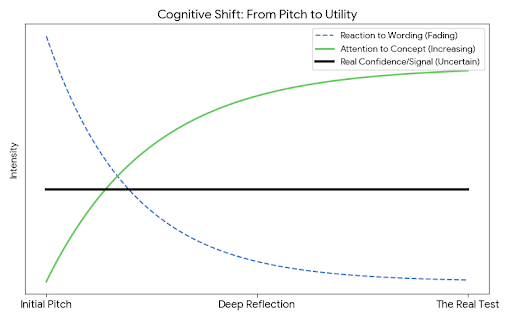
I don’t see it as something to dismiss, but I also don’t see a clear reason yet to fully lean in. It sits in that uncertain space where the idea makes sense, the timing could go either way, and the real signal hasn’t shown itself yet. That’s usually where I slow down instead of speeding up, because if it’s actually useful, it won’t need to rush to prove it. And if it does need to rush, that probably tells its own story.