
I used to believe that adoption in crypto was mostly a matter of time.
If the architecture was sound, if incentives were aligned, if the theory held users would eventually follow. It felt like a reasonable assumption.
But over time, that belief started to feel less like insight and more like distance from reality.
What unsettled me wasn’t failure. It was repetition.
Protocols that looked complete but felt unused. Systems with measurable activity but no continuity. Users who showed up once, interacted, and disappeared.
At first, I thought this was a distribution problem.
But upon reflection, it felt structural.
It felt like systems were being designed to exist, not to be lived in.
When I looked closer, the inconsistencies became harder to ignore.
Governance existed, but participation was shallow. Identity layers were introduced, but they weren’t persistent. Coordination mechanisms were present, but they lacked memory.
Nothing was obviously broken.
But very little was compounding.
The ideas sounded important, decentralization, ownership, coordination, yet they rarely translated into repeated behavior.
Most interactions were one time.
Most signals were visible.
Very few were verifiable.
And that created a quiet distortion.
We started interpreting activity as trust, and visibility as adoption.
That’s when my evaluation framework started to change.
I stopped asking whether a system works and started asking whether it holds, over time, across interactions, under real usage.
A spike in transactions might signal attention.
A large number of wallets might suggest distribution.
But neither tells me:
who returns
what persists
what the system actually remembers
And increasingly, I realized:
Most systems don’t remember anything meaningful.
That shift is what made me pause when I came across @SignOfficial .
At first, it didn’t stand out. It didn’t try to dominate a narrative or position itself as the next category.
If anything, it felt quiet.
But that was exactly what made it different.
$SIGN didn’t seem to ask how systems attract users.
It asked something more fundamental:
How do systems recognize, verify, and reuse meaningful participation over time?
Most governance systems today are built around ownership.
You hold tokens, you vote occasionally, and influence follows capital.
In theory, that creates alignment.
In practice, it often creates distance.
Because ownership doesn’t explain behavior.
And governance without behavior becomes symbolic.
What makes S.I.G.N. structurally different is where it starts.
Not with voting.
Not with tokens.
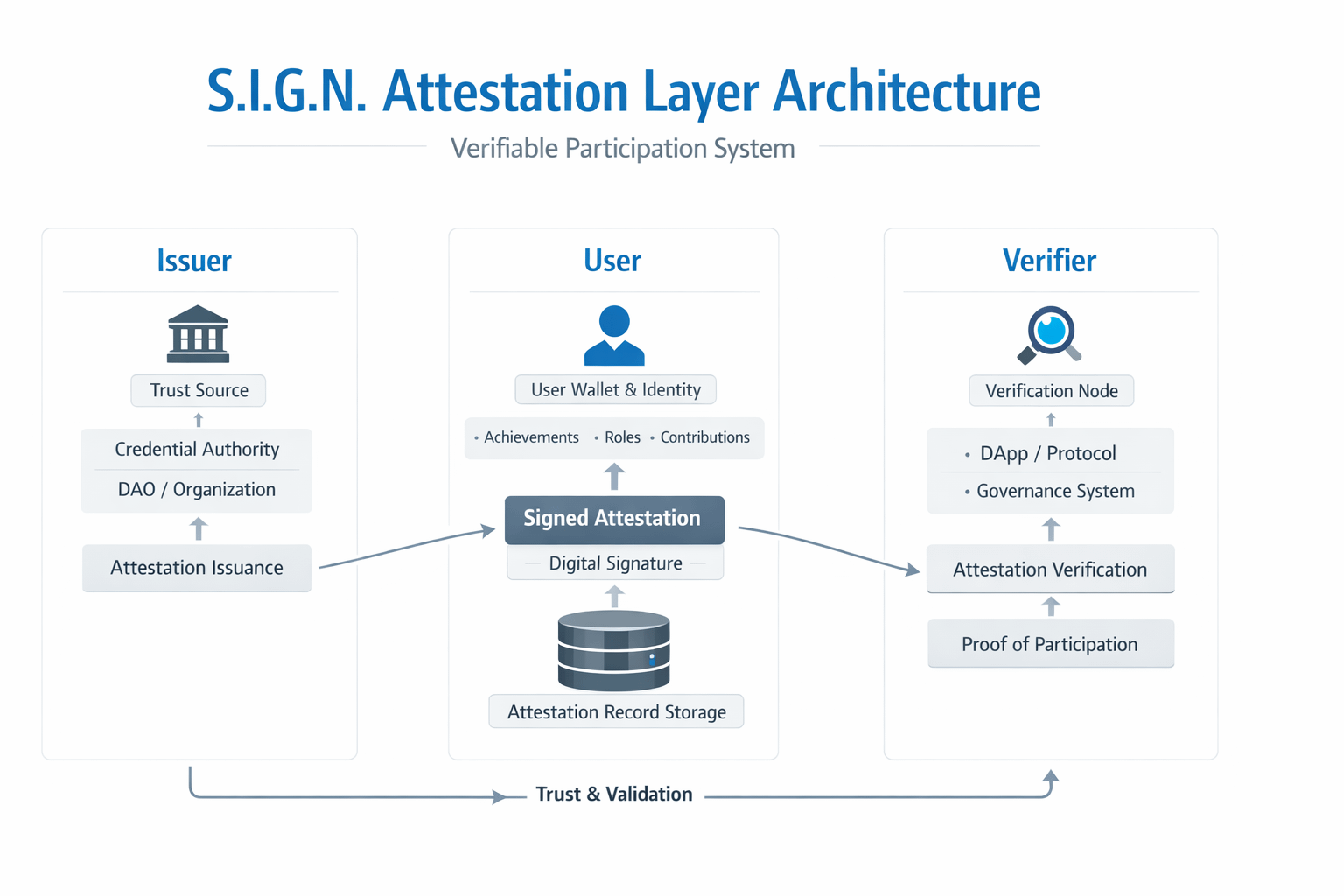
But with attestations, verifiable records of actions, roles, or claims that are signed, stored, and made reusable.
This changes the unit of participation.
Instead of asking who holds what, the system begins to track who did what and whether that action can be verified.
An attestation could represent:
a contribution, a role, a credential, or participation in a process.
But what matters is what happens after:
That action becomes:
verifiable (cryptographically signed)
portable (usable across applications)
persistent (not lost after one interaction)
And importantly:
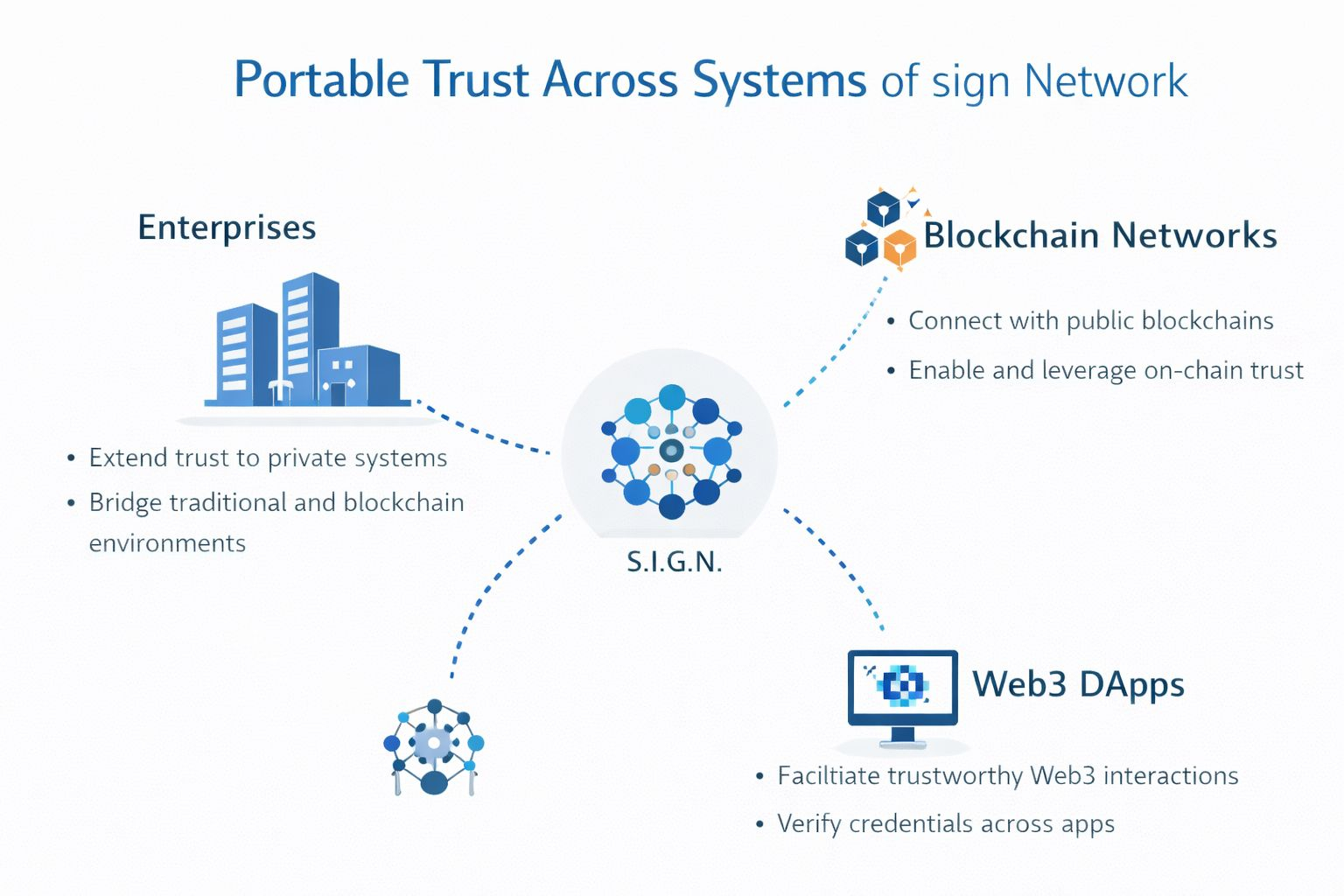
These attestations aren’t confined to a single system.
Any application can read and verify them, without recreating trust from scratch.
Their weight doesn’t just come from existence, but from who issued them and how they’re validated.
This turns verification into a shared primitive.
Not something every system rebuilds but something they build on.
To make sense of it, I had to simplify it.
Most systems today are stateless in practice.
You interact, and your actions don’t meaningfully carry forward.
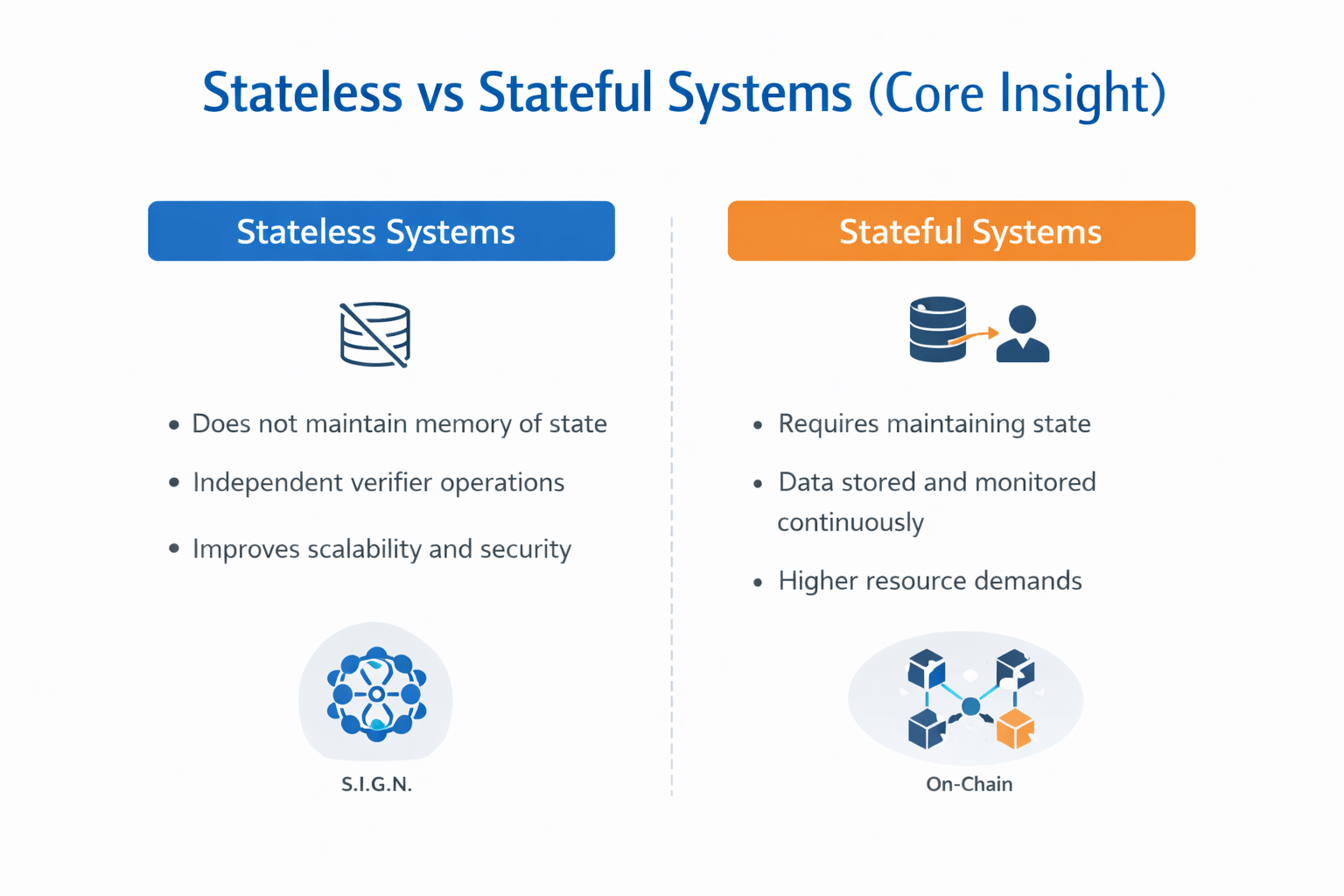
Sign introduces something closer to a shared memory layer.
Where participation accumulates.
Where contributions don’t disappear.
Where trust becomes inspectable instead of assumed.
What stood out to me wasn’t the feature set.
It was what this structure signals.
Most systems measure presence.
Some measure capital.
Very few measure credible participation.
And even fewer make that participation reusable.
This is why #SignDigitalSovereignInfra feels less like a governance tool, and more like infrastructure.
It’s not just coordinating decisions.
It’s enabling systems to recognize and reuse trust.
When I step back, this connects to a deeper limitation in crypto.
We’ve removed the need for centralized trust.
But we haven’t fully replaced how trust actually works.
Because trust isn’t just rules.
It’s patterns:
repeated interaction
visible contribution
consistent behavior over time
Without those, systems feel empty, even when they’re functional.
And users don’t stay in empty systems.
This becomes even more relevant in emerging markets.
Adoption doesn’t follow innovation.
It follows reliability.
If identity is fragmented, if contributions aren’t remembered, if trust isn’t portable,users don’t build on top.
They pass through.
The market, however, optimizes for something else.
Attention.
Price, volume, distribution, these are easy to measure.
But they don’t tell you whether a system is becoming part of someone’s routine.
And that’s where the gap forms.
Between what looks active and what actually works.
Still, none of this guarantees success.
Systems like Sign face real challenges.
Verification requires issuers.
Attestations require adoption.
Identity introduces tradeoffs around privacy and control.
And most users default to convenience, not participation.
There’s also a coordination problem.
Portability only matters if other systems choose to use it.
Which brings me to the part that feels less technical.
We often assume better systems lead to better outcomes.
But systems don’t enforce meaning.
People do.
Technology can structure behavior.
But it can’t force engagement.
That still depends on whether users find it worth returning to.
So I’ve started to look for different signals.
Not announcements.
But applications that require verified identity.
Not spikes.
But repeated interaction.
Not theoretical decentralization.
But systems where actions are recorded, referenced, and reused.
Not ownership.
But verifiable contribution.
In the end, my perspective has become quieter.
I no longer assume the most visible trends define the space.
DeFi. AI. New narratives.
They are layers.
But beneath them, something more structural is forming.
Systems that don’t just execute.
Systems that remember.
Systems that verify before they coordinate.
Sign may or may not become the defining example.
But it made something clear to me:
Adoption doesn’t come from what a system allows.
It comes from what a system recognizes, preserves, and makes usable over time.
And that shift is easy to overlook.
Because the systems that truly work rarely need to announce themselves.