
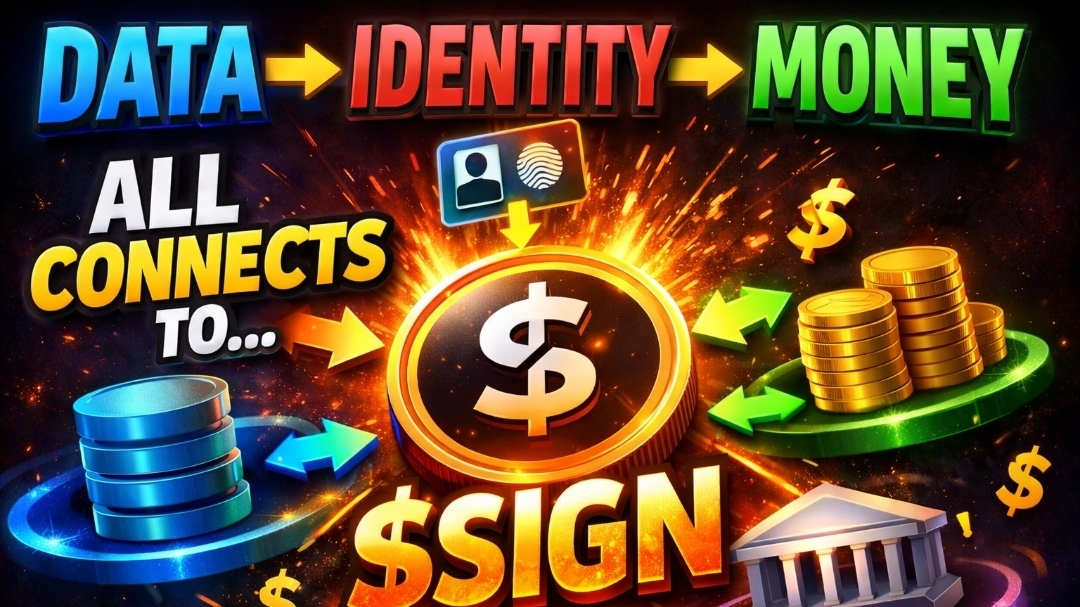
A government system is not just a way to move or store data. It is also about the meaningful way in which the two elements interact with each other. Data or information is just that at its simplest. However, when the data connects to money, it transforms into something that can have a direct impact in the real world. It helps determine who qualifies for what, how much gets allocated, and how money and other resources will move from one party to another.

On the other hand, money without context is nothing but a blind transaction; the payment can occur, but will lack a purpose. Data is the element that provides that purpose; it will transform the simple transfer of money into a structured decision with a well-defined intent and the ability to measure the impact after the fact.
The third component that is critical to the effectiveness of this system is identity. Identity serves as the connector or link between money and data. Through this logical connection, all decisions made in the above-referenced systems will be both automated, accurate and legitimate. Without this link of verified identity tied into the systems that data and money will rely on, those systems will be guessing as to what to do. If there is a linked verified identity, it will provide an exact answer.
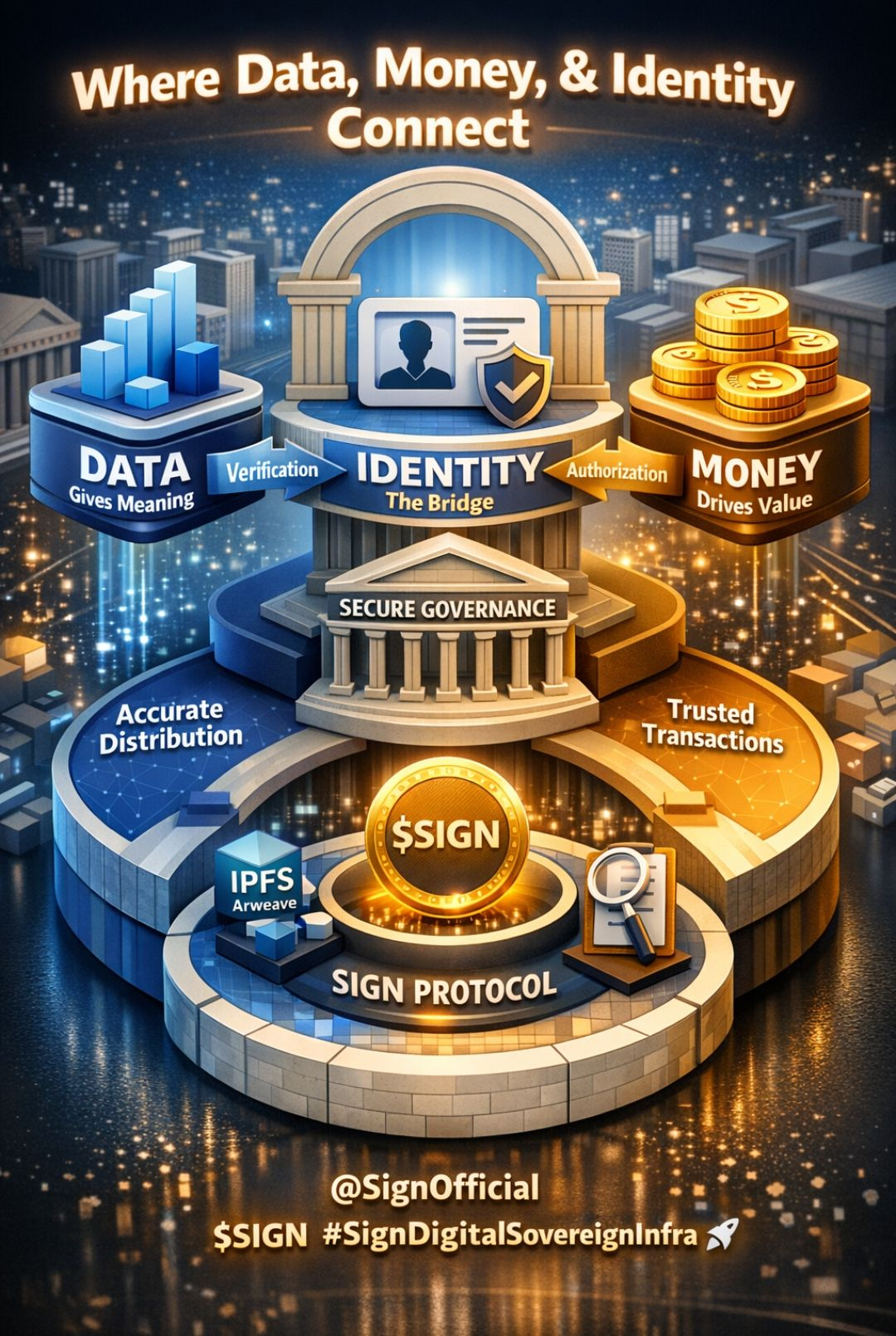
These three linked elements are what create a relationship between @SignOfficial and $SIGN . It is about creating the actual verifiable connection between the three elements of identity, data and value and helping to clarify the ambiguous world that existed prior to this three-way linking of data, money, and the identity of the parties involved in all transactions.
Ultimately, as these three elements connect to form a three-dimensional system, there will be consistent transparency in the governance of the system; more accurate distribution of resources; and measurable levels of trust rather than assumptions.$SIGN #SignDigitalSovereignInfra


#BitmineIncreasesETHStake #GoogleStudyOnCryptoSecurityChallenges