
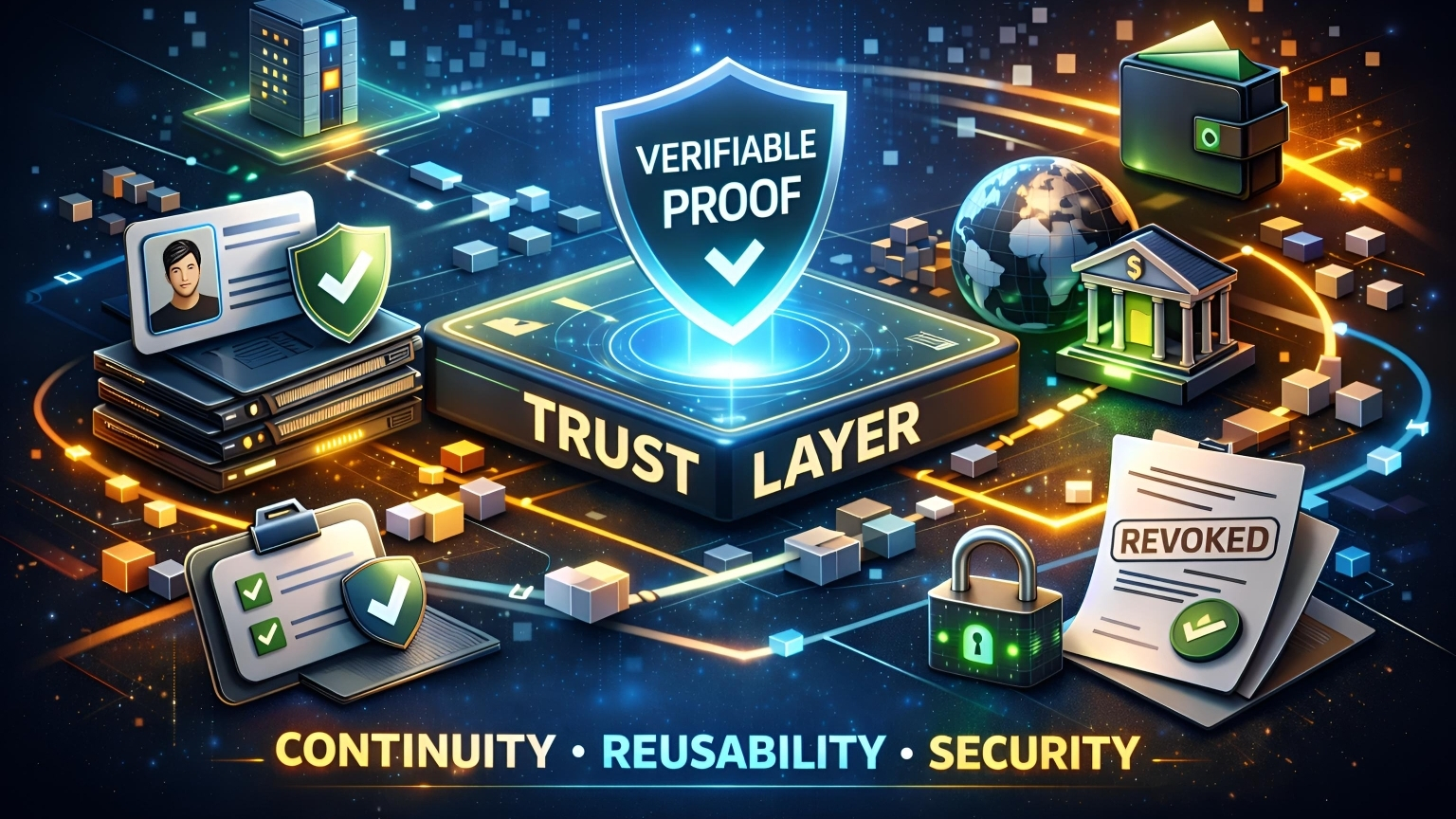
I used to believe that most digital systems fail because of weak design. Poor structure, bad user experience, or lack of features. But over time, I realized something deeper. Systems don’t fail at creation — they fail at continuation.
They can create value once, but they struggle to sustain it. And in real economies, value is not defined by creation. It is defined by movement.
A piece of data, a credential, or a transaction only becomes powerful when it keeps moving — being reused, verified, and trusted across different systems. Without that movement, it becomes static. And static systems don’t scale.
Most platforms today focus on issuing data. Identity gets created, records are stored, and transactions are completed. But after that, the system becomes passive. Data sits in place, and trust resets every time a new interaction begins.
This creates hidden inefficiencies. Every time trust has to be rebuilt, it increases cost, slows down processes, and adds friction. That’s why even advanced systems feel inefficient at scale. Not because they lack technology, but because they lack continuity.
So the real question changes. It is no longer about what a system can create. It is about what happens after something is created.
Does it move across systems?
Does it continue to generate value?
Or does it stop at the moment of issuance?
Because if trust cannot move, the system cannot grow.
This is where @SignOfficial introduces a different perspective. Instead of focusing only on creation, it focuses on the trust layer — the part that allows data to carry verifiable proof.
This approach changes how systems interact. Issuers become traceable, verifiers do not need blind trust, and data can move without exposing everything. Trust becomes portable, not repeated.
In real-world use, identity is not just a profile. It is used for decisions — access, finance, compliance, and permissions. Every one of these depends on trust. If trust has to be rebuilt every time, systems slow down. But if trust moves with the data, systems become efficient.
That is why proofs are more powerful than raw data. Instead of sharing everything, you prove only what is needed. This reduces both risk and complexity.
Continuity is what turns a system into infrastructure. Real systems are not defined by one-time use, but by repeated, reliable interaction. Credentials must be reusable, verification must be simple, and revocation must be possible. Without these, trust weakens over time.
There is also a clear difference between hype and infrastructure. Many projects can generate short-term excitement, but real infrastructure sustains usage. It shows up in consistent activity, ongoing integrations, and repeated interactions — not just temporary campaigns.
When I look at SIGN, I do not see just a token or a product. I see a system attempting to solve how trust moves in digital environments. Because in the future, data will not stay in one place. It will move across platforms, applications, and entire economies.
And wherever data moves, trust must move with it.
The systems that matter are not the ones that create something once. They are the ones where that value keeps moving, keeps being used, and keeps generating impact over time.
That is what real infrastructure looks like.