


Hey 👋 Man I keep coming back to Sign, and it’s not because it’s some flashy new toy. It just quietly messes with how I think about trust in the digital world. At its core, it’s beautifully simple: you get a credential once, the network verifies it, and boom — it’s reusable anywhere you need it. No more digging up old documents, emailing back and forth, or stressing about whether your degree or work history will be accepted this time. Imagine living in a small town and instantly proving your qualifications to a new gig or service. That kind of freedom? It actually feels liberating.
But here’s what really hooks me: underneath that clean surface is some seriously smart architecture. Sign separates issuance, verification, and usage so nothing gets bottlenecked. You control your own credentials instead of being stuck in someone else’s system. Validators on the network @SignOfficial have skin in the game (they stake to keep things honest), which makes the whole thing feel more trustworthy than the usual “trust us” corporate setups.
Sure, nothing’s perfect. What happens if a validator slips up or a new situation stretches what the original credential meant? How does the network keep everything accurate as time passes and contexts change? These are real questions, but the design seems built to handle edge cases without everything falling apart. It’s not claiming to be bulletproof #SignDigitalSovereignInfra it’s just way more elegant than the repeated verification mess we deal with today.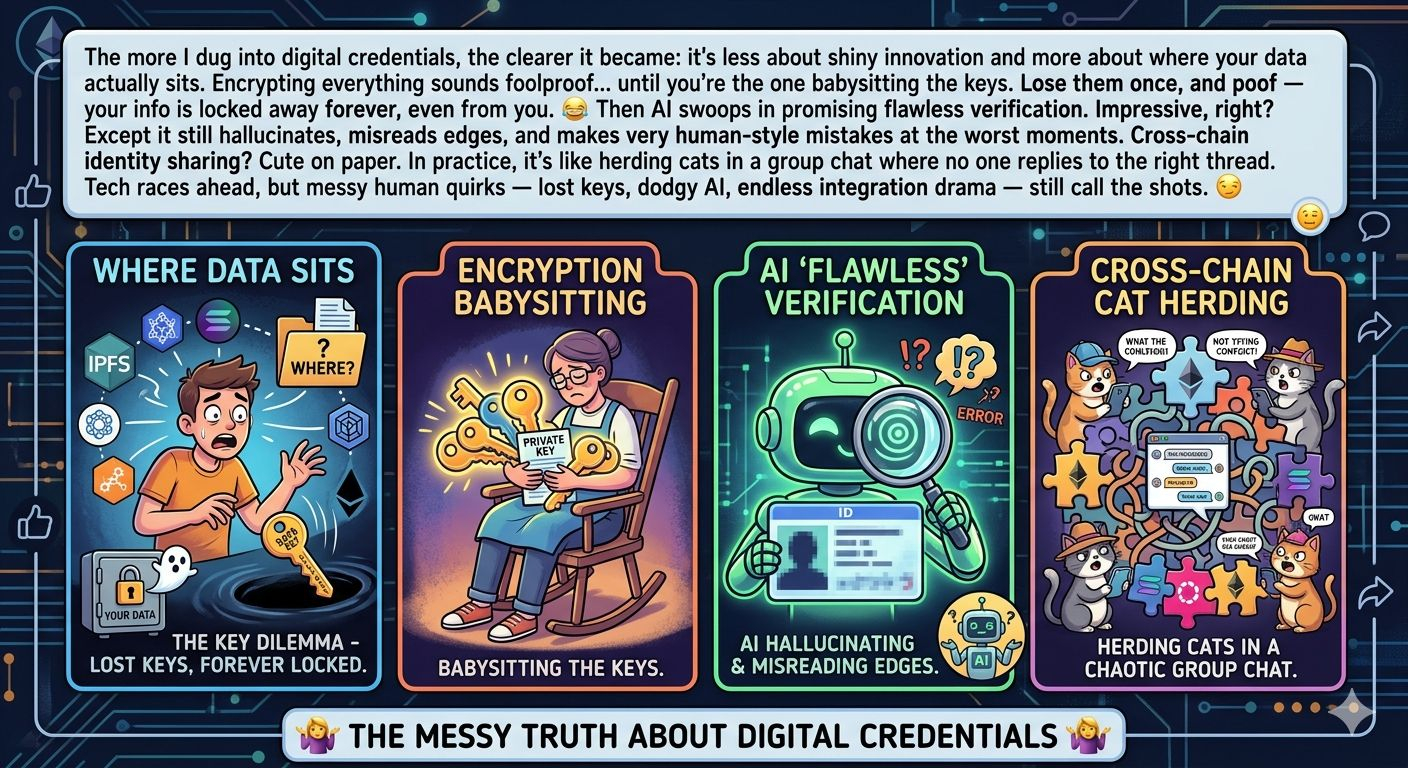
The best part? Sign isn’t trying to be loud or promise overnight miracles. It’s a quiet shift that moves us from constant re-checking to a more fluid, persistent kind of trust. In a world full of legacy systems, different rules, and uneven tech comfort levels, it’s going to face some real-world stress tests. Minor format mismatches or slow updates could create friction at first. But honestly, that’s exactly why it feels important — it shines a light on how broken and painful traditional verification really is.
What makes Sign different is its subtle power. It doesn’t scream “revolutionary!” but it gently rewires how we handle one of the most basic things in life: proving who we are and what we’ve done. As more people and organizations jump on board, those little inconsistencies might pop up, but I’m betting the elegance and reduced friction will win out over time.
At the end of the day, Sign is compelling because it takes something mundane — trust and verification $SIGN and makes it feel fresh and human again. It’s not about fixing every problem instantly. It’s about building a system that respects our time and reduces unnecessary hassle while making us think harder about what real digital trust should look like.
I’m genuinely excited to watch this unfold. If you haven’t checked out Sign yet, you probably should — it might just change how you see everyday verification forever.