
It starts to feel noticeable in a quiet way. Not loud or urgent, just sitting there underneath everything else. The pace around it is fast, almost restless, but this idea of infrastructure moves slower. I’m not sure if that’s intentional or just how it comes across.
Most attention right now leans toward entertainment-driven tokens. Things that move quickly, feel exciting for a few days or weeks, then shift into something else. It’s not hard to see why - they offer immediate texture, something visible. But that visibility doesn’t seem to last very long.
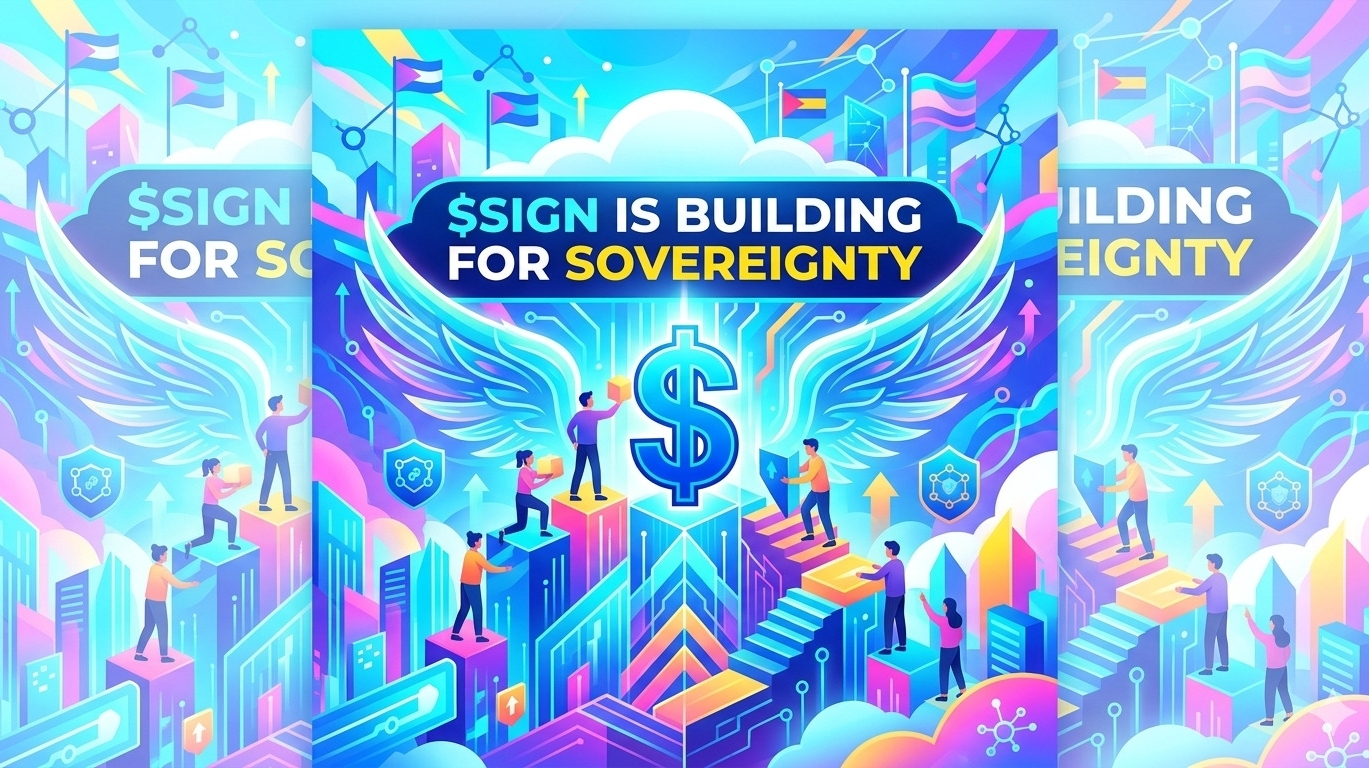
So when I read about $SIGN building for sovereignty instead of speculation, I pause a bit. Not because it sounds convincing right away, but because it feels slightly out of rhythm. Sovereignty is a heavy word. It suggests control, but also responsibility, and I’m not sure how that plays out in practice.
Infrastructure is harder to look at directly. It’s more like a foundation you only notice when something cracks. That makes it difficult to measure in real time, especially in a space that reacts to hourly changes and daily cycles. If something is meant to be steady, how do you even see it forming?
I keep wondering where the token fits into this. $SIGN exists, so it carries the same gravity as any other token - price movement, attention, speculation. Even if the intention is different, the environment around it doesn’t change easily. That creates a kind of tension I can’t fully resolve.
Maybe the token is just a tool within a larger system. Or maybe it becomes the focus anyway, even if that wasn’t the plan. It’s hard to separate those outcomes because they tend to blur together over time. I’ve seen that happen before, more than once.
The idea of sovereignty keeps pulling me back, though. Not in a clear way, more like a question that stays open. If something gives you more control over your digital presence, what does that actually require from you? Control sounds appealing, but it isn’t always simple.
There’s also something about building underneath the surface that feels easy to overlook. It doesn’t announce itself. It doesn’t compete for attention in the same way. That can either mean it’s focused, or that it risks being ignored until much later.
I notice how often the word inevitable comes up around infrastructure. It sounds certain, but I’m not sure certainty really exists here. Things can feel steady for a while, then shift without much warning. Calling something inevitable might say more about belief than about reality.
At the same time, short-term attention feels harder to trust. A token that trends for 3 days of visibility can disappear just as quickly. That pattern repeats often enough that it starts to feel expected. So the idea of something slower, more earned over time, does stand apart a little.
Still, I don’t know if standing apart is enough. If something avoids the usual cycles, it might also miss the initial pull that brings people in. That creates a kind of trade-off I don’t fully understand yet. Attention seems necessary, even if it isn’t the end goal.
There’s also a difference between saying something is a foundation and actually becoming one. A foundation has to hold weight over time, not just exist in theory. That takes longer than most people are willing to wait, especially in an environment that resets every few weeks of narrative.
So I end up circling the same thought. If $SIGN is really about infrastructure, then its value might not be obvious early on. But if it isn’t obvious, does it get the chance to prove itself? I don’t have a clear answer to that.
It feels like watching something form underneath the surface, without knowing if it will connect to anything larger. Maybe it does, slowly, piece by piece. Or maybe it stays incomplete, like many things do.
I keep coming back to that tension between what is built and what is noticed. They don’t always align. And in this case, I’m not sure which one matters more yet.