
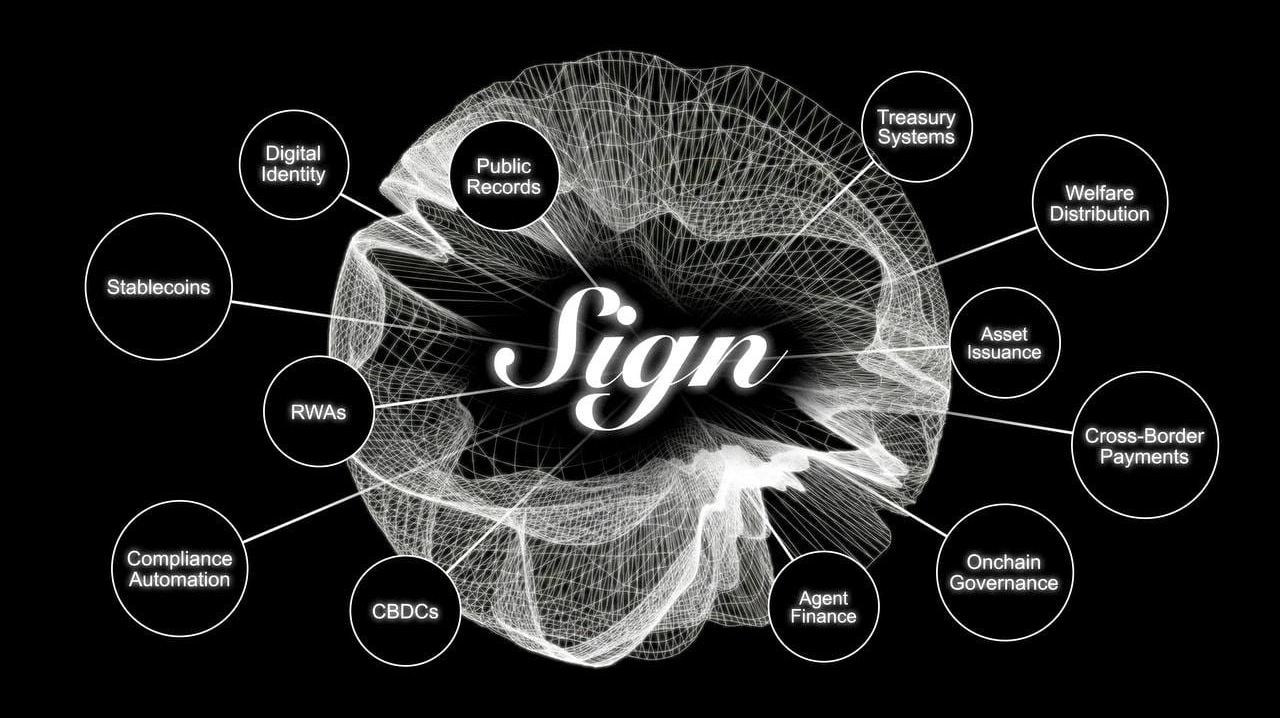
i’m not sure exactly when it shifted but I when I first started paying attention to the internet beyond just scrolling, @SignOfficial i noticed something felt off. Everything was connected yet nothing truly trusted anything else Every platform kept asking me to prove who I was, again and again like memory didnt exist i start thinking why does identity reset every time I move
That question stayed with me.
i start noticing that the real problem wasn’t identity itself, it was verification. Not who I am, but how the system decides I am real. For years, that power sat quietly with institutions governments, banks, $SIGN universities. They issued proof, and everyone else accepted it. But online, that structure broke into fragments. Every app became its own authority, and trust became repetitive inefficient, and strangely fragile
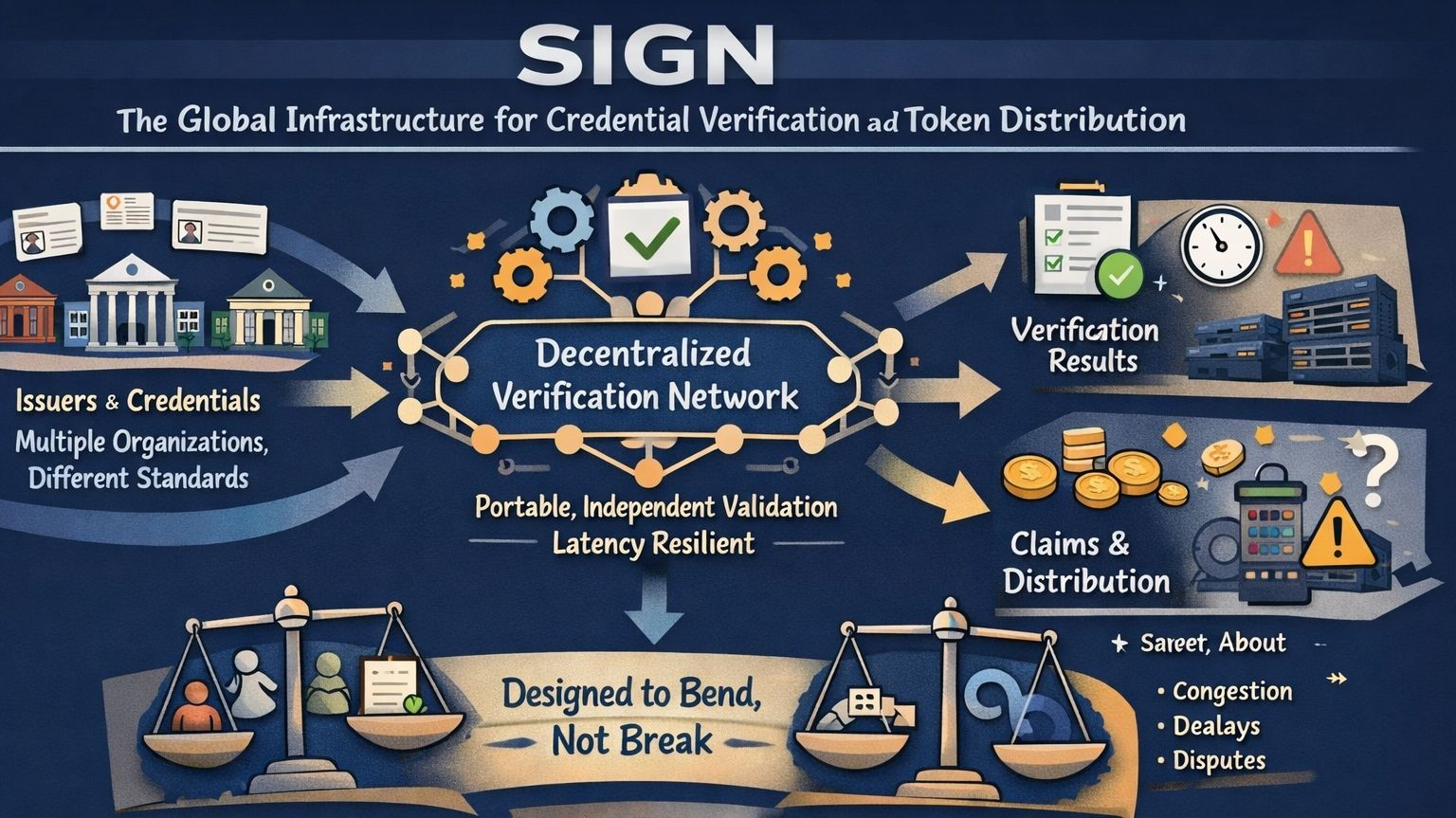
i noticed something deeper forming under all this noise a new layer being built, not for apps, not for money, but for trust as infrastructure.
i’m seeing now how credential verification is evolving into something almost invisible but incredibly powerful. Instead of logging in, we’re moving toward proving. Instead of sharing everything, we’re learning to share just enough. A credential is no longer a document, it’s a cryptographic statement something that can exist independently of where it was created.
i start realizing that this changes the entire direction of the internet.
Because when a credential becomes portable, it stops belonging to the issuer and starts belonging to me. i noticed how that flips the balance. Suddenly, identity is not stored somewhere far away it travels with me, secured, reusable, and selective.
Then tokens enter the picture, and everything becomes even more interesting.
i’m noticing that tokens are no longer just about currency. They’re becoming distribution mechanisms for trust. Access, rewards, reputation all of it starts linking back to what can be verified. Not guesses, not followers, not noise but actual, provable signals.
i start seeing how these systems connect. A verified action becomes a credential. A credential becomes a condition. And that condition unlocks a token. It feels almost like code is starting to understand human behavior, but only the parts that can be proven.
There’s something quiet but radical happening here.
i noticed that we are slowly building a world where opportunities don’t come from where you are, but from what you can prove. Not where you studied, but that you actually learned. Not who you know, but what you’ve done
And i’m noticing this doesn’t just affect individuals it reshapes systems. Hiring, finance, education, governance all of it starts to reorganize around verifiable truth instead of assumed credibility.
But there’s tension too, and i can feel it.
i start thinking about what happens if everything becomes provable. Does privacy shrink? Do we become too visible? Or do we finally gain control over what we reveal? Because this system doesn’t just remove middlemen it demands responsibility. If I lose access, I lose proof. If I share too much, I expose patterns.
i noticed that power doesn’t disappear here —it transforms.
And maybe that’s the real story.
i when I step back and look at everything, I don’t just see blockchain or identity systems. I see the early shape of something much bigger a network where trust is no longer stored in institutions, but calculated, carried, and continuously verified.
i’m realizing that this isn’t just technology evolving. It’s the idea of credibility itself being rewritten.
And i’m still watching it happen, piece by piece, quietly embedding itself into everything, until one day we won’t even notice it anymore
we’ll just live inside a world where truth moves with us. @SignOfficial $SIGN #signdigitalsovereigninfra