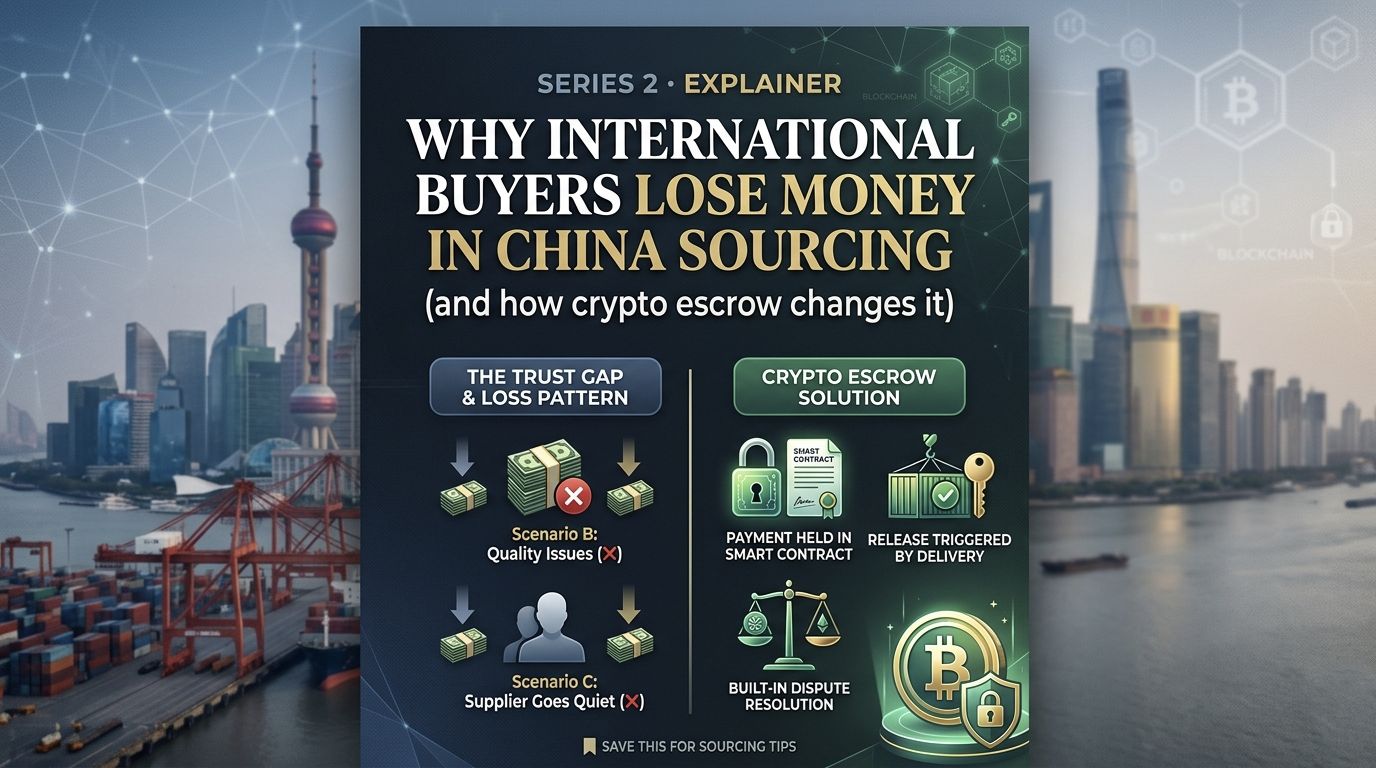
Il modello di perdita nella fornitura dalla Cina è quasi sempre lo stesso.
E quasi mai riguarda il prodotto.
Ecco come va.
L'acquirente trova un fornitore su Alibaba o tramite una fiera commerciale. Il prezzo è giusto. I campioni sembrano buoni. Il MOQ è gestibile. L'affare è concluso.
L'acquirente paga un deposito del 30%. Il fornitore inizia la produzione.
Sei settimane dopo, succede una delle tre cose:
Scenario A: Le merci arrivano e la qualità corrisponde ai campioni. Tutti sono felici. ✅
Scenario B: Le merci arrivano con problemi di qualità. L'acquirente si lamenta. Il fornitore dice "entro tolleranza accettabile." Inizia la disputa. La risoluzione richiede mesi e costa più di quanto valesse lo sconto. 🔴
Scenario C: Il fornitore tace dopo il deposito. Le merci non vengono mai spedite. L'acquirente non ha alcuna possibilità di ricorso perché il contratto non vale la carta su cui è stampato in tutte le giurisdizioni. 🔴
Lo Scenario A si verifica. Ma B e C si verificano a tal punto che gli acquirenti esperti incorporano la perdita nel loro budget di approvvigionamento come voce standard.
Questo è il divario di fiducia in numeri.
Ecco cosa cambia l'escrow crittografico:
→ Pagamento trattenuto in smart contract, non nel conto del fornitore
→ Rilascio attivato dalla conferma di consegna verificata, non dalla fiducia
→ Risoluzione delle controversie integrata nel contratto, non negoziata dopo il fatto
→ Nessuna parte singola controlla i fondi in nessun momento
La tecnologia esiste oggi. L'infrastruttura per renderla accessibile agli importatori di medie dimensioni — la verifica, l'integrazione dell'ispezione, il quadro giuridico — è ciò che si sta costruendo in questo momento.
I compratori che capiranno questo per primi avranno un vantaggio strutturale sui costi rispetto a tutti gli altri che stanno ancora assorbendo il fallimento della fiducia come una spesa aziendale.
📌 Salva questo se stai acquistando dalla Cina o pianificando di farlo.
#ChinaSourcing #CryptoEscrow #CrossBorderTrade #TrustInfrastructure #Web3Commerce