
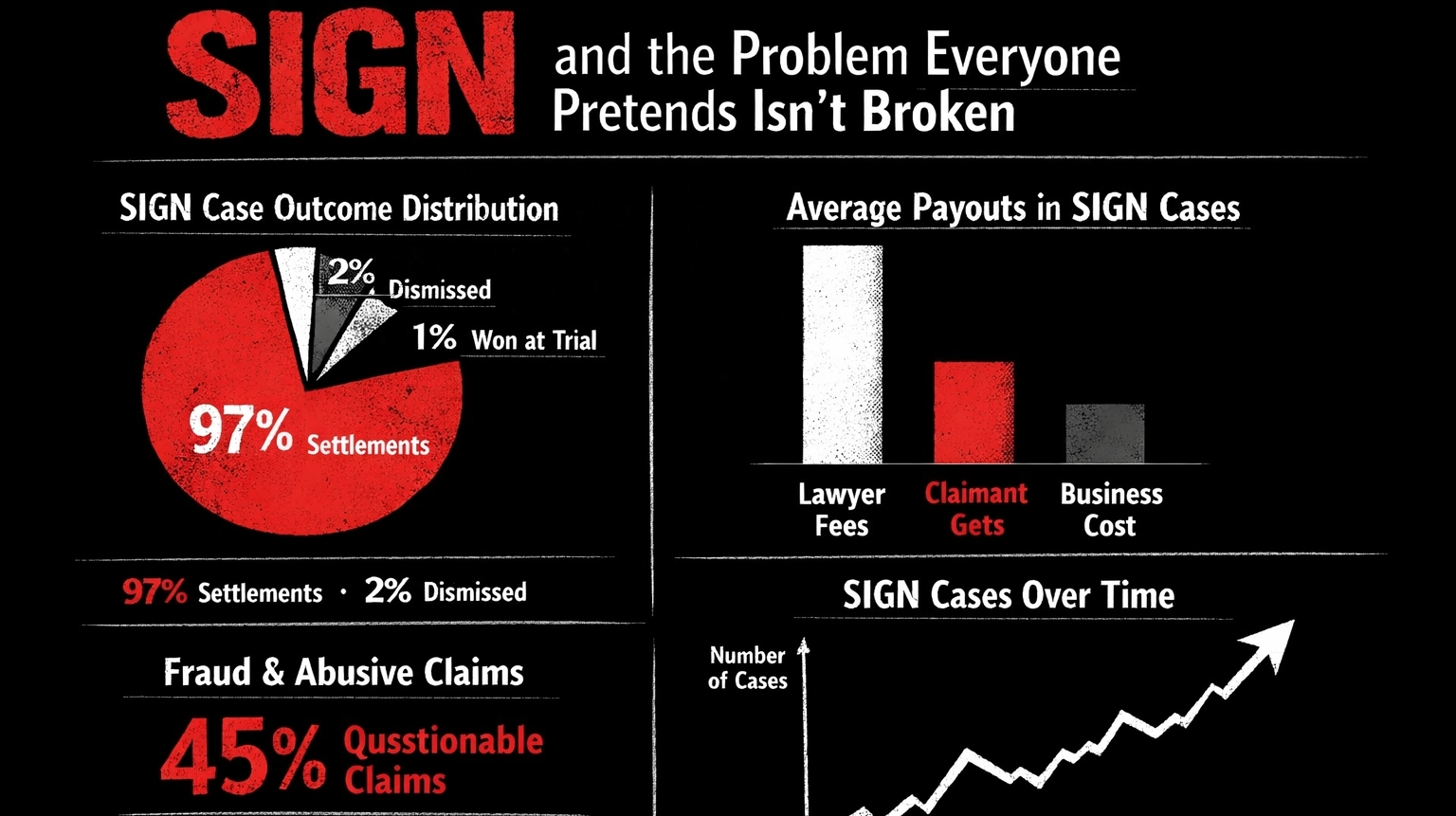
SIGN, the global infrastructure for credential verification and token distribution—sits in front of me like one of those ideas that sounds obvious only after you’ve been burned enough times to need it. I’m watching how it’s framed, how people repeat it, how quickly it gets simplified into something cleaner than it probably is. I’m waiting for the cracks to show, because they always do. I’ve seen too many systems promise fairness in distribution and end up rewarding whoever understood the loopholes first. So I read this not like a believer, but like someone who’s spent too long watching incentives distort anything that looks stable.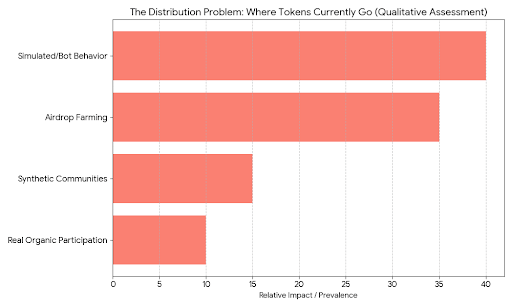
The core idea is hard to argue against. Crypto has a distribution problem, and it’s not subtle anymore. Tokens don’t go to “users,” they go to whoever can simulate user behavior at scale. Airdrops get farmed before they’re even announced. Governance gets diluted by wallets that exist purely to vote and exit. Even communities start to feel synthetic after a while. SIGN is stepping into that mess and saying: what if we actually knew something about who we’re distributing to, without turning the whole system into surveillance?
That “without” is doing a lot of work.
Credential verification sounds clean until you start pulling on it. What counts as a credential here? Proof you used a protocol? Proof you held something? Proof you showed up somewhere, did something, existed long enough to matter? And once that’s defined, who gets to issue that proof? Because even in decentralized systems, someone always ends up being the source of truth, or at least the closest thing to it. SIGN seems to be trying to abstract that layer—to make credentials portable, composable, usable across different contexts—but abstraction doesn’t remove trust, it just reshapes it.
Still, the direction makes sense. The current model—open access plus blind distribution—worked when there wasn’t much at stake. Now there’s too much value moving around for that to hold. Systems need some way to filter signal from noise. Not perfectly, just enough to stop bleeding. If SIGN can actually verify meaningful participation without forcing users into rigid identity boxes, then it’s addressing something real. Not theoretical, not future-facing—something already breaking in plain sight.
But then the token side creeps back in. Because no matter how elegant the credential layer is, the moment tokens are involved, behavior shifts. People stop asking “what is this system for?” and start asking “how do I qualify?” That’s where things get distorted. Credentials become targets, not reflections. Activity becomes strategic, not organic. I’ve seen people interact with protocols they don’t understand just to build a history that might pay off later. SIGN doesn’t remove that instinct—it just gives it a new surface to operate on.
What matters, I think, is whether the system can handle that pressure without collapsing into its own logic. Can it recognize when behavior is being gamed, or does it just formalize the game? Can credentials evolve, expire, adapt? Or do they become static markers that people learn to manufacture? Real infrastructure has to survive misuse, not just ideal use. That’s the part most projects underestimate.
There’s also a quieter tension here around privacy. Crypto has always leaned on pseudonymity as a kind of default shield. Not perfect, but enough to keep participation open. Credential systems, even the privacy-preserving ones, start to chip away at that. They ask for signals, proofs, attestations—pieces of identity, even if fragmented. SIGN seems aware of this, trying to balance verification with minimal exposure, but that balance is fragile. Users will tolerate friction if the value is clear. If it isn’t, they just disengage or find ways around it.
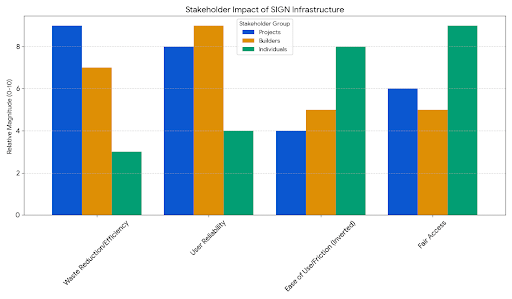
And I keep thinking about who really benefits if this works. Projects get cleaner distribution, less waste. Builders get better targeting, more reliable users. But for individuals, it’s less obvious. Maybe it means fewer missed opportunities, fewer bots crowding out real participation. Or maybe it just means a new layer they have to understand, manage, and maintain—another system that decides whether they’re “eligible” for something they don’t fully control.
None of this makes SIGN feel pointless. If anything, it feels like something the space has been circling around for a while, just without committing to it. A way to anchor incentives in something slightly more real than wallet activity alone. A way to make distribution less chaotic without locking everything down. That’s a narrow path, and most attempts either drift into centralization or dissolve into noise.
So I don’t dismiss it. But I don’t buy it outright either. It feels like one of those layers that only proves itself after people try to break it, over and over again. Right now it’s still in that phase where the idea carries more weight than the evidence. Maybe it tightens the system in a way that actually matters. Maybe it just gives the same old behaviors a more structured playground. Hard to tell yet. I’ve learned to wait for the part where usage reveals more than the narrative ever could.