
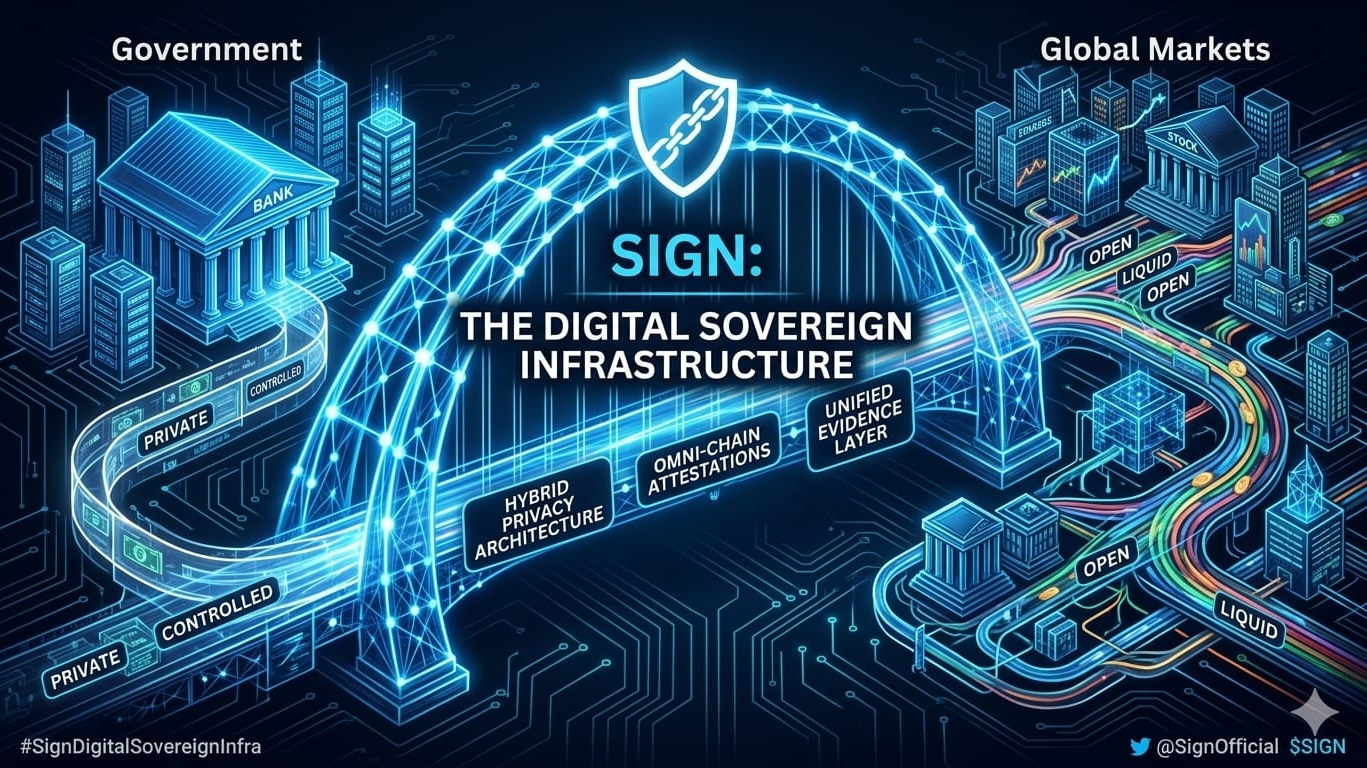
I mean seriously… there’s something about this whole SIGN Protocol idea that keeps circling back in my mind.
And the more I think about it, the more I realize this story is not just about technology.
It’s also about a quiet shift in how we think about trust on the internet.
If we step back for a moment, our entire online life is built on trust.
But honestly… it’s a very fragile kind of trust.
Every time we send money online, sign a digital document, or make an agreement through a website, we are basically trusting someone else’s server. A company stores the data, and we just assume they won’t change it.
Most of the time it works.
But somewhere deep down there is always a small discomfort.
Because the truth is simple: digital information can be changed.
A document can be edited.
A database can be modified.
A photo or video can be manipulated.
And now we are entering an era where it is becoming increasingly difficult to know what is real and what is fake.
This quiet uncertainty has become one of the biggest problems of the digital age.
And that’s where something like SIGN Protocol’s omni-chain attestation system starts to make sense.
It’s not just another crypto product.
It’s an attempt to repair the damaged layer of trust on the internet.
---
Making Proof Visible
Numbers like 40 million attestations might sound impressive at first.
But numbers alone don’t really matter if they don’t help ordinary people.
What caught my attention is something more practical.
TokenTable.
In the crypto world, token distributions often happen behind closed doors.
Projects promise fairness, but many people still wonder:
Who actually received the tokens?
Was the distribution transparent?
Was there manipulation?
These questions rarely have clear answers.
What SIGN Protocol is trying to do is create something much stronger than promises — verifiable proof.
Not statements.
Not screenshots.
But records that cannot be quietly changed later.
That difference might sound small, but it’s actually huge.
---
Change Will Happen Quietly
But here’s the honest truth.
This kind of system probably won’t change our lives overnight.
The biggest changes in technology often happen quietly, behind the scenes.
When someone buys something online in the future or signs a digital agreement, they might not even realize there’s an attestation layer running underneath.
They won’t care about blockchain.
They will only care about one thing:
The information cannot be faked.
And that alone could reshape how digital systems work.
 Why This Matters in Developing Countries
For people living in countries with strong administrative systems, this idea might feel abstract.
But in many developing countries, documents like land records, birth certificates, or licenses can become complicated nightmares.
Sometimes records disappear.
Sometimes dates are changed.
Sometimes verification takes months.
Now imagine those documents living on a layer where no one can secretly edit them later, not even officials.
That kind of transparency could be incredibly powerful.
At the same time, it might also feel uncomfortable.
Because many societies have become used to a certain level of opacity in their systems.
When transparency suddenly arrives, it can feel like a shock.
People might worry that everything is being tracked.
But over time, that discomfort could slowly turn into a stronger sense of security.
---
From EthSign to Something Bigger
The transition from EthSign to SIGN Protocol is also an interesting evolution.
EthSign was mostly an interface — a tool people used to sign documents.
SIGN Protocol feels more like building the engine itself.
It’s the invisible infrastructure that could support many different systems — identity, governance, credential verification, token distribution, and more.
In a way, it’s like moving from building a single car model to building the factory that produces engines for many vehicles.
---
Why Governments Are Paying Attention
When countries like the UAE or Thailand begin experimenting with this type of technology, it tells us something important.
They are not just exploring blockchain for fun.
They are looking for digital sovereignty.
In simple terms, they want their country’s data and verification systems to exist outside the control of foreign companies or centralized servers.
That’s a big strategic shift.
---
The Difficult Reality
Of course, not everything is perfect.
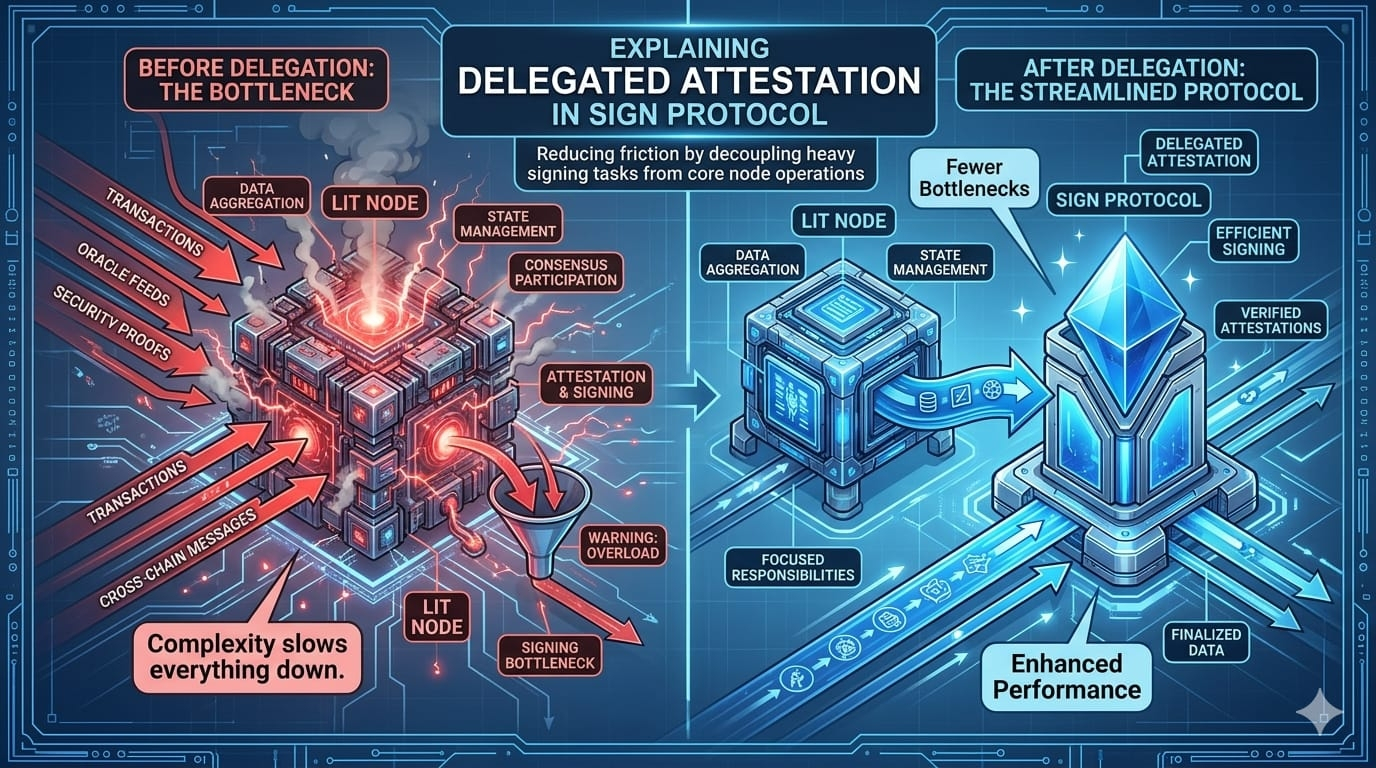
Omni-chain or cross-chain systems are incredibly complex.
Coordinating between different blockchains is still a major technical challenge.
Even verifying thousands of attestations per second without slowing networks down is difficult.
So it’s fair to say that SIGN Protocol is still being tested in the real world.
What we’re seeing today is not a finished system.
It’s more like an ongoing experiment.
---
The Deeper Question
But maybe the most interesting question isn’t technical at all.
It’s philosophical.
Are we really ready for a world where proof exists for everything?
Blockchain doesn’t forget.
Once something is signed or attested on-chain, it can remain there permanently.
That permanence brings security.
But it also removes something we’ve grown used to on the internet — the ability to disappear or make mistakes quietly.
In that sense, immutability brings both hope and a little bit of fear.
---
The Real Test
Ultimately, this technology will only succeed if it becomes invisible.
Just like email.
When we send an email today, we never think about SMTP protocols or server infrastructure.
It just works.
For SIGN Protocol to truly matter, it needs to reach that same level of simplicity.
People should be able to verify identity, sign agreements, or confirm credentials without even thinking about blockchain.
A Quiet but Important Shift
Whether SIGN Protocol succeeds or not will take time to answer.
But one thing is becoming clear.
The current digital world — where information can be easily manipulated —cannot remain the way it is forever.
A new system of trust is slowly being designed.
Omni-chain attestation might not be a magic solution.
But it could be an important first draft of a more reliable internet.
A future where we no longer have to say:
“I didn’t know it was fake.”
And honestly, that kind of certainty might become one of the most valuable things in the digital age.