
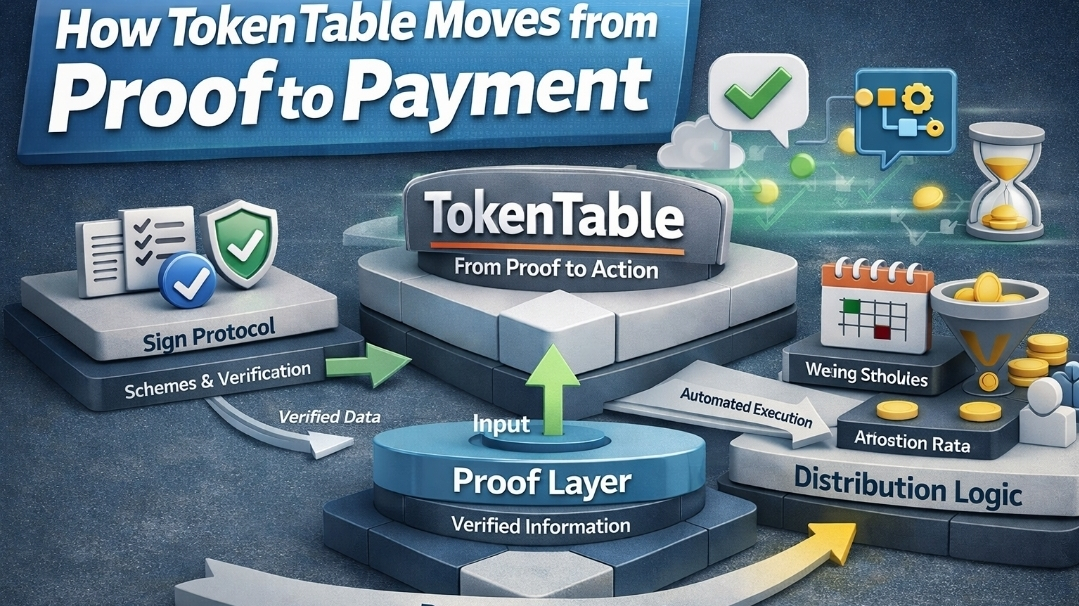
One thing that keeps coming up in digital systems is this disconnect between truth and payment. We’ve built strong ways to verify information — signatures, records, attestations — but that doesn’t automatically decide who should receive value, when it should happen, or under what conditions. Verification alone doesn’t complete the process.
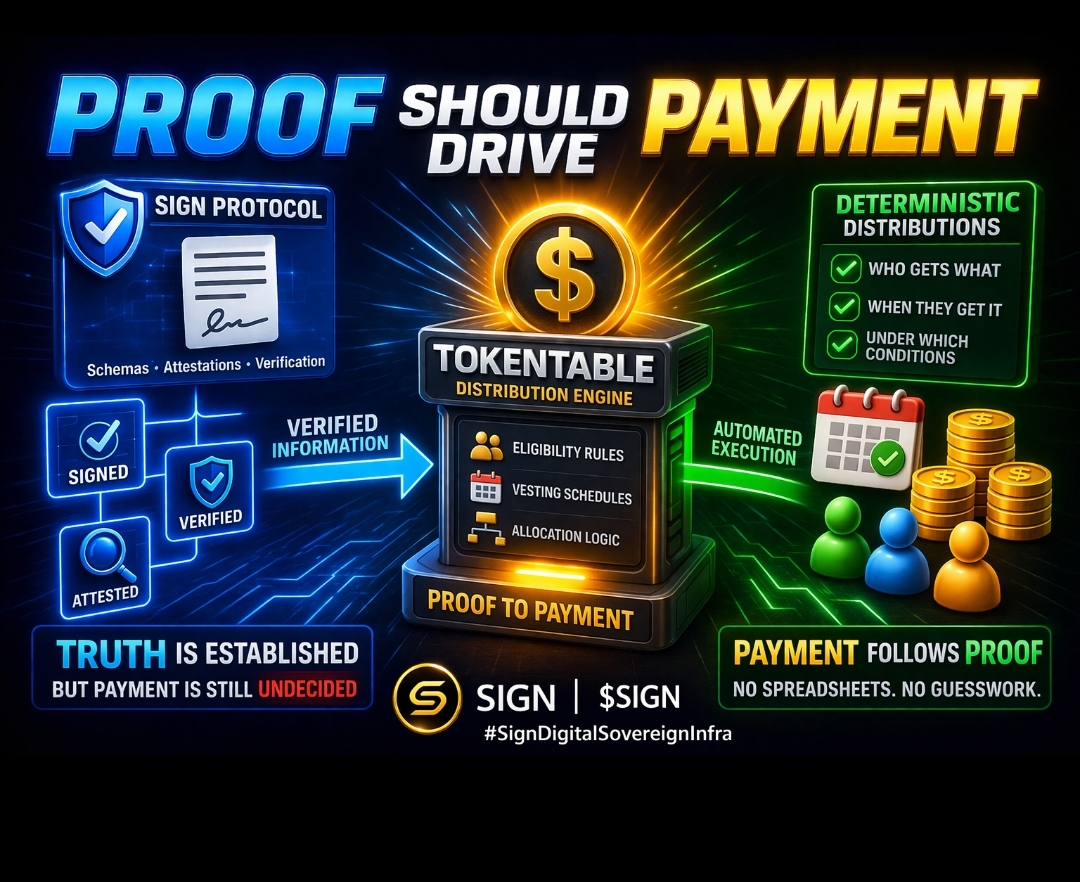
That’s where the idea behind TokenTable starts to make more sense. It doesn’t try to replace identity or proof. Instead, it takes verified information and pushes it into action. In simple terms, it turns “this is true” into “this is what should happen next.”
Within the Sign ecosystem, Sign Protocol handles the foundation — schemas, attestations, and verification. TokenTable goes further, handling the entire distribution process.
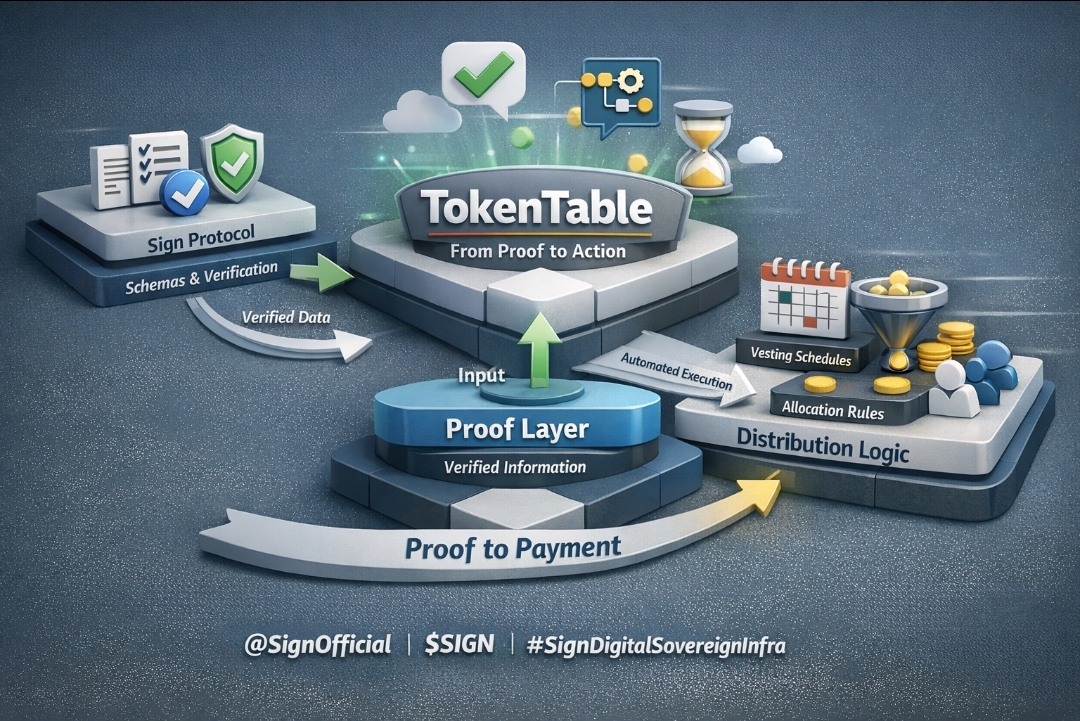
It defines eligibility, controls timing, applies conditions, and ensures that allocations follow clear rules instead of manual decisions.
What stands out is how this removes ambiguity. No more waiting on internal sign-offs, wrestling with spreadsheets, or enduring lengthy audits. Everything is organized and transparent. The system does more than just verify; it actively utilizes the data.
The change, though subtle, is important.
Proof is no longer something stored for later reference. It becomes part of the execution layer itself.
In that sense, TokenTable isn’t just about sending funds. It’s about making sure value moves based on verified reality, not assumptions or manual control.
@SignOfficial $SIGN #SignDigitalSovereignInfra


