
@SignOfficial #SignDigitalSovereignInfra
I spent time testing Sign Protocol directly instead of relying on descriptions.
I gave it a simple constraint: 30 minutes, one basic workflow. No deep setup, no overthinking.
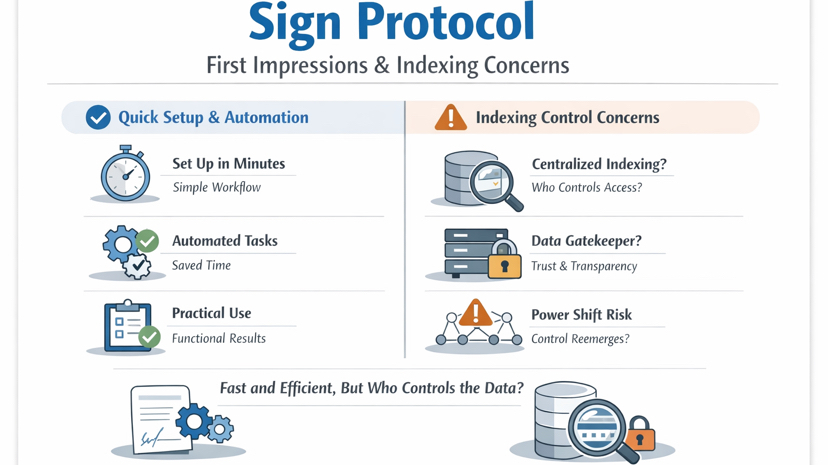
The first thing I noticed was usability. It didn’t slow me down with complex configuration or a steep learning curve. I created a basic attestation flow for a routine task nothing advanced, just clear sequential steps. Once set, the process ran without manual repetition.
That shift matters. Instead of reacting to tasks, I moved ahead of them. The system automated execution, reduced oversight, and saved time in a way that felt immediate not theoretical.
It’s not perfect. I had to adjust parts of the flow to match how I actually work. But that’s expected in any real system. What stands out is speed to utility. Within minutes, I had something functional—not a demo, not a concept, but a working process.
That’s rare.
I don’t see it as a complete transformation. I see it as a practical improvement. My approach stays the same: start small, build something useful, then refine. The value shows up in execution, not in chasing ideal setups.
That said, one area raises concern: the indexing layer, specifically SignScan.
This is where control can quietly concentrate.
You can build verifiable, portable data at the protocol level but if access to that data depends on a centralized indexing layer, the power shifts. Whoever controls indexing influences what data is discoverable and usable.
I’ve seen this pattern before. Strong base technology, but control reappears at the data access layer. It doesn’t break the system, but it changes its trust assumptions.
I’m not dismissing the protocol. The core design portable attestations and reusable trust still holds value. But indexing is not a minor detail. It’s a structural point.
So I don’t just read documentation. I watch live behavior on-chain activity, who operates indexing, and how open that layer actually is.
Because in infrastructure systems, design promises matter less than operational reality.