The more I think about it the more it makes sense to me.
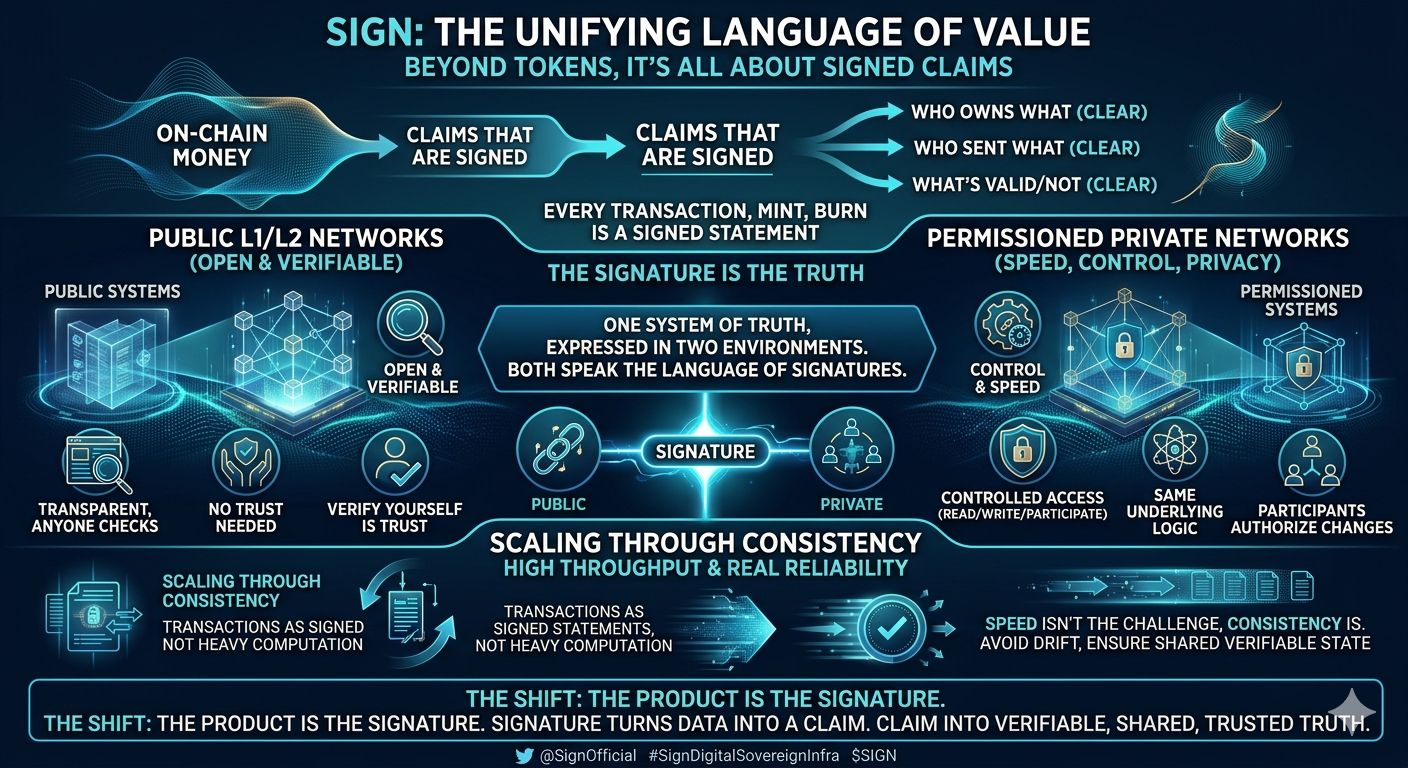
On-chain money isn't something
It's claims that are signed.
Who owns what is clear.
Who sent what is clear.
What's valid. Whats not is clear.
Everything comes down to signatures.
When I look at stablecoins in this way it starts to feel simpler to me.
It's not really about tokens or balances.
It's about creating, verifying and synchronizing signed state across systems.
Every transaction is a message that is signed validated and added to a shared understanding of reality.
On the side whether its Layer 1 or Layer 2 every transaction, mint or burn is a signed statement.
It's transparent and verifiable.
Anyone can check it.
You don't need to trust the system.
You can verify it yourself.
That is trust.
Not belief,. Verification.
On the permissioned side things are more controlled.
The foundation is the same.
Private networks still operate on signed state transitions.
Participants authorize changes.
Systems validate them.
The only real difference is access.
Who can read, who can write and who is allowed to participate.
The logic doesn't change.
That's what makes SIGN powerful.
It becomes a language between both worlds.
Public or private, open or controlled it doesn't matter.
A transfer is still a signed statement.
A balance is still a signed truth.
The format may differ.
The environment may change.
The underlying thing stays the same.
This creates something than just working together.
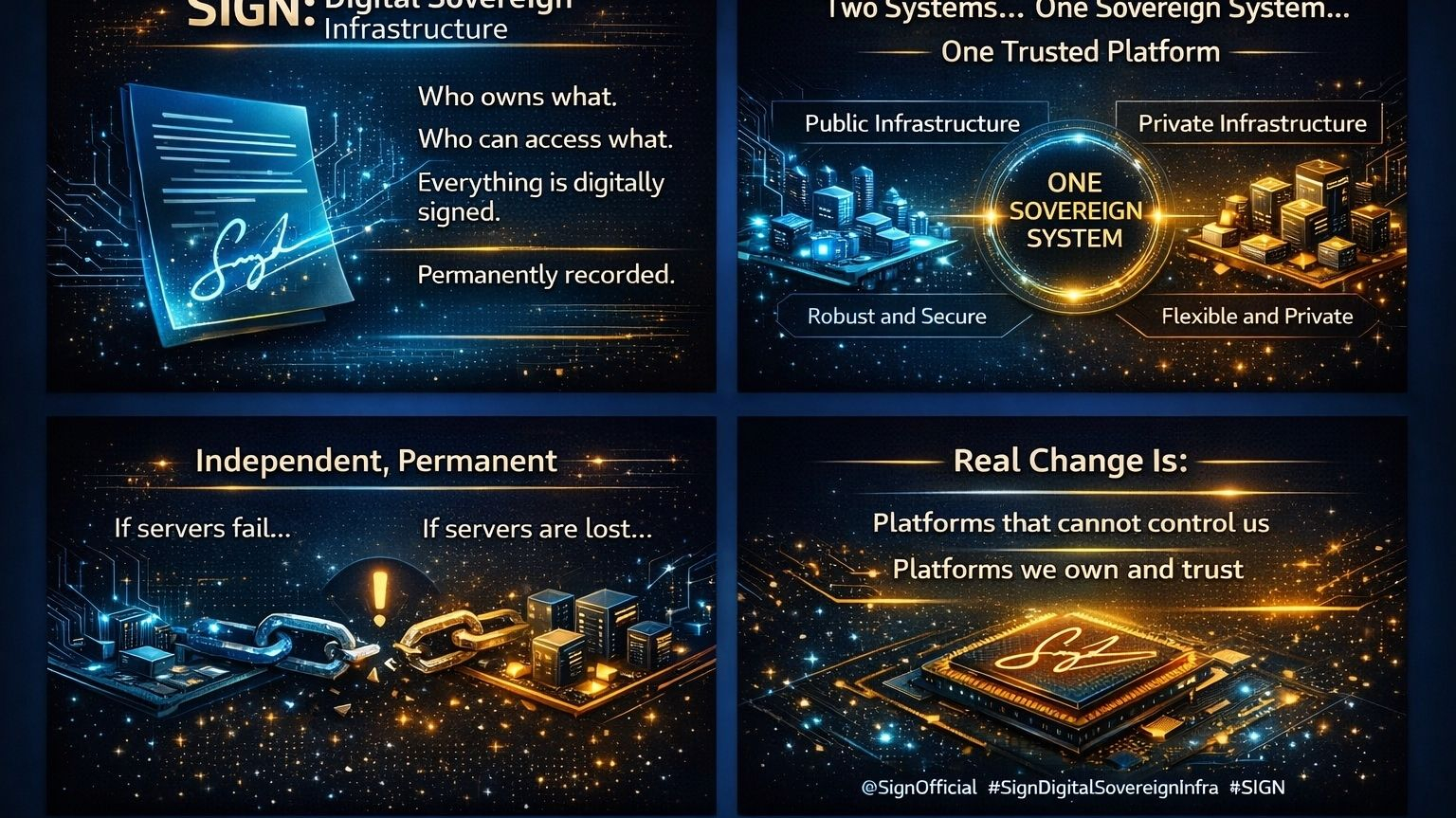
Not two separate systems trying to stay aligned
but one system of truth expressed in two environments.
Public systems focus on being open and verifiable.
Permissioned systems focus on speed, control and privacy.
Both are speaking the same language: signatures.
High throughput starts to make more sense in this way.
If transactions are treated as signed statements rather than heavy computation scaling becomes more achievable.
Systems don't need to do more.
They just need to verify and stay in sync.
Speed isn't the real challenge.
Consistency is.
Because if public and permissioned states ever drift apart trust breaks.
Not because signatures failed,
Because systems failed to agree on what is true.
At the end of the day it's not about chasing speed or optimizing performance.
It's about ensuring that every environment, no matter how fast or controlled shares the verifiable state.
That's where real reliability comes from.
That's why this approach matters.
It doesn't try to reinvent the system.
It simplifies it.
Signed data.
Portable truth.
Verifiable everywhere.
Maybe the real shift is this:
The product isn't the chain.
The product is the signature.
Because a signature is what turns data into a claim
A claim, into something that can be verified shared and trusted across a
ny system.
If we get that right
everything else starts to fall into place.
@SignOfficial #SignDigitalSovereignInfra $SIGN