
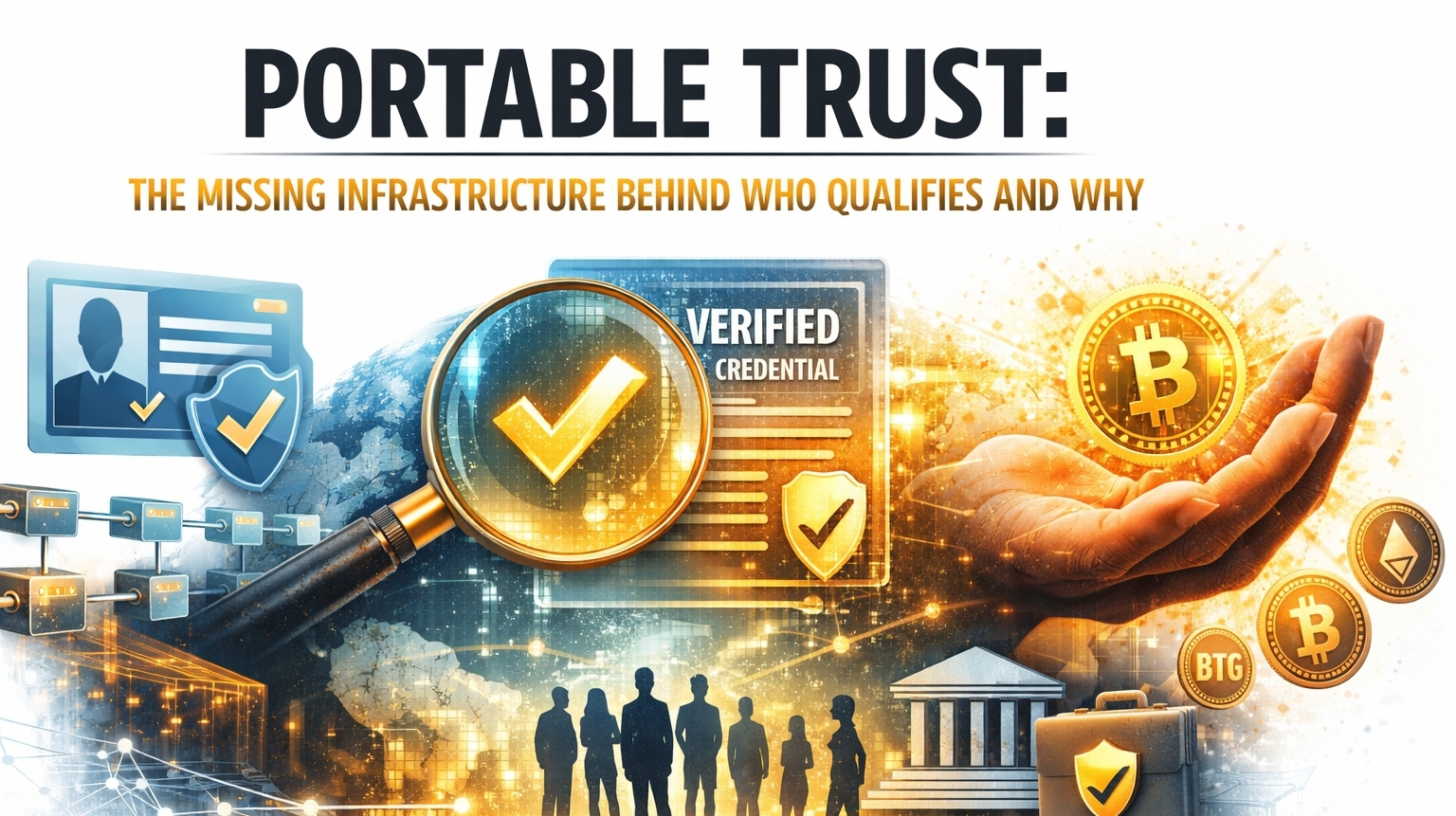

I keep coming back to the same thought when I look at crypto infrastructure: moving value was never the only hard part. Honestly, it may not even be the hardest part anymore. We’ve gotten pretty good at transferring assets, settling transactions, and making wallets talk to chains. What still feels messy is proving who qualifies, what is legitimate, and whether a system’s decisions can actually be trusted after the fact.
That’s why credential verification and token distribution, when they’re built together, feel much bigger to me than they first appear. On paper, it can sound narrow. Maybe even boring. But once you really sit with it, you realize this touches one of the oldest problems in digital systems: trust that can travel.
I’ve noticed that most online systems still work like isolated islands. One platform verifies something. Another platform distributes something. A third platform stores the record. None of them naturally inherit confidence from each other. So users repeat themselves, institutions duplicate checks, and incentives get pushed through workflows that are way more fragile than they look. It works, sure, until scale or complexity exposes the cracks.
That’s where credential infrastructure starts to matter. Not as a flashy feature, but as the layer that turns claims into reusable proof. A credential, in this sense, isn’t just a badge or a label. It’s evidence with structure. Something that can be issued, checked, and referenced without every system starting from zero again. I think that changes the conversation quite a bit.
And token distribution gets more interesting too when it’s tied to verified conditions instead of loose assumptions. Because distribution isn’t just about sending tokens out fast. It’s about whether the right people receive them, under the right rules, with enough transparency that the process can survive scrutiny later. That sounds obvious, but the industry still underestimates how much damage comes from weak eligibility logic.
What I like about this model is that it treats trust as operational. Not emotional trust. Not branding. Real workflow trust. The kind that lets systems coordinate without constantly re-litigating every input. That has implications far beyond airdrops or identity. You can imagine grants, rewards, access control, compliance flows, even public-sector use cases working better when proof is portable and distribution is rule-based.
I’m not saying this solves everything. It doesn’t. The issuer still matters. Governance still matters. Bad inputs can still produce very polished outputs. That part shouldn’t be romanticized. But even with that limitation, I think building infrastructure around verifiable credentials and structured distribution is one of the more serious directions in crypto right now.
A lot of projects talk about scale like it’s only throughput. I don’t buy that anymore. Real scale, at least to me, is when systems can handle complexity without losing legitimacy. And that’s exactly why this category keeps pulling my attention. It’s not just about sending value. It’s about proving why that value should move in the first place.
