
Digital identity has been broken for a long time. In Web2, your identity is spread across different platforms, all controlled by big tech companies. Your information is stored in centralized places that can be hacked or misused. You don’t actually own your identity—you’re borrowing it from platforms that can restrict or take it away whenever they want.
Web3 promised a fix. It brought wallets and anonymous addresses, but that alone doesn’t solve the identity problem. A wallet address doesn’t tell your story or show your credibility.
This is where SIGN makes a difference.
The problem with identity in Web3 today is that it’s scattered and incomplete. People can have multiple wallets and activities both on and off the blockchain, but there’s no reliable way to bring it all together and confirm it.
Projects have trouble answering simple questions like:
Is this person trustworthy?
Do they have real experience?
Have they made meaningful contributions before?
Without a solid identity layer, trust is just a guess.
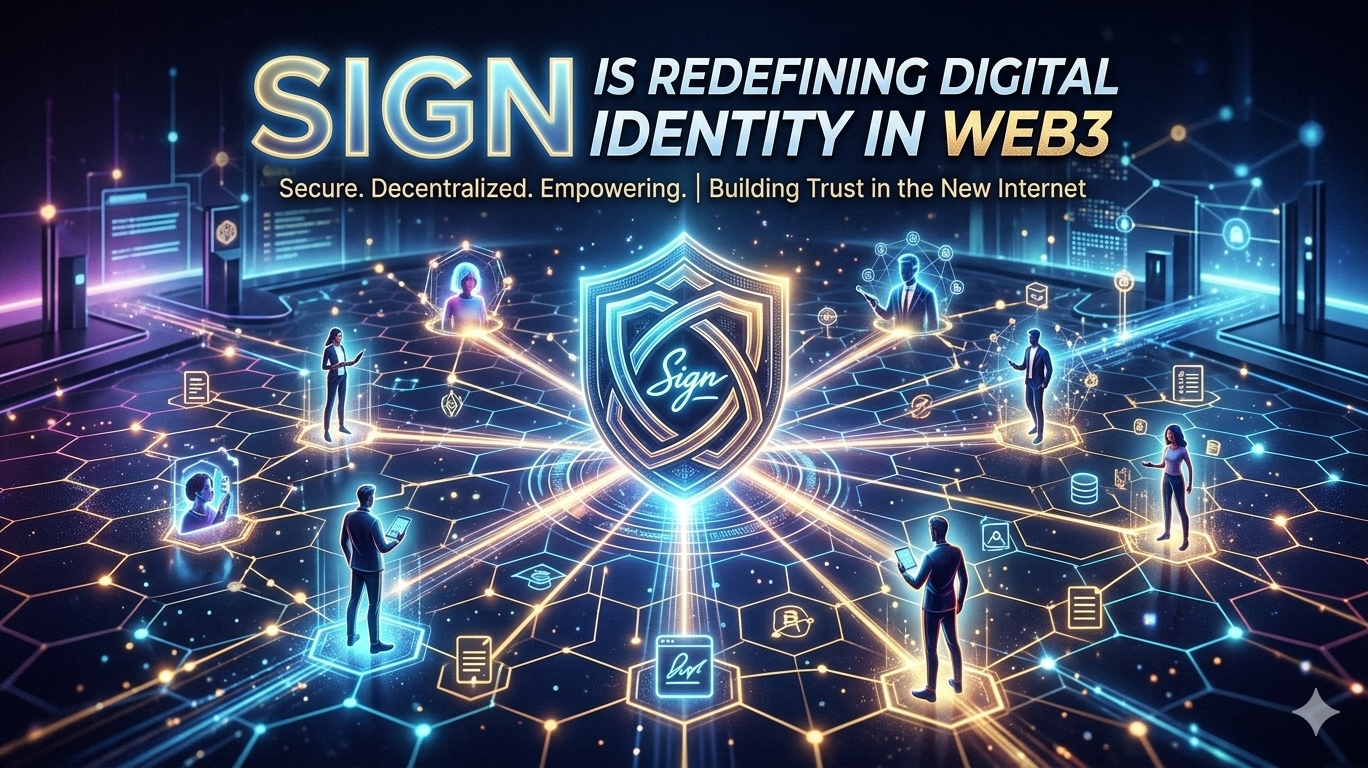
SIGN offers a new approach using attestations.
Instead of depending on one central authority, SIGN lets different groups—protocols, organizations, individuals—issue verifiable proofs about a user. These proofs can show things like:
Participation history
Skills or achievements
Reputation and trust signals
Ownership or connections
Over time, these proofs build a rich, decentralized identity that is:
Flexible—usable across many platforms
Secure—protected by cryptography
Owned by the user—portable and under their control
So your identity becomes a set of trusted proofs, not just a wallet address.
SIGN also removes the need to rely on centralized checks like governments or big companies. Here, trust is built into the data itself.
Anyone can verify a proof without blindly trusting whoever issued it. This creates a system where:
Trust is clear and open
Verification happens quickly
No single party controls your identity
It shifts the idea from trust the platform to check the evidence.
This new way opens up many possibilities in Web3:
1. Smarter rewards and incentives by verifying real activity, not bots.
2. Giving access or roles based on proven contributions rather than guesses.
3. Letting your identity move across different platforms without starting over.
4. Proving things like age or membership without sharing private details.
Why does this matter? Digital identity is the base for trust online. Without it, it’s hard to avoid fraud, fake accounts, and low-quality participation.
SIGN doesn’t just fix identity—it makes it useful. It gives users control, better tools for developers, and helps the whole Web3 world build trust while keeping things decentralized.
Looking ahead, identity will only become more important in Web3. Wallets were just the start. The real next step is identity that shows who you are and what you’ve done.
SIGN is building that foundation.
If it works, the internet could finally move past broken profiles and central control to a place where identity is:
Owned by users
Verified by networks
Trusted as a normal part of the system
SIGN isn’t just changing digital identity in Web3—it’s setting the stage for a more trustworthy internet.
#signdigitalsovereigninfra @SignOfficial $SIGN