
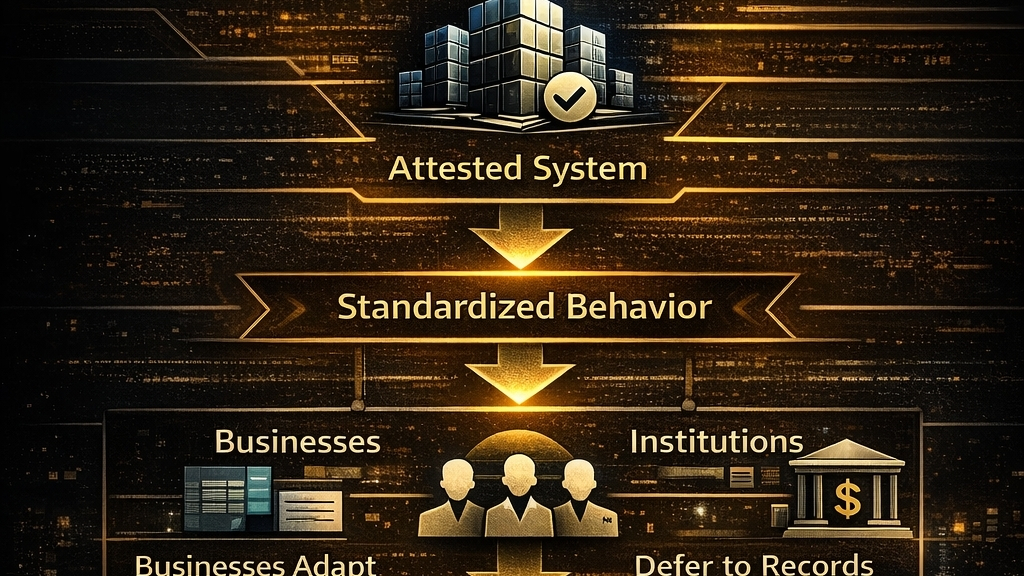

I used to think systems like @SignOfficial and $SIGN were just there to record truth… not shape it.
Simple idea in my head:
something happens → it gets verified → stored → reused.
Clean pipeline.
But the more I think about how something like #SignDigitalSovereignInfra actually plays out in real economies… the more I feel like the real story begins after everything is already verified.
Because once a system becomes the default place where “truth” lives…
people don’t just use it… they start adapting to it.
Businesses don’t just prove compliance… they structure themselves to meet whatever gets recognized by the system.
Institutions don’t just check records… they start trusting the system more than their own judgment.
And slowly, without anyone explicitly deciding it…
the infrastructure starts shaping outcomes.
Especially in regions like the Middle East, where digital transformation is happening fast, systems like this don’t just digitize processes…
they standardize behavior at scale.
That’s the part I didn’t fully see before.
I thought this was about making verification easier.
Now it feels more like deciding what counts as valid in the first place.
And once that layer becomes invisible…
it’s hard to even notice where influence is coming from.
Maybe I’m reading too deep into it,
but when infrastructure becomes the reference point for reality…
does anything outside of it slowly stop mattering?