
Brazil’s gold stash jumped 33% in late 2025 after the Central Bank bought 42.8 tonnes of bullion between September and November, pushing holdings from 129.6 to 172.4 tonnes. The move underscored a clear, steady rebalancing of reserves: from 2022 to December 2025 the dollar’s share slipped each year — from 80.42% in 2022, to 79.99% in 2023, 78.45% in 2024, and finally to 72% at the end of 2025. Gold is now the second-largest reserve asset for Brazil at 7.19% of the portfolio, behind the dollar. The euro makes up 6.60% and the Chinese renminbi 5.94%, with the pound, yen, Canadian and Australian dollars, and South Korean won rounding out the mix. In its March 31, 2026 Annual Report on International Reserves, the Central Bank said it expanded diversification “in light of increasing economic and geopolitical uncertainties,” adding positions in the South Korean won and boosting holdings of gold, euros and renminbi. The report also confirmed that all gold transactions for reserves were carried out abroad. That domestic rebalancing comes amid a broader BRICS push into gold and alternatives to dollar-dominated settlement. BRICS countries together now hold more than 6,000 tonnes of gold — roughly 20–21% of the global total. Russia leads the bloc with about 2,336 tonnes, China about 2,298 tonnes, India roughly 880 tonnes, Brazil 172.4 tonnes after the late-2025 purchases, and South Africa near 125 tonnes. BRICS central banks accounted for over half of global official gold purchases between 2020 and 2024. The bloc is also developing a pilot “Unit” settlement system: a proposed digital currency backed roughly 40% by gold and 60% by local currencies as a potential long-term alternative to dollar-based trade settlements. Analysts cited in the data estimate that sustained gold-price gains could push the value of BRICS gold reserves past their combined US Treasury holdings by 2027–2028. That strategic pivot has played out against political pressure from Washington. President Trump publicly warned BRICS in late 2024 and again in January 2025 — threatening tariffs if the group pursued a dollar alternative — but Brazil kept reducing its dollar share year-on-year and accelerated gold purchases. Still, the dollar remains dominant globally: a Federal Reserve study (July 2025) showed the greenback accounted for 58% of officially declared global reserves in 2024, with the euro at 20%, the yen 6%, the pound 5% and the renminbi just 2%. The Fed noted the dollar’s share is down from historical highs, but no single rival has yet filled its role at comparable scale. Why it matters for crypto and digital finance: a growing, coordinated shift by central banks toward gold and multi-currency digital settlement systems could reshape how international trade is denominated and settled. For crypto markets, that raises new variables — from how tokenized gold and central-bank digital currencies interact with private digital assets, to liquidity and reserve diversification trends that influence safe-haven demand. For now, Brazil’s moves are incremental and carefully documented, but they form part of a wider, policy-level reassessment of the global reserve architecture. Read more AI-generated news on: undefined/news

Articolo
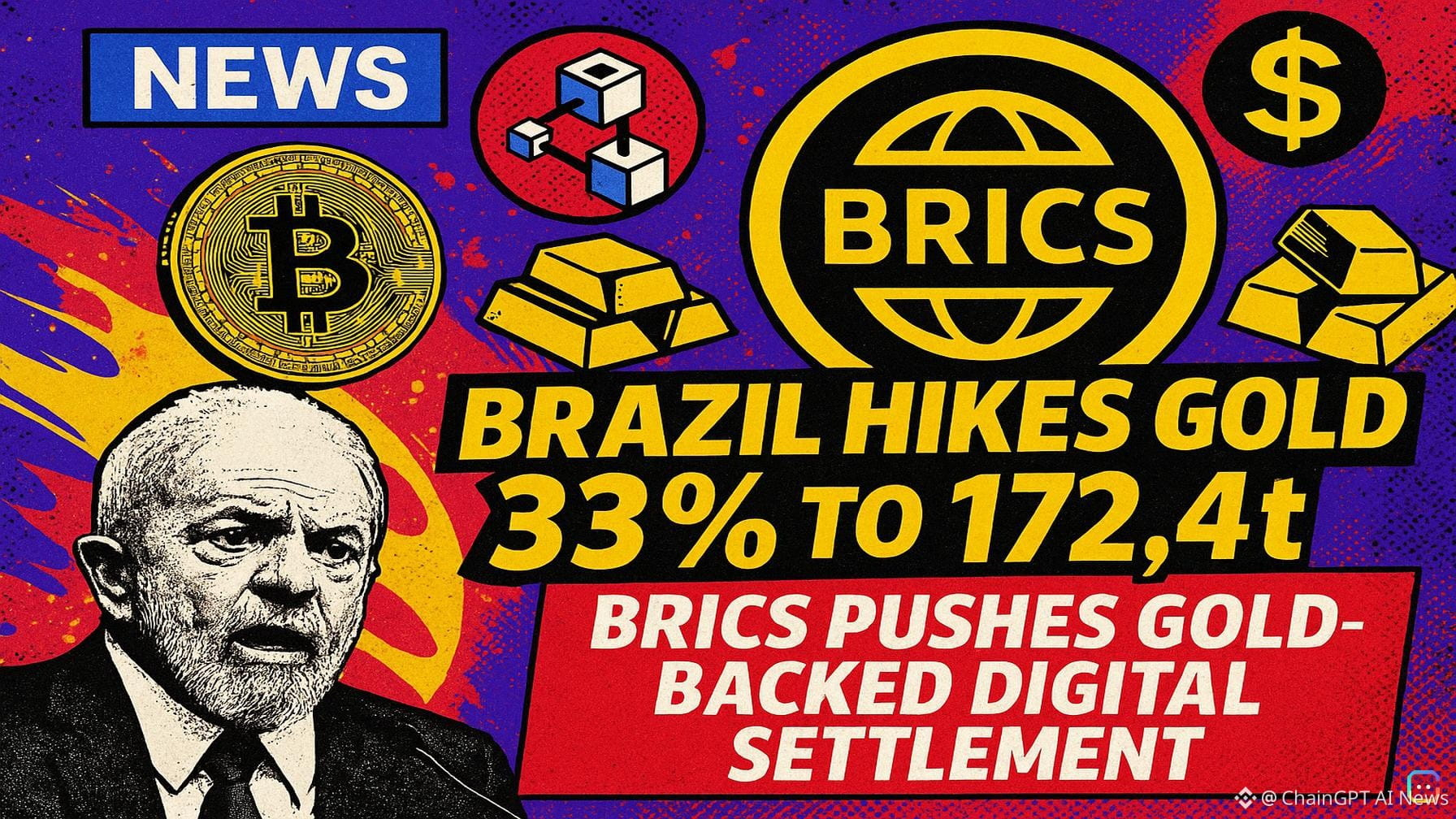
Brazil Hikes Gold 33% to 172.4t As BRICS Pushes Gold-Backed Digital Settlement
Disclaimer: Include opinioni di terze parti. Non è una consulenza finanziaria. Può includere contenuti sponsorizzati. Consulta i T&C.