
Introduction
Let’s cut straight through the noise as trading is not a game of profits only but it’s also game of survival, that might sound dramatic, but pause for a second and think: how many traders come in chasing quick gains, only to disappear just as fast? The charts didn’t defeat them, the market didn’t hate them. They simply didn’t understand one thing deeply enough which is risk.
*The Truth Most People Avoid
Here’s the explosive reality, you don’t control the market, you control your risk, that’s it. You can analyze patterns, follow signals, and stack indicators but none of them guarantee outcomes. The market is influenced by forces far beyond any individual trader’s reach but risk? that’s personal, that’s controllable and that’s your edge. Yet most traders flip the priorities:
~They obsess over entries
~They chase perfect setups
~They ignore exit plans
It’s like walking into a storm with a perfect map but no shelter.
*Risk Is Not the Enemy
Most beginners treat risk like something to avoid and that’s a mistake. Risk is not the enemy, it’s the cost of opportunity, rvery trade carries uncertainty. Without risk, there is no reward but unmanaged risk is exactly where destruction lives. Think of risk like fire. Controlled, it powers engines and left uncontrolled, it burns everything down. So the goal isn’t to eliminate risk, it’s to discipline it.
*The 1–3% Rule: Small Moves, Big Impact
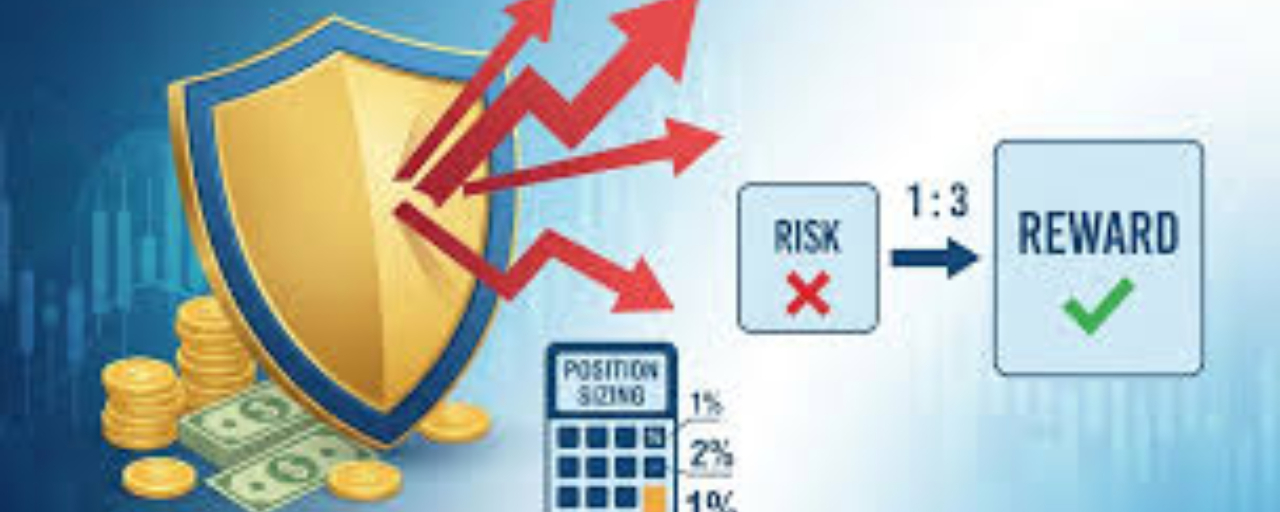
Getting practical, one of the simplest yet most powerful principles in trading is this: Never risk more than 1–3% of your capital on a single trade. Sounds small, right, that’s the point for example:
You have $1,000. You risk 2% per trade = $20. Lose 5 trades in a row and you’re still in the game. Now flip it: Risk 25% per trade, lose 4 trades and its game over. Now ask yourself honestly: Have you been trading to grow or gambling to win fast? because the difference shows up in how you manage risk.
*Stop Loss: The Line You Don’t Cross
Let’s talk about discipline, a stop loss is not just a tool, it’s a commitment. It’s you saying if the market reaches this point, I accept that I’m wrong. No excuses, no second chances but here’s where many traders sabotage themselves as they move the stop loss, they widen it, delay it or sometimes ignore it and why because accepting a loss feels painful but here’s the twist small losses are healthy while big losses are deadly. So would you rather take a controlled hit or a devastating blow?
*The Emotional Trap
Let’s go deeper because trading isn’t just numbers, it’s also psychological.
~Fear whispers: Close early.
~Greed shouts: Hold longer.
~Hope lies: It will come back.
And without risk management, those emotions take control but when your risk is predefined? something changes. Losses feel expected, decisions feel calmer and you act with intention not impulse and that’s the difference between reacting and executing.
*Overtrading: The Silent Account Killer
Now let’s expose another hidden danger which is overtrading, it feels productive, it feels active but it’s often driven by:
~Boredom
~mpatience
~The need to make something happen
And here’s the truth, the market doesn’t reward activity, it rewards precision. Sometimes the smartest move is no move at all.
*The Long-Term Game
Here’s where everything clicks, trading is not about today, not about one win, not about one perfect trade, it’s about consistency over time. Imagine placing 100 trades. Would your current approach survive that journey or would it collapse halfway through? because that’s the real test, professionals think in sequences while beginners think in moments.
*The Hard Truth
The market doesn’t care about your effort, it doesn’t reward hope and it doesn’t adjust to your expectations, it responds to discipline. And discipline, in trading, is built on risk management. Strip everything else away strategies, indicators, signals and one truth remains which is if you can’t manage risk, nothing else will save you. One mistake won’t destroy you but one undisciplined habit will. In trading, it’s never the market that wipes you out; it’s the moment you ignore your own rules and let emotion take the wheel. Control that moment, and you control your future.
*Final Thought: Choose Your Path
Every trader eventually faces this decision, not once but repeatedly. Do you chase profits and risk everything or protect capital and build steadily? One path is exciting but fragile while the other is controlled but powerful and here’s the twist: The traders who last, the ones who grow and the ones who win over time, they’re not the boldest just that they’re the most disciplined.$BTC