
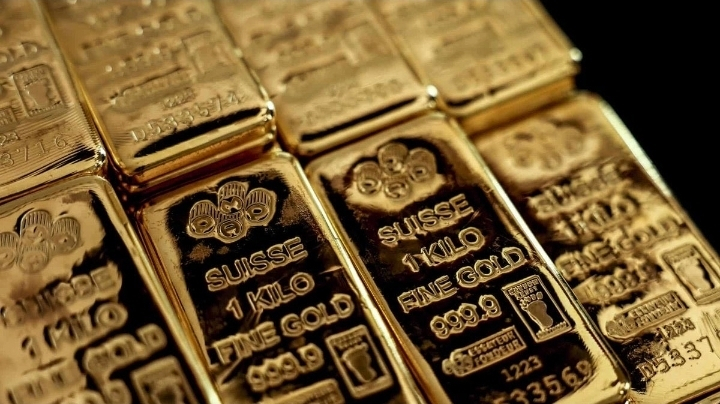
The central banks are doing something the market has not priced. They are buying gold through the war, not despite it.
The World Gold Council confirmed this week that February 2026 was the 23rd consecutive month of net central bank gold purchases. Twenty-seven tonnes added in a single month. Poland bought 20 tonnes, bringing its reserves to 570 tonnes with a target of 700. Uzbekistan added 8 tonnes, now holding 407 tonnes representing 88 percent of its entire foreign exchange reserves. Kazakhstan added 8 tonnes. China added 1 tonne for its 16th consecutive month, reaching 2,308 tonnes. The structural buyers did not pause for the war. They accelerated into it.
Russia sold 6 tonnes. Turkey sold 8 tonnes in February and swapped an estimated 50 to 60 tonnes in March to defend the lira. These are the headlines that financial media uses to write “central bank gold buying slows.” They are wrong. Russia and Turkey are not selling because gold has lost its value. They are selling because the war has drained their fiscal reserves and gold is the only asset liquid enough to convert under sanctions pressure. The sales prove gold’s utility, not its obsolescence.
The 2025 full-year total was 863 tonnes. Down 21 percent from 2024’s record but still the fourth-highest annual total ever recorded and nearly double the 2010 to 2021 average of 473 tonnes. The WGC’s 2025 Central Bank Gold Reserves Survey received 73 responses, the highest in its history. Ninety-five percent of respondents expect global official gold reserves to increase over the next 12 months. Forty-three percent plan to increase their own holdings. Zero percent expect reductions. Not one central bank on earth told the WGC it plans to reduce its gold position.
Now connect this to what happened at Hormuz today. The IRGC is charging one dollar per barrel in yuan or cryptocurrency. No dollars accepted. The IMF’s latest data shows the dollar’s share of global foreign exchange reserves fell to 56.77 percent in Q4 2025, the lowest since 1994. BRICS nations now hold over 6,000 tonnes of gold, representing 17.4 percent of all central bank gold worldwide, up from 11.2 percent in 2019. India has proposed linking BRICS central bank digital currencies at the 2026 summit. China and Russia settled $244 billion in bilateral trade entirely in yuan and rubles.
Gold sits at the intersection of every one of these forces. It is the only reserve asset that carries no counterparty risk, no sanctions exposure, no SWIFT dependency, and no political alignment. When a central bank holds dollars, it holds an asset that the United States can freeze. When it holds yuan, it holds an asset that China can manipulate. When it holds gold, it holds an asset that no government can confiscate, devalue, or weaponise without physical possession. The war proved this in real time. Turkey sold gold to defend its currency and the gold performed exactly as designed: it converted to liquidity under extreme stress without requiring permission from Washington or Beijing.
JPMorgan targets $6,300 by year end. Goldman Sachs reaffirmed $5,400. Wells Fargo raised to $6,100 to $6,300. Gold closed at $4,723 on April 8. The correction is 9 percent from the January highs. The structural floor is 863 tonnes of annual central bank demand and a Hormuz toll booth that charges in yuan.
The war did not weaken the gold thesis. It is the gold thesis.


#IranClosesHormuzAgain #TrumpDeadlineOnIran #MorganStanley'sBTCETFSetToLaunch #MarketRebound #PolygonFunding