
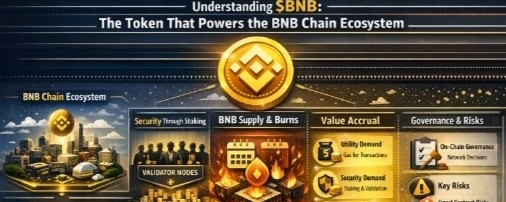
When I think about BNB, I don’t really see it as just another cryptocurrency. It feels more like a “background system” quietly powering a lot of what happens inside the Binance ecosystem. It started as a simple fee-discount token, but over time it has grown into something much bigger—and that evolution changed how I see it.
At its core, what BNB really does is reduce friction. In blockchain and digital systems, there are always small inefficiencies—fees, liquidity issues, fragmented tools. BNB smooths a lot of that out. Once you’re inside the ecosystem, everything just works without you thinking too much about it. That “it just works” feeling is honestly one of its biggest strengths.
When I think about real-world use cases, I don’t see BNB as the main character—it’s more of a supporting layer. Take healthcare, for example. If hospitals and labs need to share data securely, privacy is the priority. BNB wouldn’t handle the privacy itself, but it could help with payments, logging access, and automating processes. Basically, it helps the system run smoothly.
The same idea applies to AI workflows. When dealing with sensitive data, people want to contribute without losing control. In that kind of setup, BNB could be used for microtransactions, rewarding contributors, or coordinating decentralized efforts. It’s not the privacy solution, but it makes the economics work.
One thing I personally notice is how easy BNB is to use. You don’t have to overthink it—it works across multiple use cases. It reminds me of cloud platforms, where developers don’t build everything from scratch because the infrastructure is already there. That readiness and liquidity are what make BNB powerful.
That said, it’s not perfect. My biggest concern is centralization. Since BNB is so closely tied to Binance, I sometimes question how resilient it really is. If regulatory pressure hits the company, the entire ecosystem could feel the impact. In areas like healthcare or AI, where trust matters a lot, that dependency can be a real issue.
Another thing is that BNB isn’t built for privacy. Compared to newer blockchain projects focused on zero-knowledge proofs or confidential computing, BNB feels more like a general-purpose tool. That’s not necessarily bad, but it does mean it might not be the best fit for highly sensitive use cases.
Looking ahead, I think BNB’s future depends on how well it adapts. If it can maintain its usability while improving decentralization and aligning with stronger privacy needs, it can stay relevant for a long time. But if it remains too tied to a single centralized entity, it could face challenges as the industry evolves.