
How the ability to freeze an asset is changing the game for the crypto world
Introduction (The Hook)
The crypto community faces yet another harsh reality: all "on-chain" assets may not be entirely permissionless.
The renewed interest in the #usdcfreezedebate has made many investors aware of the issues associated with centralizing stablecoins—especially the possibility that issuers of centralized stablecoins may freeze funds whenever they want. From traders to crypto builders, everyone needs to ask themselves this one million-dollar question:
Can I really possess an asset that someone else can freeze at any time?
This debate matters today since stablecoins form the foundation of Web3 financial applications in terms of capital protection, risk management, and liquidity. Moreover, their design can create risks that can affect the whole crypto ecosystem.
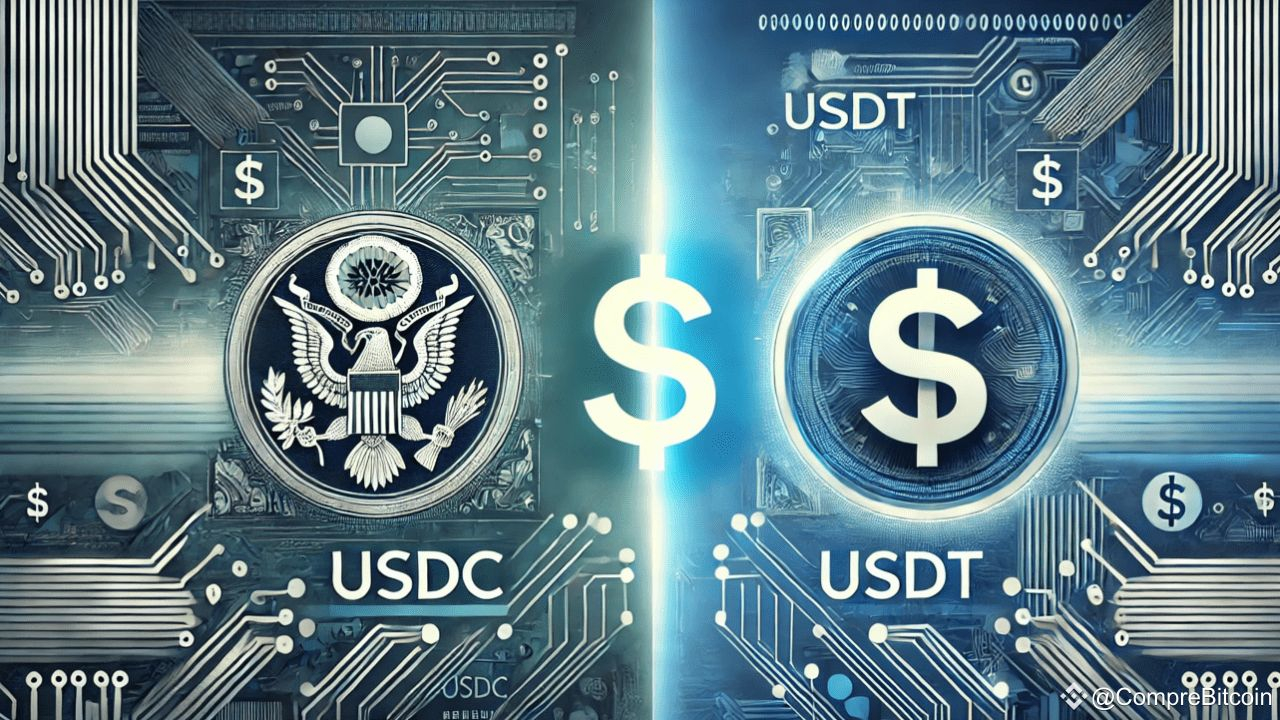
Core Thesis (The Value Proposition)
Beyond USDC, the debate about freezing rights highlights the need to redefine the concept of "trust" in cryptocurrencies.
What we see here is a shift in the stablecoins market:
From efficiency-first to sovereignty-first
It may not be black and white, but there is always a spectrum to explore.
Problem Statement (The Friction)
Web3 Bottleneck: Limited Ownership
Centralized stablecoins bring with them one paradox:
You possess an asset, but not its end-state.
Pain Points
Censorship: The asset holder has no say in whether the funds should be frozen.
Counterparty Risks: Decisions are taken by the issuer outside of chain governance.
Liquidity: If funds are frozen, it can affect liquidity of DEXes and DeFi pools.
Regulation: A change in policy may limit use and transfer of funds.
Why current solutions fail:
Fully centralized stablecoins lack decentralization.
Fully decentralized stablecoins often have issues with scaling and liquidity.
The result is the need to choose between the following:
Security vs. Sovereignty
Liquidity vs. Control
Technology Stack (Clarity & Proof)
Asset freezing mechanism
How it works: Centralized stablecoins (e.g., USDC) have smart contract capabilities that enable freezing of assets for specific addresses.
What it brings:
Regulatory compliance
Non-neutral money behavior
Off-chain reserve-backed collateral system
How it works: USDC is fully backed 1:1 by fiat money and Treasury bills stored offline by a centralized entity.
What it brings:
Great price stability
Requires trust in custodians and audits
Permission-based governance layer
How it works: Decision-making process includes freezing of assets and updating contracts done by a single entity.
What it brings:
Speed in addressing issues
Single-point-of-failure risks
On-chain transparency layer
How it works: All transaction information and balance data is recorded on chain.
What it brings:
Improved transparency of transactions
Does not solve control issues
Addressing Users' Anxiety (The Security Layer)
The main worry of every user who holds stablecoins is pretty straightforward:
"What if my funds will be frozen?"
The following is currently in place to reduce anxiety:
Publicly available blacklist
Correspondence with the regulation framework
Smart contracts audit by third parties
The reality is that, in this case:
Your funds are safe, provided that you understand the jurisdictional nuances
It means that:
Your safety is regulated rather than coded
Distribution Strategy
Centralized stablecoins gained popularity because of:
Listing on exchanges that provides liquidity
Partnerships with institutions, including payment processors
Cross-border utility in settlement and remittances
This is deliberate: centralized stablecoins prioritize:
Regulatory friendliness
Ease of integration into fiat ecosystem
User experience
Historical Context & Evolution
Stablecoins evolution was characterized by distinct stages:
Dominance of fiat-pegged (USDT, USDC)
Early attempts at algorithmic pegs
Development of hybrid models (collateralized and off-chain)
The current debate on freezing assets is the next phase when users are starting to wonder:
Is it stable enough?
Instead of wondering if the asset is stable enough, it is time to think about whether you really possess it.
"Aha" Moment
The risk is not in whether stablecoins are able to freeze the assets, but whether the market prices stablecoins as something that is not vulnerable to such attacks.
Speculator/Builder Checklist (Next 3-6 Months)
Watch out for the following:
Liquidity increase of decentralized stablecoins
Emergence of new hybrid models
Increased transparency tools
Regulatory changes that impact the issuer's decisions
Increasing diversification of collateral in DeFi#Write2Earn