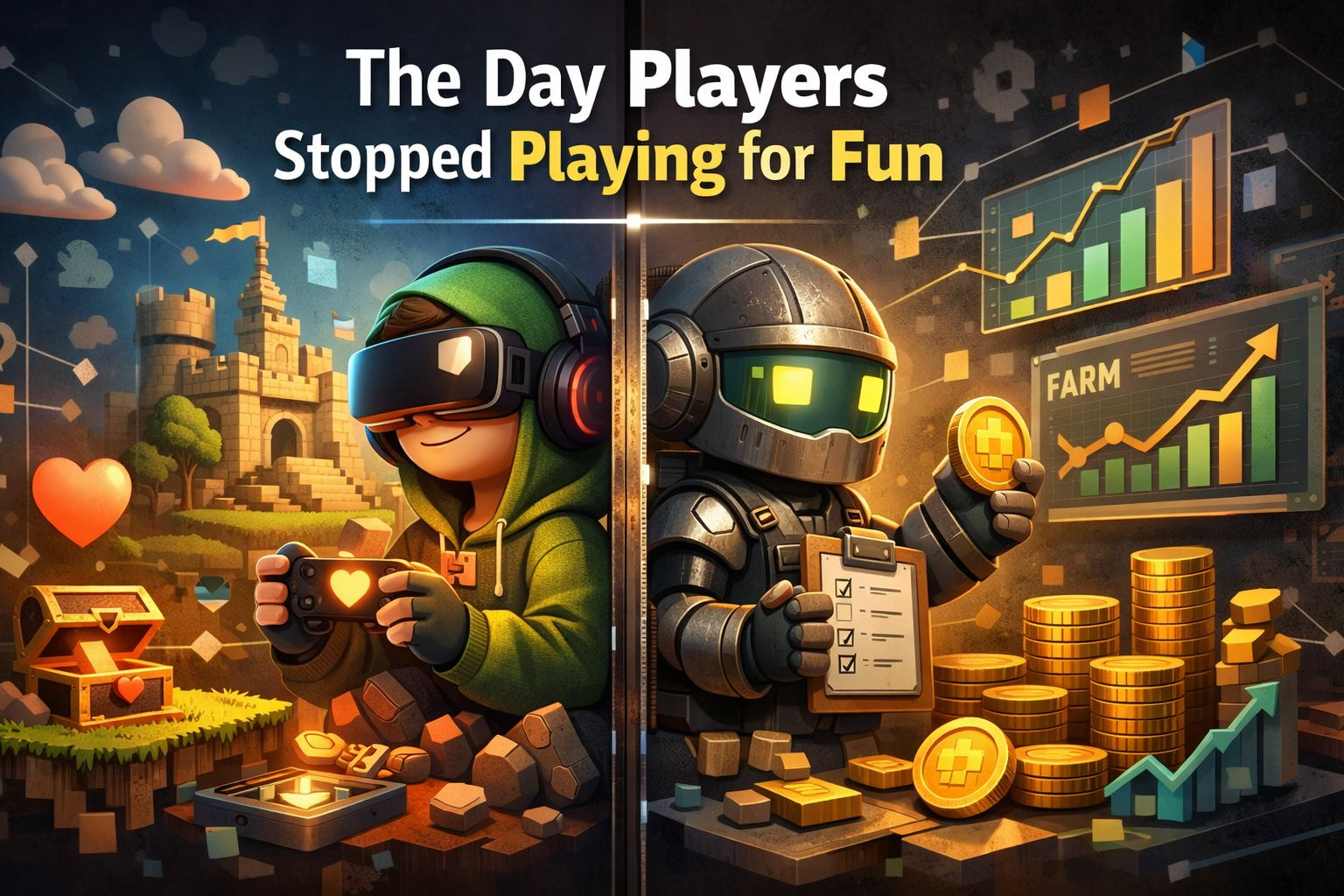
Something feels off. Games look more alive than ever… but players feel more calculated.
Here’s the hidden problem: when rewards enter games like PIXEL, behavior quietly shifts from exploration to optimization. People don’t play to enjoy, they play to extract. And slowly, the game becomes a system to “work,” not experience.
You can already see it. New players ask “how to earn fast?” before they even understand the game. Creators push farming strategies instead of sharing moments. The economy grows… but the soul of the game starts thinning.
This matters more than it looks. Because if every player starts acting like a mini-economist, then gameplay design must constantly fight exploitation. Balance becomes harder. Inflation creeps in. And suddenly, sustainability is not about fun — it’s about controlling behavior.
PIXEL is not just building a game economy. It is quietly testing whether incentives can coexist with genuine engagement.
If it succeeds, it proves something big: that people can earn without losing the reason they started playing.
If it fails, we learn a harder truth:
The moment everything becomes profitable, nothing feels meaningful anymore.