
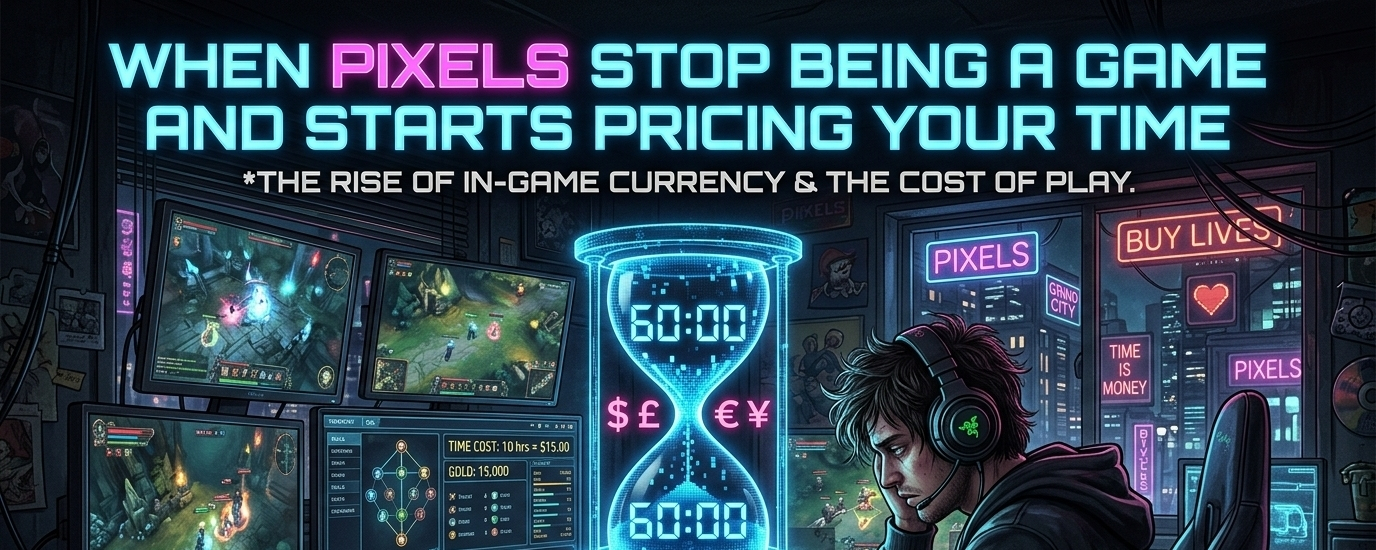
There is a moment in Pixels where the vibe quietly shifts. At first it feels like a laid back farming loop plant a few crops check in later maybe decorate your land a bit. Nothing urgent nothing heavy. Just a cozy routine you can slip into after a long day.
But then the task board starts to matter.
I remember the first time I noticed it. Not in a dramatic way just a small realization creeping in. The rewards on the board were no longer just optional side goals. They started to feel like signals. Little price tags attached to my time. And suddenly the game did not feel quite as casual as it did on day one.
At its core Pixels still looks simple. Grow crops gather resources complete tasks. But once those tasks are tied to token rewards everything shifts slightly. It is not just about progress anymore. It becomes about efficiency.
I have noticed that players begin optimizing faster than they expect. Routes get tighter decisions get sharper. You stop asking what do I feel like doing and start asking what is worth doing right now. That is a subtle but powerful change.
The task board acts like a mini marketplace without looking like one. It tells you what the game values at that moment. If wood tasks are paying more players move to wood. If farming tasks spike everyone adjusts. It feels organic but underneath it is pure market behavior.
From my perspective this is where Web3 games reveal their real nature. They are not just games. They are systems where time effort and attention get priced in real time.
And it is not always obvious at first.
One thing that stood out to me is how quickly this affects player mood. When rewards feel good the game feels smooth almost relaxing. When they drop or competition rises you can feel a slight tension. Not stress exactly but a sense that you should be doing something more optimal.
It reminds me a bit of yield farming during peak DeFi days. Back then you would move funds around chasing better returns. Here you move your character instead of your capital but the mindset is strangely similar.
Pixels does something interesting though. It wraps all of this in a soft cozy layer. Bright visuals simple mechanics calm music. So the economic pressure does not hit you all at once. It builds gradually.
Some players lean into it. They treat the game like a strategy loop maximizing every action squeezing value out of each session. Others pull back and try to keep it casual ignoring the board as much as possible.
But even if you ignore it you still feel it in the background.
That is the part I find fascinating. The task board does not force you to play differently. It just nudges you. Quietly. Repeatedly.
It feels like a reflection of the broader crypto space. We often enter projects for fun curiosity or experimentation. Then incentives appear and behavior changes. Not because we are told to change but because the system rewards it.
I have also noticed how this creates small cycles inside the game. Certain tasks get crowded then less rewarding then players rotate out. It is almost like watching mini market rotations happen in real time just on a much smaller scale.
And honestly it makes the experience more engaging. Not necessarily more fun in a traditional sense but more dynamic. You are not just playing a loop you are reacting to a living system.
At the same time it raises a question. How much optimization is too much before a game stops feeling like a game.
Because once your evening session starts to feel like checking charts or managing positions the cozy layer begins to thin out.
I do not think Pixels crosses that line completely. At least not yet. But it definitely walks close to it.
In a strange way that might be its biggest strength. It shows how easily casual gameplay can blend with real economic signals without breaking immersion right away.
For crypto users this feels familiar. We are used to systems where incentives shape behavior. Pixels just brings that into a softer more approachable environment.
Stepping back it makes me think about where Web3 gaming is heading. If more games adopt this model we might see a new kind of player emerge. Someone who is not just playing for fun or earning for profit but constantly balancing both without fully separating them.
And maybe that is the real experiment here.
Not whether games can reward players but whether players can stay casual once those rewards start quietly pricing their time.