
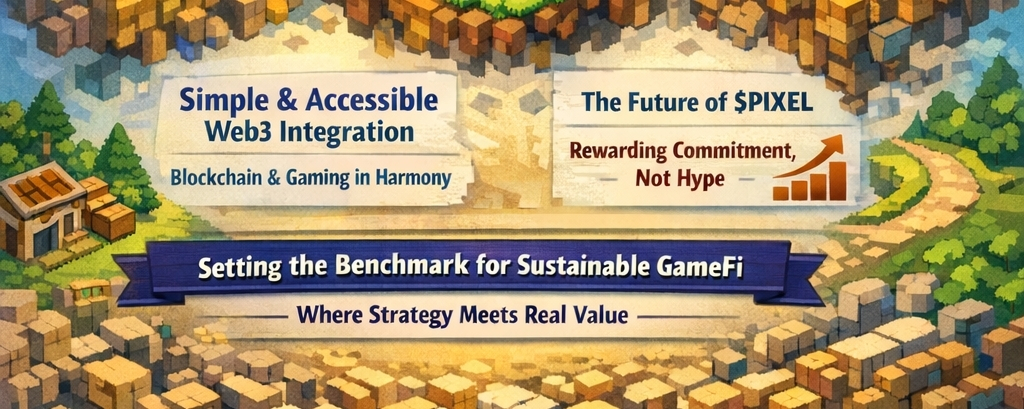
The evolution of @Pixels is becoming a key case study in how GameFi can move beyond short-term hype into something more sustainable. With $PIXEL EL, the focus is no longer just on playing a game—it’s about participating in an economy where your time, strategy, and consistency can translate into real value.
What stands out most is the Staked ecosystem. Instead of relying purely on new players entering the system, Pixels is building a loop where users can commit their $PIXEL and stay engaged over time. This creates a stronger connection between gameplay and long-term holding, reducing the typical “play and dump” cycle seen in many GameFi projects.
The idea of staking within a game environment adds a deeper layer of purpose. Players are not just farming resources—they are contributing to an ecosystem that rewards patience and participation. If done right, this model could improve token stability and create a more balanced in-game economy.
Another important aspect is how Pixels blends simplicity with blockchain mechanics. Many projects fail because they overcomplicate the experience, but Pixels keeps it accessible while still integrating Web3 elements like staking and rewards. That balance is critical for attracting both casual gamers and crypto-native users.
Looking ahead, the success of $PIXEL L will likely depend on how well the team continues to refine the staking model and maintain player incentives. If they can align rewards with actual ecosystem growth rather than inflation, Pixels could become a benchmark for sustainable GameFi design.
@Pixels Pixels is not just building a game—it’s experimenting with a new kind of digital economy where engagement and value go hand in hand.