
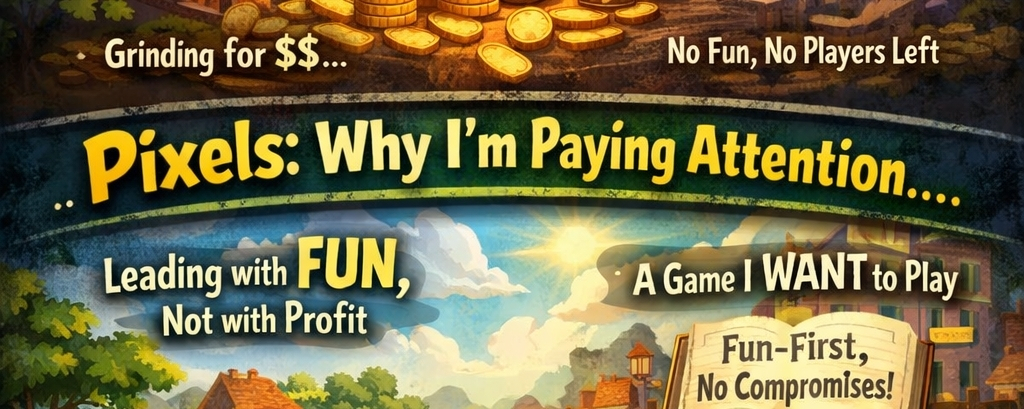

Let me tell you something I've never really said out loud before.
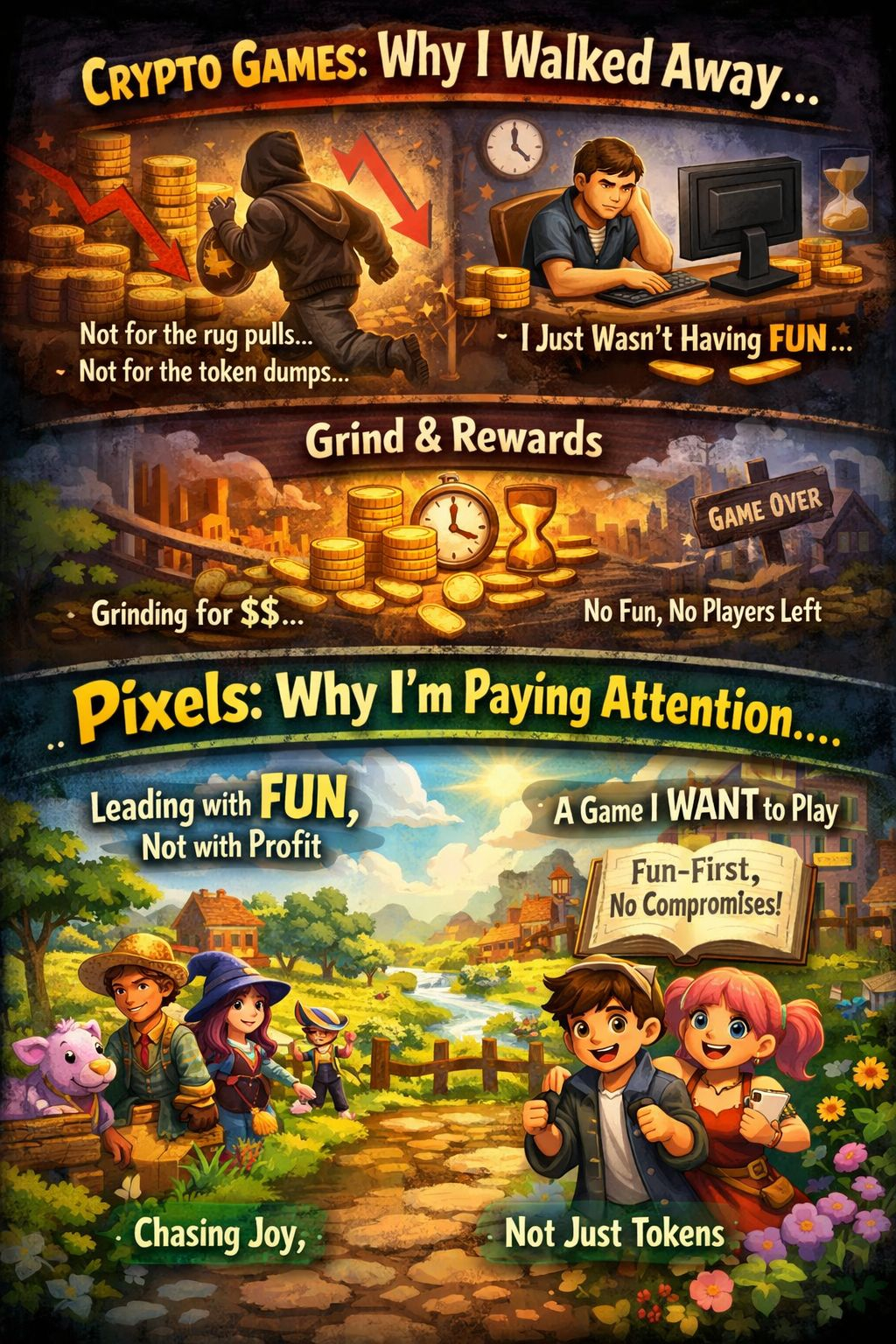
Every time I've walked away from a crypto game — and I've walked away from more than I can count — I told myself it was because the token dumped, or the team rugged, or the hype died. But if I'm being completely honest with myself, the real reason was simpler than any of that. I just wasn't having fun. And I think I knew that from day one. I just didn't want to admit it because the money made me stay longer than I should have.
That's the trap. That's always been the trap.
What "Fun-First" Actually Means to Me
When I hear "fun-first," I don't think about game design theory or product frameworks. I think about a very specific feeling — the feeling of losing track of time.
You know that moment when you're so deep into something that you look up and two hours have passed and you didn't even notice? That's what fun actually feels like. It's not something you calculate. It's not something you optimize for. It just happens when the experience in front of you is genuinely worth your attention.
That feeling has been almost completely absent from every crypto game I've ever played.
Instead, what I got was a different kind of time loss — the kind where you're grinding through something boring because you're telling yourself the reward at the end justifies the pain in the middle. That's not fun. That's just delayed gratification dressed up as a game. And the moment the reward starts feeling uncertain, the whole thing falls apart instantly.
Real fun doesn't need a financial incentive to keep you there. Real fun is the incentive.
Where Most Crypto Games Got This Wrong
I've thought about this a lot, and I think the fundamental mistake most projects made was building the reward system before building the game. They started with tokenomics and worked backwards into gameplay. So what you ended up with was a financial product that had game-like visuals on top of it — but nothing underneath that would make you want to stay if the money disappeared.
And here's the brutal reality: the money always disappears eventually. Token prices fall, early players exit, the economy deflates, and suddenly the only people left are the ones who genuinely enjoy the game. If you never built something genuinely enjoyable, you have nobody left.
The games that last — the ones that people are still playing ten years later — are the ones where the fun came first. The monetization came after, and it worked because people already loved being there.
Why Pixels Actually Makes Me Pay Attention
I'm not someone who gets easily excited about new projects anymore. That optimism got worn down through too many disappointments. But when I read through the Pixels whitepaper, something about it felt different — not because of the tech or the token mechanics, but because of the language they used.
They led with fun. Not with yield. Not with APY. Not with token burns or staking rewards. Their very first pillar is the acknowledgment that a game has to be genuinely enjoyable before anything else can work. They said it plainly — games need to be fun, and that's hard to execute but non-negotiable.
That one sentence carried more self-awareness than most whitepapers I've read in their entirety.
What also stood out to me is that they're not just saying "fun-first" as a marketing line. They're backing it with a data-driven system that tracks which player actions create real long-term value — meaning they're trying to understand what genuinely keeps people engaged, not just what triggers short-term activity spikes. That's a completely different question than most projects are even asking.
The Honest Part
I still don't know if Pixels will get it right. Saying the right things and building the right things are two very different challenges, and this space is full of projects that had the right ideas and still failed to execute.
But what I do know is this — every game I've ever stayed with for more than a year, I stayed with because it was fun. Not because it paid me. Not because my friends were making money on it. Because I genuinely looked forward to being in that world.
That's the bar. It's simple and it's high and almost nobody in crypto gaming has cleared it.
Pixels at least knows what the bar is. That's further than most have gotten.
And right now, that's enough to keep me watching.