
Most Web3 gaming "investors" are chasing payouts without ever understanding the actual product. Think of the Restaurant Analogy: You go to a high-end restaurant for the exceptional food and carefully curated experience. If they started offering cashback on every meal but the food became inedible, you’d stop visiting the moment the subsidies ended.
Web3 gaming has repeatedly failed because it tried to sell “cashback” (yield) without serving any real “food” (fun). Players were treated as treasury liquidators rather than participants in a living ecosystem. Pixels has flipped this script by adopting a strict Fun-First Mandate recognizing that tokens are a utility, not a replacement for a genuinely compelling core loop.
Tech Alpha: Tiered Industries and Retention Logic
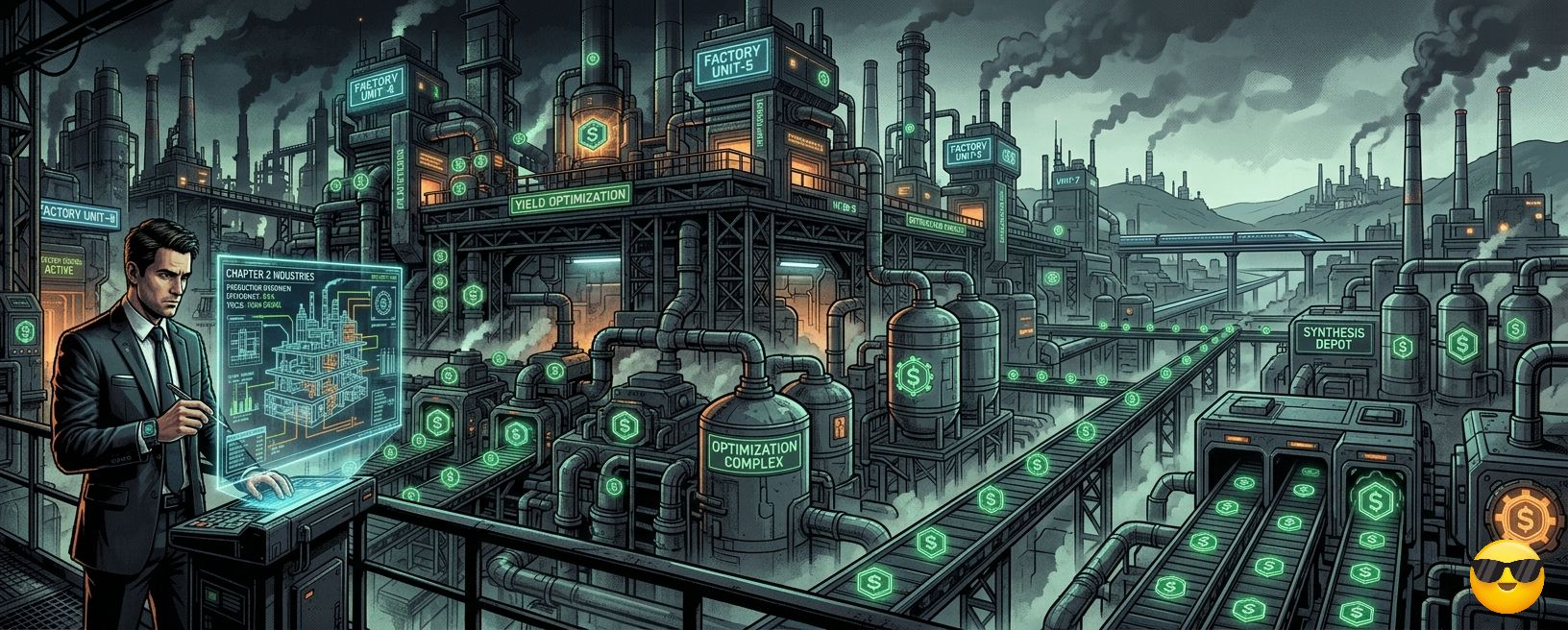
The shift toward Sustainable Retention isn’t about flashy marketing; it’s rooted in the mechanics of play itself. With the launch of Chapter 2, Pixels completely overhauled its Economic Loops through deep tiered industry systems.
We’re no longer just planting seeds. Skills like Stone Shaping, Metalworking, and Woodworking now include over 100 new recipes, creating a rich, layered supply chain that demands real strategic thinking.
This added complexity builds genuine Value Perception. Players must manage Resource Scarcity and progress through tiered upgrades taking “Specks” from Tier 1 all the way to Tier 5 to unlock high-value production. The gameplay itself becomes the main reason to stay. It’s no longer about clicking for an airdrop; it’s a sophisticated simulation where $PIXEL serves as the premium hard currency for status and convenience.
By following the proven “Gems” model from hits like Clash of Clans, $PIXEL is used to speed up construction, unlock exclusive skins, and access rare crafting recipes acting as the lubricant for a machine players actually enjoy running.
Reality Check
The biggest threat to this model is the Content Treadmill. Even the strongest economic loops will collapse into Game-Fatigue if the team stops shipping meaningful updates. The arrival of Chapter 3’s “Bountyfall,” with new features like Unions and Yieldstones, helped keep the meta fresh but this growing complexity is a double-edged sword.
If the barrier to entry climbs too high or if narrative content fails to evolve alongside the economic systems, Pixels risks turning industrial management into “digital labor” instead of entertaining gameplay.
The Verdict
The logic is straightforward: If the game isn’t worth playing without the token, then the token isn’t worth holding.
Pixels stands out as one of the few projects that successfully moved from a speculative farming game (BERRY) to a utility-driven economy ($PIXEL) backed by real revenue over $25M generated to date. By prioritizing Sustainable Retention through deep industrial mechanics and social reputation systems, they’ve created a digital world where the token actually has a purpose.
Stop hunting for yield in a vacuum. Look for the “food” that keeps players coming back to the table.