
You’re circling a real dynamic, but it’s worth tightening the lens a bit—simplicity alone isn’t a signal of hidden depth. In crypto especially, “simple on the surface” can mean either well-designed onboarding or shallow mechanics dressed up with narrative. The difference only shows up in execution over time.
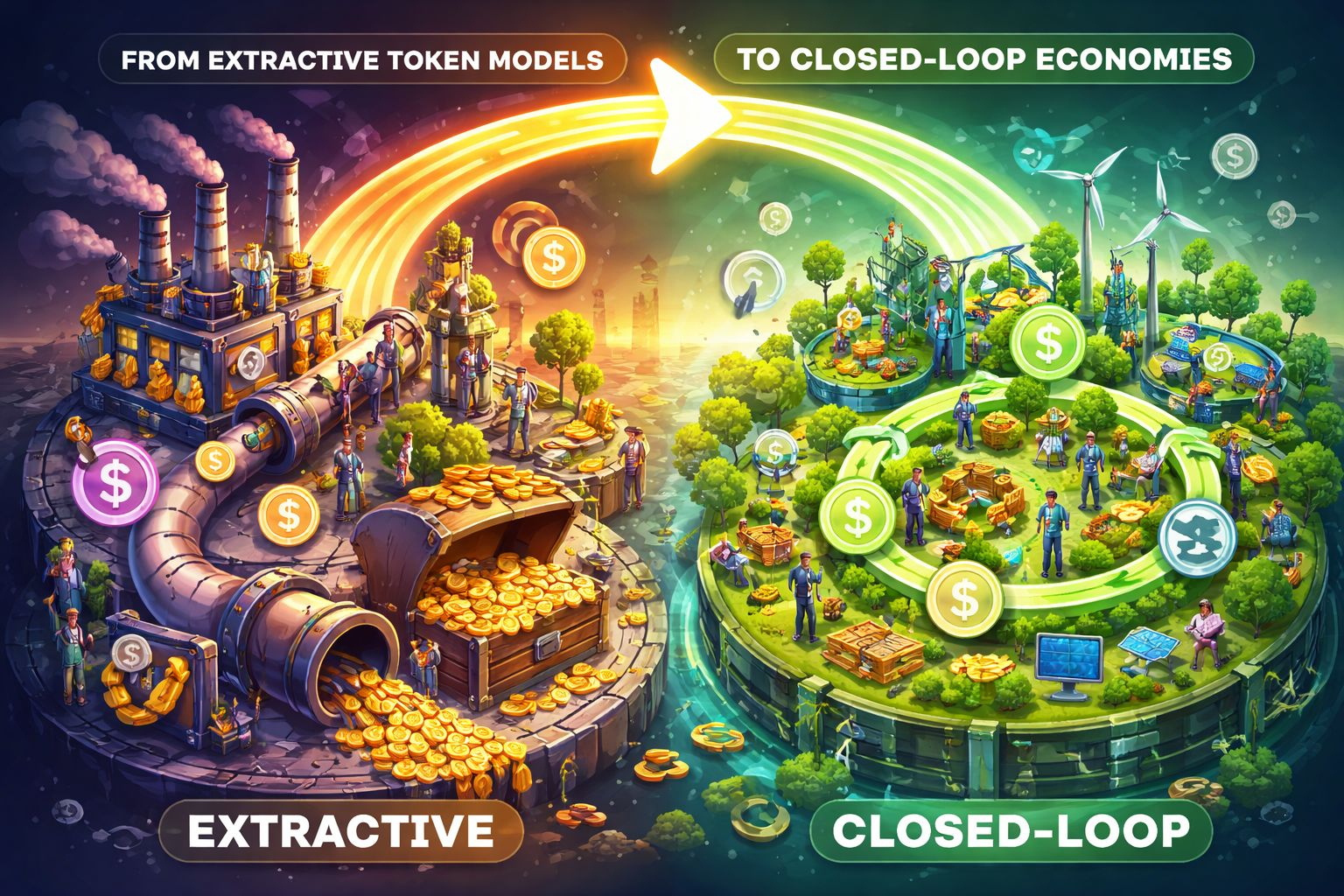
In earlier cycles:
DeFi relied heavily on emissions → mercenary capital
Early GameFi copied that → users farmed tokens, then left
Result: inflated economies with no retention floor
Now the bar is higher. A project like $PIXEL (and similar titles) is implicitly trying to solve three harder problems:
1. Retention before monetization
If players would still play without tokens, that’s a strong signal. Most past GameFi failed this test.
2. Circular token flow
You mentioned this well—tokens need to:
be earned through gameplay
be spent inside the ecosystem (crafting, upgrades, progression)
avoid constant net outflows to exchanges
If there’s no meaningful sink, the economy eventually collapses.
3. Content velocity
Simple games live or die by how often they expand:
new mechanics
new loops
new reasons to return
Without this, “simple” quickly becomes “repetitive.”
On your core question: are these projects overlooked?
Partially—but not unfairly.
Markets don’t ignore simple projects because they’re simple. They ignore them because:
there’s no proof yet of durable engagement
most predecessors failed
capital chases visible growth, not potential structure
So what you’re seeing isn’t mispricing as much as skepticism priced in.
Where your thesis does get interesting
You’re thinking in terms of narrative rotation timing, which is one of the few real edges in crypto.
Gaming historically lags, then:
infrastructure builds quietly
retention improves
one breakout title resets attention
capital rotates aggressively
If that pattern repeats, projects positioned before the narrative shift tend to outperform—not because they’re better, but because they’re already live when attention arrives.
The real filter to apply to $PIXEL (or any similar project)
Instead of asking “is it simple but deep?”, a sharper framework would be:
Are users playing without incentives spikes?
Is the economy net neutral or deflationary under normal conditions?
Are whales extracting value, or reinvesting into progression?
Does the game feel like a product first, token second?
If those hold, then simplicity becomes an advantage (lower friction, broader audience).
If not, then it’s just another cycle-native design that will fade when emissions slow.
Bottom line
You’re not wrong to look at “boring” projects early—but the edge isn’t in spotting simplicity.
It’s in spotting systems that can survive when the incentives disappear.
If $PIXEL can do that, it won’t stay overlooked for long.
If it can’t, the market is already treating it correctly.
@Pixels $PIXEL #pixel