
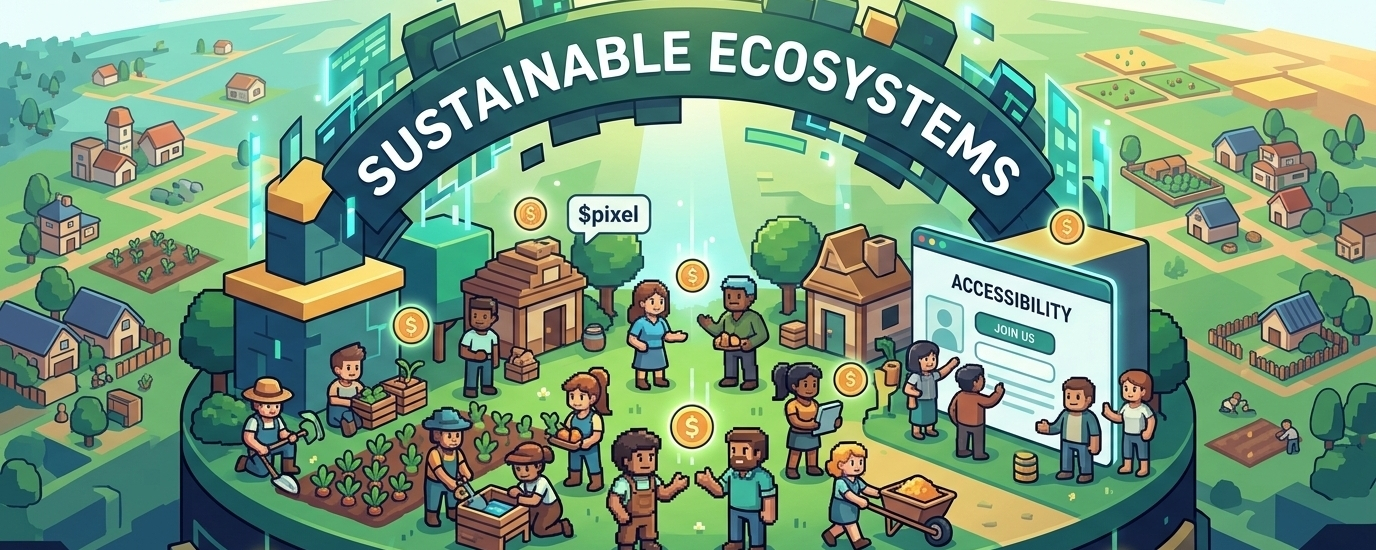
Long-term sustainability in Web3 gaming is rarely driven by hype alone — it usually comes down to whether users stay active and engaged within the ecosystem. From my perspective, this is where many projects start to lose momentum after their initial growth phase.
When I look at @Pixels , the structure seems more focused on building around player behavior rather than just token performance. Instead of making the token the main attraction, the emphasis appears to be on how users interact within the game, how value flows between participants, and how engagement is maintained over time.
This is where $pixel becomes more interesting, not as a short-term asset, but as a component of a broader system. If the ecosystem continues to grow and user participation increases, the token could naturally gain relevance through actual usage rather than speculation alone.
Another factor worth considering is accessibility. Projects that reduce complexity and make it easier for users to participate tend to have stronger retention, which ultimately supports the overall economy. If @Pixels can maintain that balance, it may create a more stable environment compared to many short-lived Web3 gaming experiments.
Caption:
Sustainable ecosystems are built on users, not hype.
@Pixels seems to be leaning in that direction.