
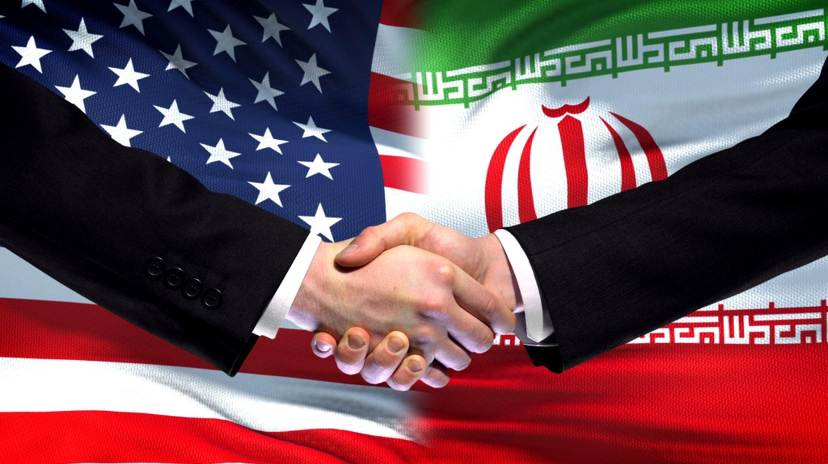

In mid‑April 2026, the global financial markets witnessed a notable shift in sentiment as signs emerged that the United States and Iran might be on the verge of completing a peace deal. This shift marks a pivotal moment, both for the geopolitical landscape and the financial markets. As an observer of global trends and market behavior, I couldn’t help but reflect on how quickly things can change when a major political development takes shape — and how markets react in real-time to such events.
The Turbulence Before the Calm
The past few months have seen the US-Iran conflict create waves of uncertainty. Tensions, particularly regarding the Strait of Hormuz, disrupted energy markets and caused widespread concern in the global economy. Oil prices surged, pushing the cost of energy higher, and creating a general atmosphere of caution in the financial markets. Investors seemed hesitant, favoring safe-haven assets like gold and bonds. For those of us watching these developments, it was clear how interconnected geopolitics and financial markets had become.
What stood out, however, was the deep sense of fear and instability that clouded decision-making. This was not simply a market concern over oil prices, but a larger anxiety about the future of global stability. Geopolitical tensions often feel distant, but they carry tangible consequences that reverberate across industries, affecting everything from commodities to global trade.
The Shift Toward Optimism
However, as April unfolded, a new narrative began to emerge. The announcement that the peace talks between the United States and Iran were nearing completion caused a shift in market dynamics. Equities rallied, oil prices stabilized, and market participants seemed to shed some of their anxiety, instead embracing the hope of a diplomatic resolution.
What fascinated me most about this transition was how quickly the markets reacted. There was a sense of optimism that spread like wildfire, reflected in the sharp uptick in stock indexes and the pullback in energy prices. Investors, it seemed, were pricing in the likelihood of an easing of geopolitical risk. The peace deal, even though not yet finalized, began to take center stage in the collective mindset of market participants.
As a result, sectors traditionally sensitive to geopolitical risk, such as energy, travel, and luxury goods, saw significant gains. This was a clear reminder of how much hope drives market behavior, often even more so than concrete facts or long-term forecasts.
The Fragility of Optimism
Despite the clear rally, a sense of caution remains. The peace deal between the US and Iran, while promising, is still shrouded in uncertainty. It’s a reminder that optimism in markets can often be fragile — based on probabilities and potential rather than certainty. The reality is that this deal, like many geopolitical agreements, will require careful, sustained cooperation. The complexities and entrenched positions on both sides are not easily overcome. While the hope of peace is palpable, it also feels like a delicate balance that could shift at any moment.
In reflecting on this, I find myself questioning the nature of market optimism. Why do we as investors and analysts often place so much weight on short-term news cycles? It seems that, when faced with the prospect of a peace deal, markets respond with eagerness, even though the fundamental issues may not have been resolved. It’s almost as if the possibility of a resolution — no matter how tentative — is enough to unleash the pent-up desire for stability.
This, in itself, is fascinating. The markets are driven not just by logic, but by human emotions and the collective psyche. Investors are constantly balancing between fear and hope, and in this case, hope seems to have won out, at least for the moment.
Broader Implications Beyond the Markets
From a broader perspective, a potential US‑Iran peace deal carries with it profound implications not only for financial markets but for global trade, energy security, and even social dynamics. For years, the tension between these two countries has weighed heavily on the global economy. A successful peace deal could pave the way for a more stable Middle East, less disruption to global oil flows, and potentially lower energy prices. In turn, this could lead to reduced inflationary pressures across the world and allow economies to breathe a little easier.
On the other hand, the fragility of the situation means that any sudden change in course could quickly undermine these positive shifts. The fact remains that geopolitics rarely operates in a straight line. Even with a peace deal in place, challenges will remain, and markets will need to adjust to the evolving dynamics.
Conclusion
In the end, watching the US‑Iran peace deal come close to fruition has been a stark reminder of how interconnected markets and global events are. It also brought to light how markets operate not only on hard facts and economic indicators but also on narratives and expectations. The peace deal is more than just a political event; it’s a reflection of the delicate interplay between hope, fear, and market psychology.
For me, the lesson is clear: markets are as much about perception as they are about reality, and that perception can change in the blink of an eye. As the world watches to see whether this peace deal will come to fruition, one thing is certain — the markets will continue to respond to whatever happens next, adapting as they always do to new narratives, and reflecting the optimism or pessimism of the moment.