
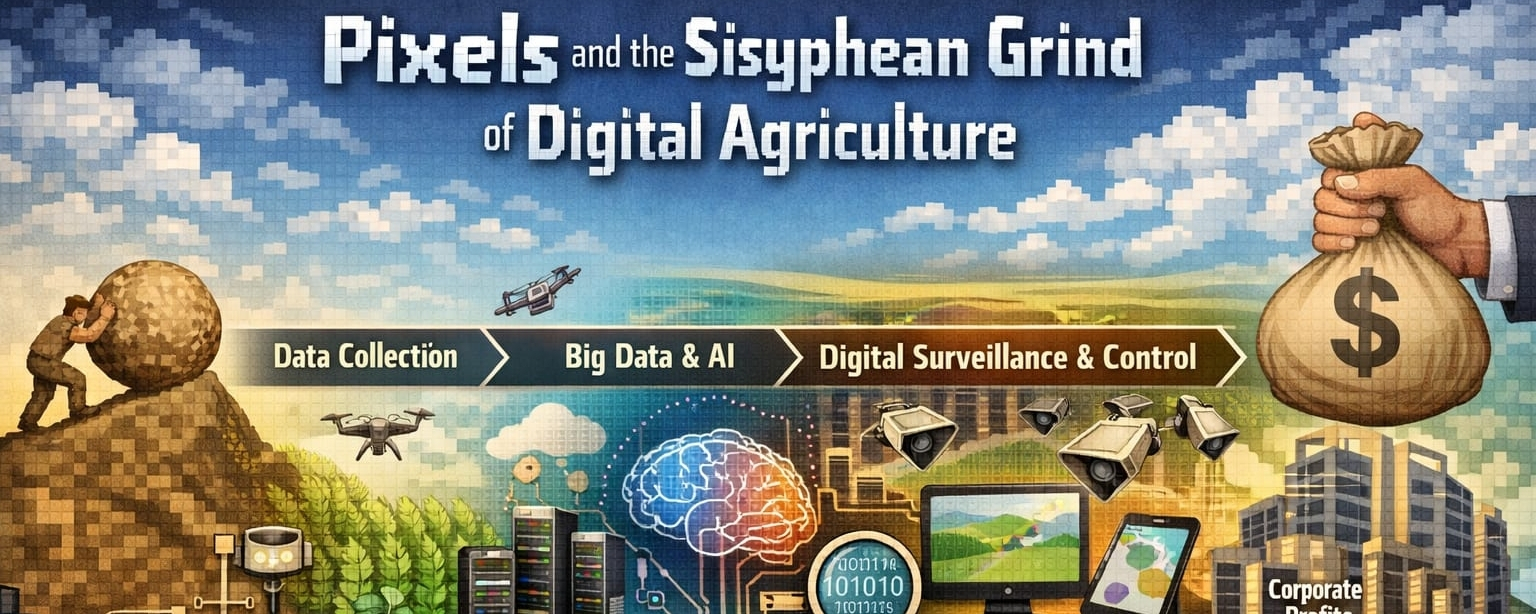
Honestly, I’m tired of the word "metaverse." It’s a bloated, overused term that usually signals a pitch for some dystopian digital real estate scheme nobody actually wants to visit. But then you look at something like Pixels, running on the Ronin Network, and you realise the noise has quieted down. The hype cycle has moved on to AI or the next shiny object, leaving the actual builders to do the boring work. And make no mistake, Pixels is mostly boring work, but I mean that as a compliment. It’s a farming game. You plant seeds, you water them, you wait, and you harvest. It’s the kind of loop that shouldn't work in a high-tech environment, yet here we are, watching thousands of people treat digital radishes with the seriousness of a stock portfolio.
Let’s get one thing straight right away: the tech here isn't the star. It’s the plumbing. Ronin is basically the infrastructure that popped up after Axie Infinity proved that blockchains could handle—barely, at first—millions of tiny transactions. It’s unsexy. It’s a database optimised for grinding. But without this specific, narrow kind of plumbing, a game like Pixels collapses under its own weight. If you have to pay fifty dollars just to move a shovel, the economy dies. So, the fact that it runs smoothly is a miracle of engineering disguised as a casual afternoon distraction.
The game itself revolves around farming, exploration, and creation, which sounds lovely on a marketing brochure. In reality, it’s a masterclass in behavioural psychology. We’re talking about an open-world social game where the primary mechanic is time-gated labour. You log in, you do your chores, you chat with a few other avatars, and you log off. It sounds like a chore simulator, and in many ways, it is. But—and this is the weird part—people love chores if there’s a number that goes up. The "social" aspect isn't just tacked on; it’s the glue. People aren't just farming for the sake of digital crops; they’re farming because their neighbours are watching. It’s a high-tech potluck where everyone is desperately trying to look busy.
Now, the cynical take here is that this is just another Play-to-Earn trap disguised as a cute Stardew Valley clone. I won't pretend that isn't a massive part of the appeal. Whenever you introduce a token, in this case PIXEL, you invite the sharks. You get the speculators who don't care about the art style or the community, only the liquidity pools. That’s the friction. It’s the constant battle between the people who want to play a game and the people who want to extract value from it. The developers are walking a tightrope, trying to keep the economy from hyperinflating while also keeping the grinders interested. It’s a mess. A necessary mess, but a mess nonetheless. Actually, wait—maybe the mess is the point. A sterile economy is a dead one. A volatile, messy one means people are actually fighting over something, even if that something is just pixels on a screen.
What surprises me, after two decades of watching these digital markets rise and fall, is the shift in quality required to survive. Three years ago, you could launch a game with stick figures and a promise of passive income, and you’d raise millions. Today, Pixels has had to actually build a game that feels good to click in. The exploration mechanics, the resource management—it has to be genuinely engaging, or the whole house of cards falls down. The "Web3" part is almost secondary now. If the game sucks, the token doesn't matter. We’ve seen this movie before, and it usually ends with a crash. Pixels seems to be trying to write a different ending by making the game playable first and financialised second.
But let’s not get too optimistic. We’re still dealing with a volatile asset class masquerading as entertainment. The open-world aspect creates a sense of permanence, but the reality is fluid. The servers could shut down, the token could tank, or the player base could migrate to the next shiny farming sim. There is a gritty reality to these "sovereign" digital assets that nobody likes to talk about: they rely entirely on a centralised entity keeping the lights on.
So, is Pixels the future of gaming? I doubt it. It’s more like a prototype for how we integrate digital ownership into leisure without making it feel like a second job—though it often fails at that. It’s an experiment in digital feudalism where the serfs are willing participants because they own a piece of the land. The real takeaway isn’t about the technology or the "innovation." It’s about human nature. We will find meaning in the most repetitive tasks if we think we’re building something for ourselves, even if that something is just a row of digital turnips that might be worthless tomorrow. The game continues as long as the collective belief holds out, and right now, the believers are busy watering their crops, ignoring the silence where the hype used to be.