
I've been seeing the same pattern show up again in the market, and it tends to appear right before sentiment shifts rather than after.
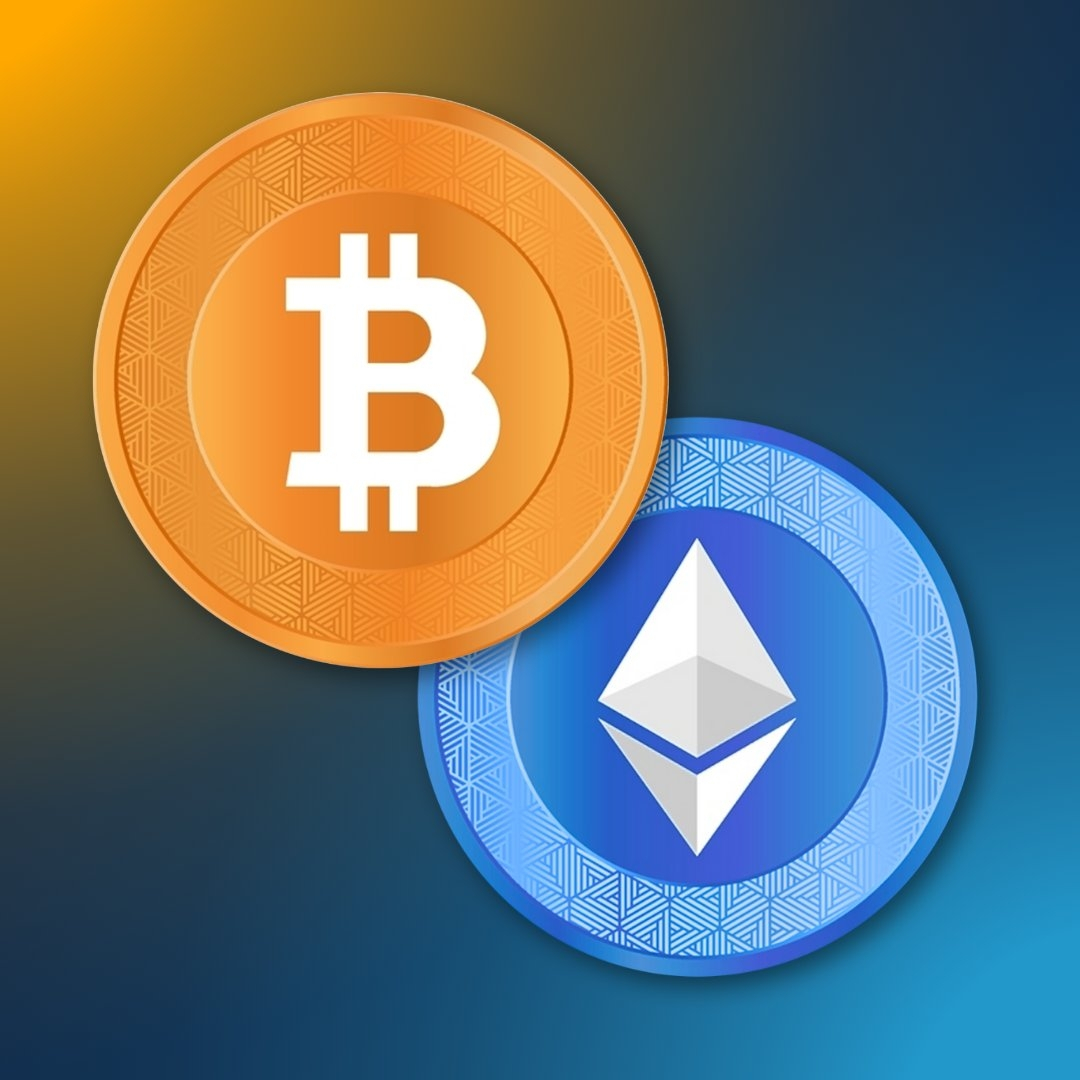
Right now, there’s a growing view that $BTC and $ETH are “lagging behind.” That comparison shows up in nearly every cycle. When newer narratives accelerate—AI-related tokens, L2 ecosystems, or experimental DeFi structures—the largest assets are often labeled as slow or unexciting in the short term.
From experience, that framing usually reflects attention cycles more than it reflects underlying market structure.
We’ve seen this kind of rotation before. Smart contracts shifted focus from simple value transfer to programmable money. DeFi turned liquidity itself into a product. L2s expanded scalability narratives and spread activity across ecosystems. Now AI is capturing attention again, pulling liquidity and imagination in a different direction.
Each phase didn’t replace what came before it—it added another layer on top.
In that process, BTC and ETH often stop being viewed as the “exciting trade” and instead become the base layer that everything eventually references again.
What stands out right now isn’t necessarily that they’re lagging, but that expectations are shifting too quickly. The market keeps rotating into newer stories while foundational assets are judged on increasingly short time horizons.
At the same time, there are quieter institutional signals reappearing in the background. Traditional finance firms exploring crypto access—like Charles Schwab signaling interest in spot crypto trading—often show up during periods when market structure is changing, even if price doesn’t immediately reflect it.
Ecosystem dynamics around major exchanges also continue to influence narrative flow. Community platforms and events, such as Binance-related discussions and #CZ’sBinanceSquareAMA, play a role in shaping what gets attention and how liquidity moves between themes.
So when BTC and ETH are described as “lagging,” it raises the question of what they’re being measured against. Against short-term speculative momentum, they can look slow. Against long-term capital positioning and broader macro integration, the picture becomes less clear.
There’s also a repeating behavioral pattern here: many participants only reassess large-cap assets after momentum has already returned. By that point, sentiment often flips quickly from “dead” to “obvious.”
None of this points to a specific direction or prediction. The more relevant point is the mismatch between narrative excitement and structural positioning. Markets rarely move simply because expectations say they should—they tend to move when attention is elsewhere.
And right now, attention is clearly fragmented.
Maybe the more interesting question isn’t whether BTC and ETH are lagging, but whether the market is quietly building conditions where “lagging” is just the calm phase before a broader repricing of what stability means in crypto.
At what point does the market stop chasing the newest narrative and start rotating back toward the center again?
#CharlesSchwabtoRollOutSpotCryptoTrading #Write2Earn