
Recent geopolitical developments have once again brought attention to the strained relationship between the United States and Iran. As negotiations face setbacks and tensions continue to rise, concerns are growing about the current direction of diplomacy.
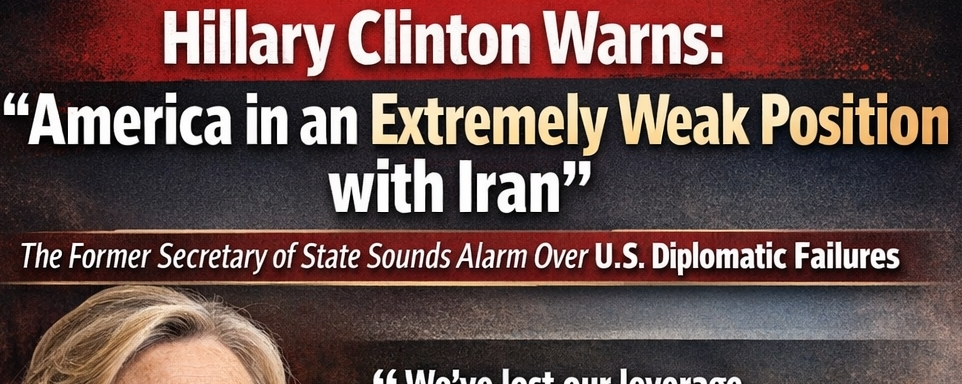
Former U.S. Secretary of State Hillary Clinton recently shared her perspective during a media discussion, suggesting that the U.S. may be losing its traditional diplomatic advantage in dealing with Iran. According to her analysis, the situation appears to have shifted from one of strategic control to reactive positioning.
She also raised questions about the composition of the negotiation team, pointing out the involvement of figures like Jared Kushner and Steve Witkoff. In her view, such decisions could impact the effectiveness and credibility of diplomatic efforts in sensitive international matters.
Clinton emphasized that in earlier scenarios, the United States typically held stronger leverage in negotiations. However, current developments suggest a reversal, where Iran may now have more room to maneuver strategically.
This evolving situation highlights the complexity of global diplomacy, where leadership decisions, negotiation strategies, and international perception all play a crucial role. As tensions continue, the global community watches closely to see whether diplomacy can regain balance or if further escalation will reshape regional dynamics.
#CryptoNews #GlobalPolitics #BitcoinPriceTrends #BinanceSquare #CryptoMarket #Geopolitics #BTC #ETH #ORDI #AR #movr