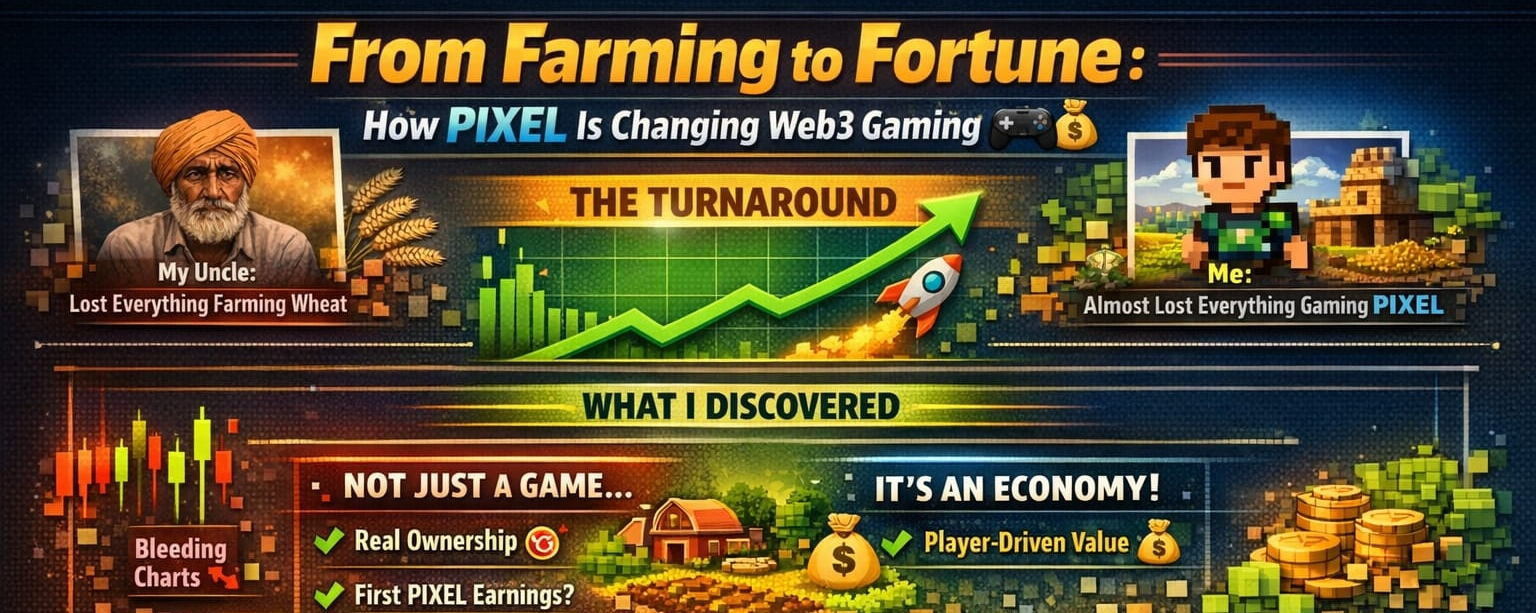
My uncle lost everything farming wheat in Punjab. I almost lost everything playing a game about farming.
But then something shifted — and I'm still trying to wrap my head around it.
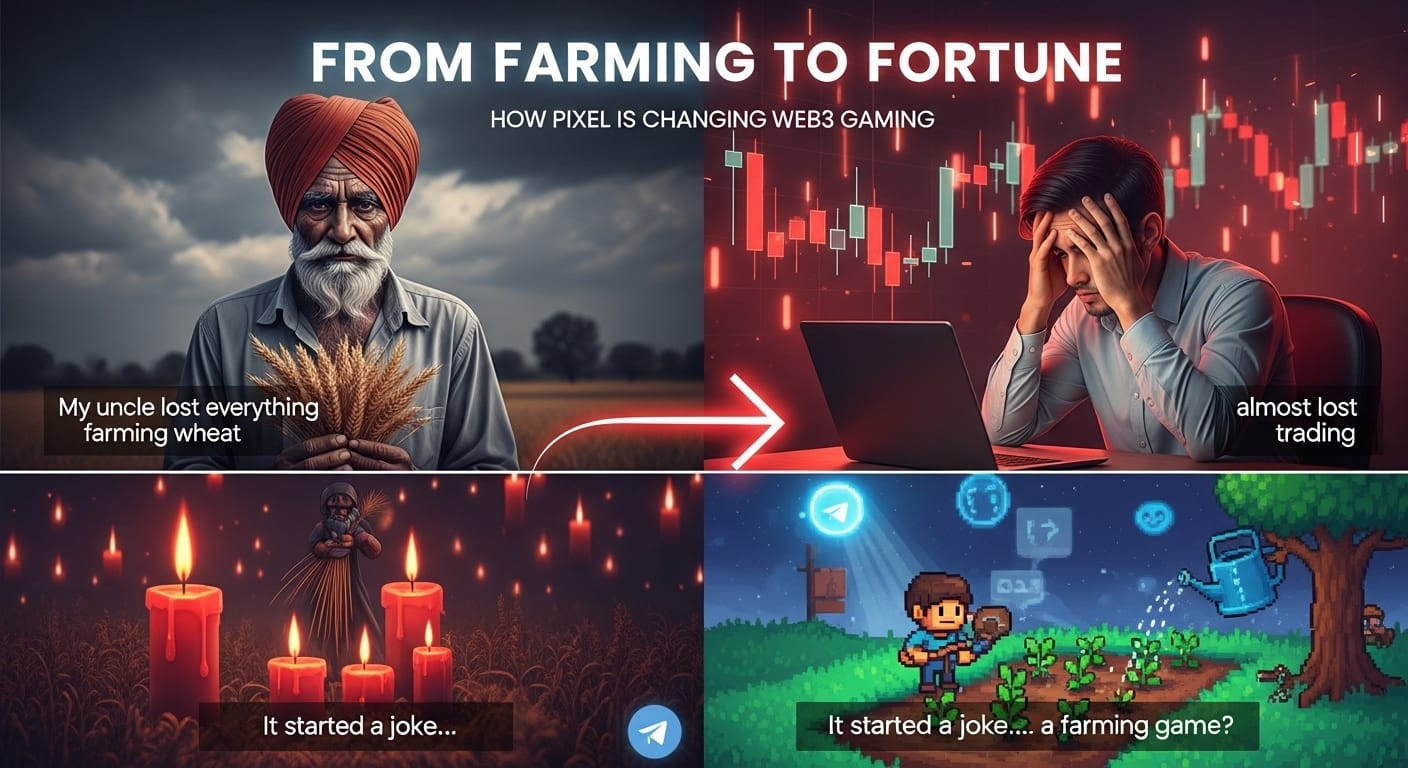
It started on a Tuesday night when I couldn't sleep. I'd been staring at red candles all week, watching positions bleed, feeling that specific kind of tired that comes not from work but from hope wearing thin. A friend sent me a link in a Telegram group. "Bro try this, it's different." I almost ignored it. I'd heard "it's different" at least forty times in crypto.
But I clicked anyway.
PIXEL loaded on my screen — and I'll be honest, my first reaction was a laugh. This is it? A farming game? Little characters walking around, planting seeds, watering crops. I thought about my uncle, about real soil and real sweat, and felt almost embarrassed to be sitting in my room doing a digital version of the same thing.
I almost closed the tab.
I didn't.
Within three days, I stopped sleeping properly again — but for a completely different reason.
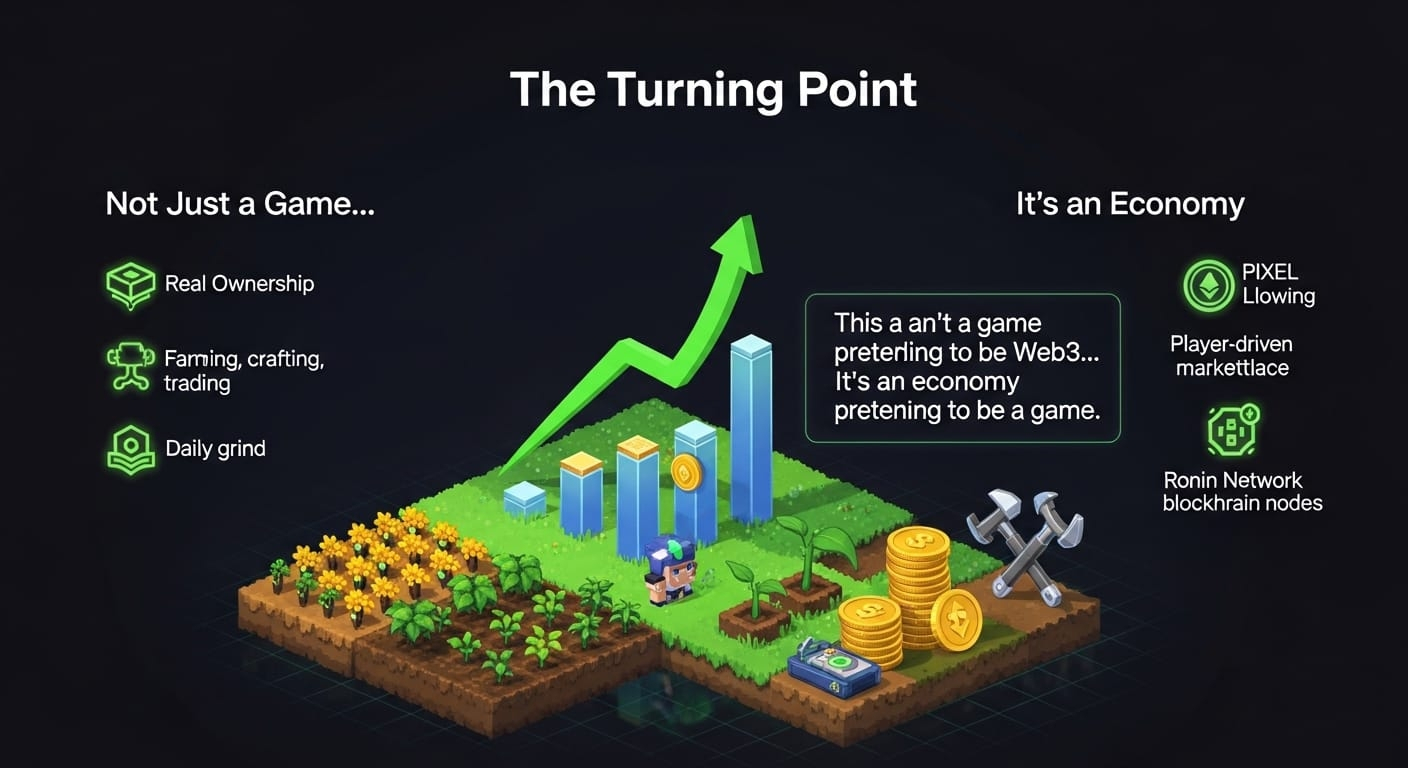
There was something almost meditative about the early hours. Watering your plot before dawn, crafting tools, choosing which seeds to plant based on market demand inside the game. Real decisions with real weight. I started reading about the PIXEL token, about Ronin Network, about the actual economy running underneath the cute graphics. And the more I read, the more the laugh faded.
This wasn't a game dressed up as an investment. It was an economy dressed up as a game.
The difference matters more than most people realize.
The turning point came quietly. No fanfare.
I'd been grinding for about three weeks when I converted my first meaningful PIXEL earnings into something real. Not life-changing numbers — I want to be straight with you — but real numbers. Enough to cover a week of groceries. Enough to make my wife look up from her phone when I showed her the transaction.
That look. That single moment of her saying "wait, from farming?" — I think that's when I truly understood what Web3 gaming was trying to build.
Because here's what nobody tells you about play-to-earn: the earning part is almost secondary. What hits different is the ownership. Every item I crafted, every plot I developed — it was mine in a way no mobile game had ever given me. Not stored on a company's server that could shut down tomorrow. Verifiable. Portable. Mine.
I grew up watching my uncle hand over 30% of his harvest to a middleman who added nothing. PIXEL made me realize that same structure had quietly infected digital entertainment too — and that blockchain wasn't just hype. It was a quiet correction.
I'm not writing this to tell you PIXEL will make you rich. I'm writing this because I spent years chasing complicated plays — leveraged futures, obscure altcoins, whitepaper promises — and meaning was always somewhere else, always later.
And then a farming game, of all things, taught me the most important lesson I've learned in Web3:
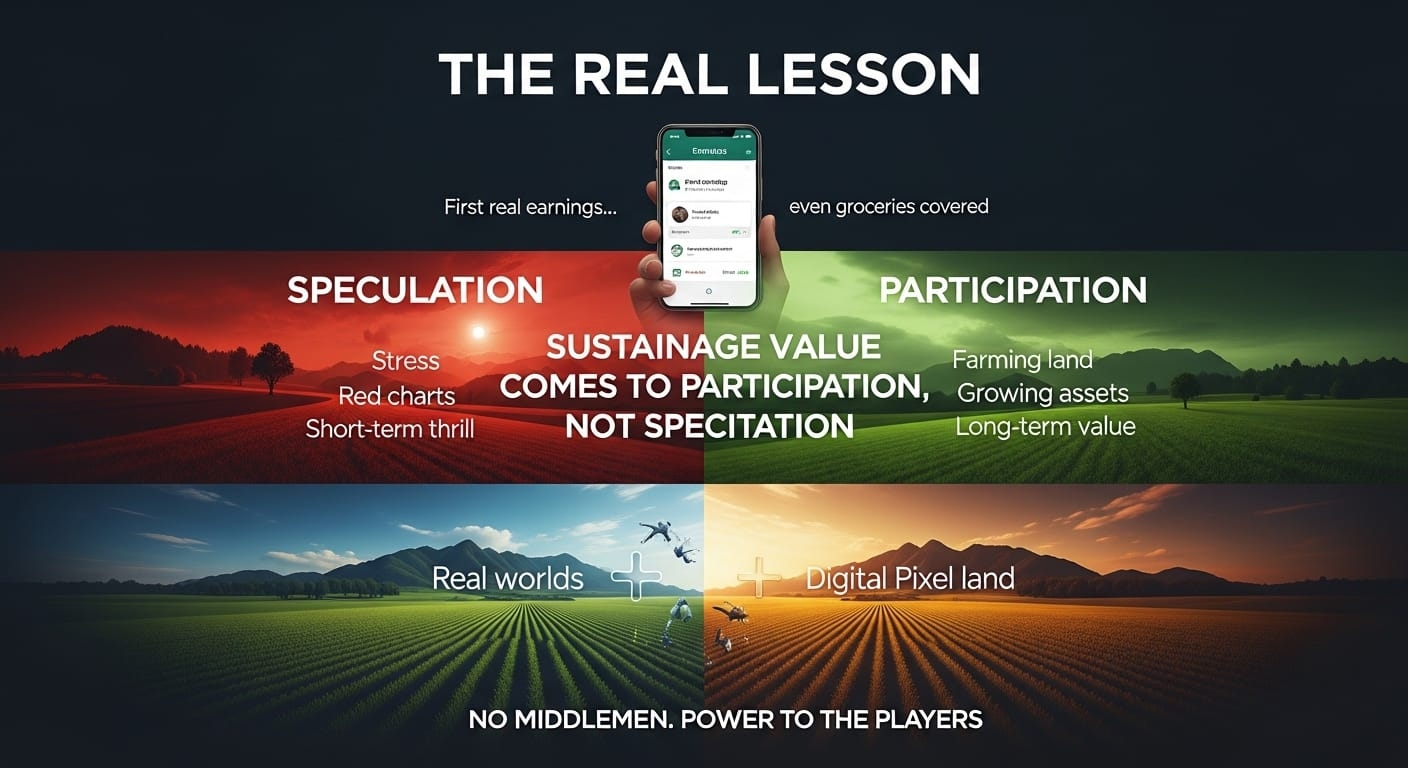
Sustainable value doesn't come from speculation. It comes from participation.
Every day you play, you're not just accumulating tokens. You're adding to an ecosystem. You're part of the reason the economy functions. That's not a metaphor — it's literally how the tokenomics work. And when you finally feel the weight of that, when you realize your small daily actions are woven into something larger than your own wallet
That's a feeling no candlestick chart has ever given me.
My uncle still farms wheat. Real soil, real seasons, real uncertainty.
But sometimes I call him and tell him about digital land, about owning your harvest, about a world being built where the middleman slowly loses his grip.
He doesn't fully understand it yet.
Honestly? Neither do I.
But we're both watching something grow — and for the first time in a long time, it feels like it belongs to us.