
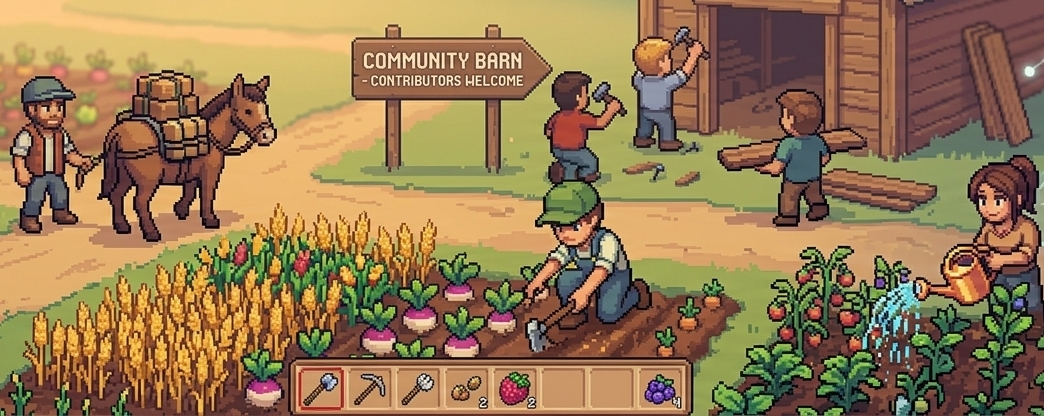
I’ve been watching Pixels for some time now, and honestly, it doesn’t feel like just a game anymore. At first, it looks simple—plant crops, explore land, collect items. But the more I pay attention, the more I feel like something deeper is happening underneath.
What really stands out to me is how natural everything feels. You don’t need to understand blockchain or any technical stuff to start playing. You just join, start farming, maybe trade a few things, and move around. But slowly, without realizing it, you become part of a system where your actions actually matter and stay there.
I’m noticing that nothing you do really disappears. If you spend time building something or growing something, it becomes part of a bigger shared world. Other people can see it, interact with it, and even depend on it. That changes how you behave. You stop thinking short-term and start feeling like you’re contributing to something that lasts.
The interesting part is trust. In most online spaces, trust depends on people—who you know, what reputation you have. But here, it feels different. The system itself keeps track of everything. It’s not about trusting a person, it’s about trusting the rules of the game. And those rules don’t change randomly.
Because of that, cooperation starts happening in a very quiet way. People don’t always plan things together, but their actions still connect. Someone grows crops, someone trades, someone builds—and somehow it all fits together. It feels less like random gameplay and more like a small digital society forming on its own.
I also keep thinking about ownership. In Pixels, when you spend time on something, it actually feels like it belongs to you. Not just emotionally, but in a real, system-recognized way. That feeling is powerful, even if it’s introduced very simply.
The more I observe, the more it feels like Pixels is teaching something without saying it directly. It’s showing how people can work together without needing full understanding of the system behind it. Everything is built in a way that you learn by doing, not by studying.
And maybe that’s the most interesting part. It doesn’t push big ideas in your face. It just lets you experience them slowly. Over time, you start to realize that this isn’t only about farming or exploring. It’s about how people connect, trust, and build together in a different kind of environment.
The more I look at it, the more it feels like a small preview of how digital worlds—and maybe even real systems—could work in the future. Not forced, not complicated, just naturally growing through simple actions that start to mean more over time.