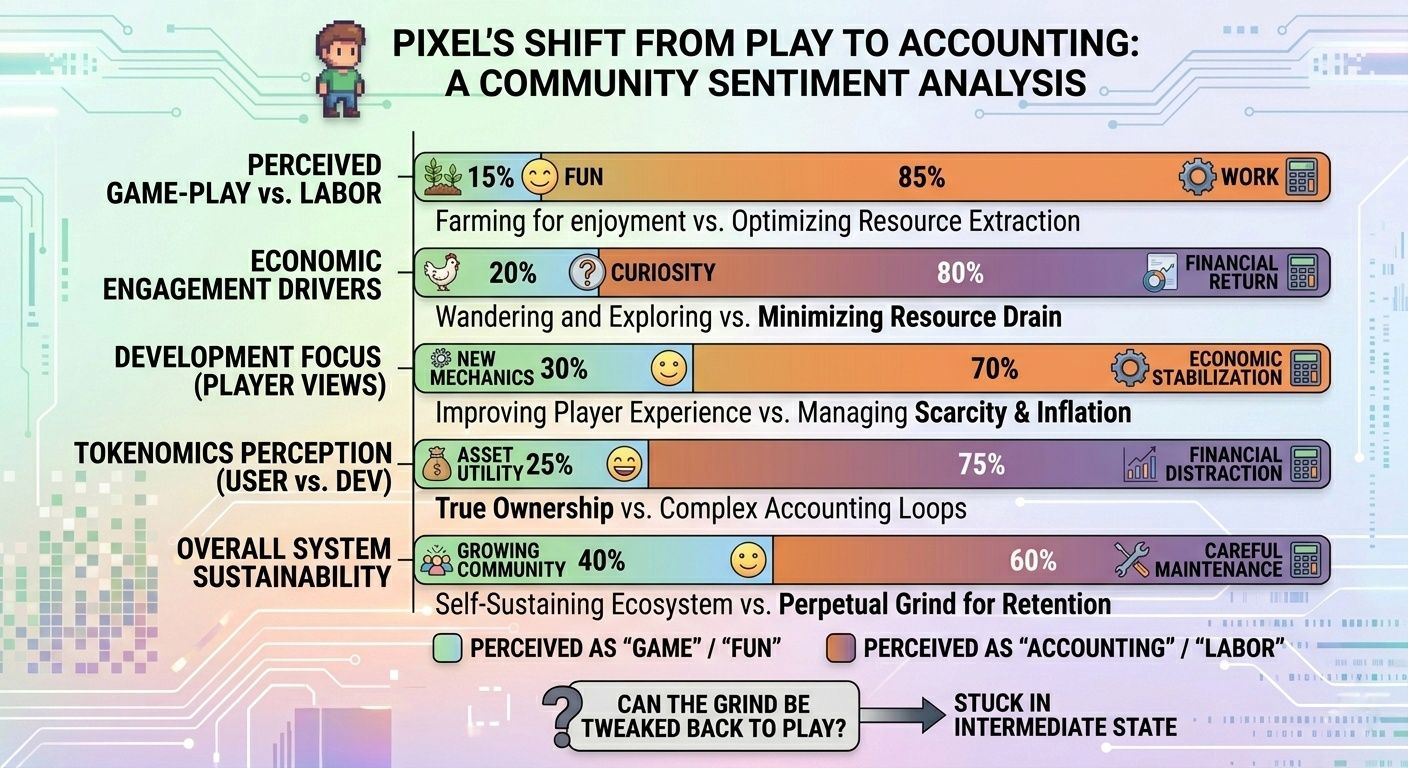
Man, I’ve hit that point with PIXEL where the whole hype pitch just stops landing and I’m left watching how the thing actually holds together once the easy excitement fades. That’s usually when these projects start feeling real to me—not in the shiny optimistic phase, but when folks begin treating it like the system it’s become instead of some big dream.
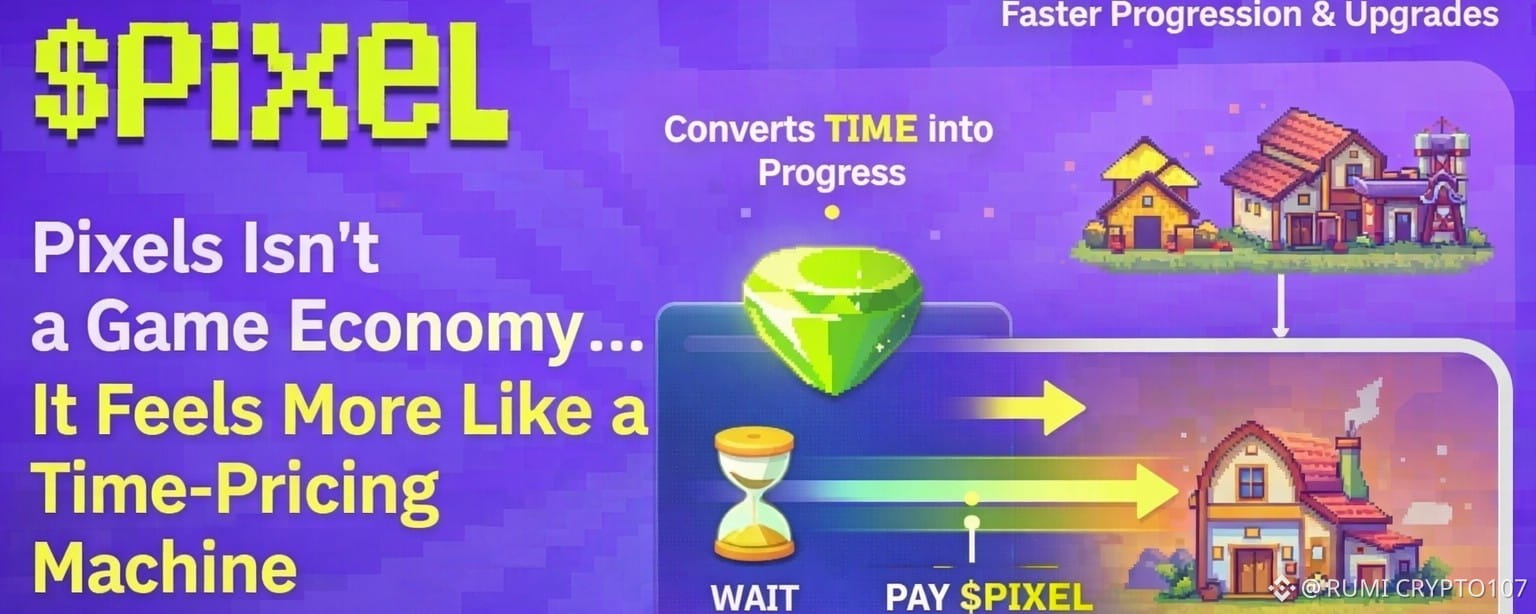
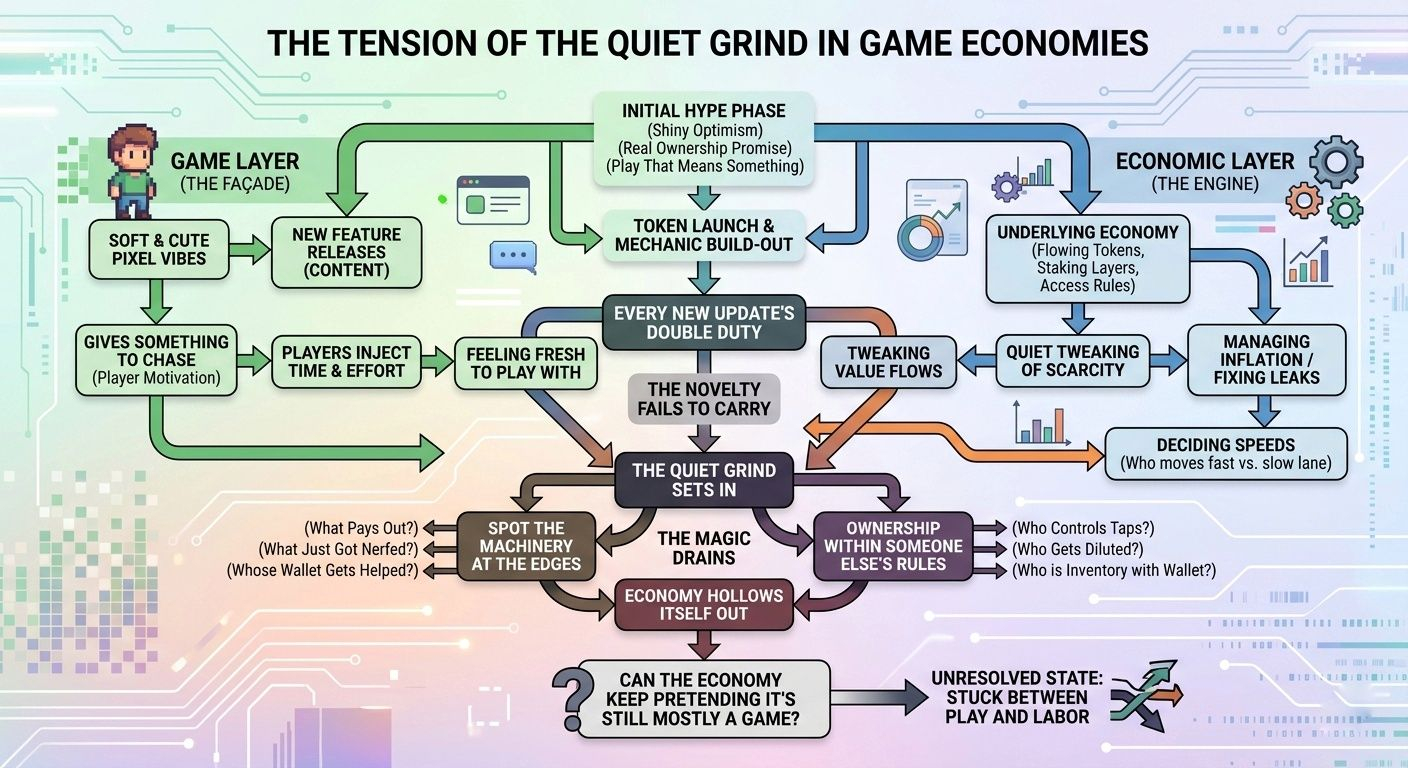
Right now it’s sitting in this weird middle space. The outside still looks all soft and cute with those pixel vibes, but underneath it’s turned into a full-on economy dressed up as a game. You’ve got the tokens flowing, staking layers stacking up, access rules, reward routes—every new update has to do two jobs at once. It needs to feel like fresh stuff to play with while quietly tweaking scarcity, fixing leaks, and deciding who gets to move fast and who ends up stuck in the slow lane.
I’m not trying to throw shade or anything. I’ve just seen this cycle play out enough times that I recognize the signs. It always starts with the big talk about real ownership and play that actually means something. Then the token drops, more mechanics pile on, and suddenly the whole experience starts bending toward whatever keeps the numbers looking healthy. Ownership inside someone else’s rules was never quite the free ride the marketing sold us, you know? The real power was always in who controls the taps, who gets diluted, who has to pay to keep up, and who quietly gets left in the dust.
PIXEL feels like it’s crossing that line these days. The novelty isn’t carrying it anymore—the market’s way too tired for that. We’ve all watched too many of these economies slowly hollow themselves out. So the questions shift. It stops being “Is this actually fun?” and turns into “Can the economy keep pretending it’s still mostly just a game?”
You start spotting the machinery in the edges of everything. Every new feature feels like it’s pulling double duty—giving you something to chase while also managing retention, creating fresh sinks, or rerouting the value. Before long you’re not really wandering the world anymore; you’re thinking about what pays out, what drains your resources, what just got nerfed, and whose wallet this patch is really helping. Once that switch flips in your head, the magic drains away pretty quick.
It’s not like PIXEL is some unique villain here. Honestly, it feels more like the clearest example of where this whole category ended up after the first wave of big promises wore off. Less of the idealism, more of the careful tuning. Less open playground, more reliance on keeping those loops spinning just right.
The real test isn’t whether they can keep shipping updates—plenty of projects pull that off. It’s whether any of these new layers actually make the grind lighter or if they’re just repackaging the same old loop in slightly prettier wrapping. Whether players still feel like they’re playing or if we’ve all slowly turned into inventory with wallets attached.
PIXEL still feels unresolved to me, stuck between wanting to be a place people genuinely want to come back to and needing to run like an economy that demands constant maintenance. Play, labor, and finance all bleeding together until it gets hard to tell where one ends and the next begins.
Maybe that’s just where this whole space has landed—not pure games, not pure markets, but these strange half-alive systems where the line between having fun and feeding the machine gets thinner every season. I’m still here watching. Still curious how much more weight it can carry before the whole world starts feeling like straight-up accounting.
Or maybe it already does, and we’re all just getting better at pretending it doesn’t.