
Most players think $PIXEL is just a farming game… but is that really true?
At first, it looks simple.
You plant crops, complete tasks, and earn rewards.
That’s it… right?
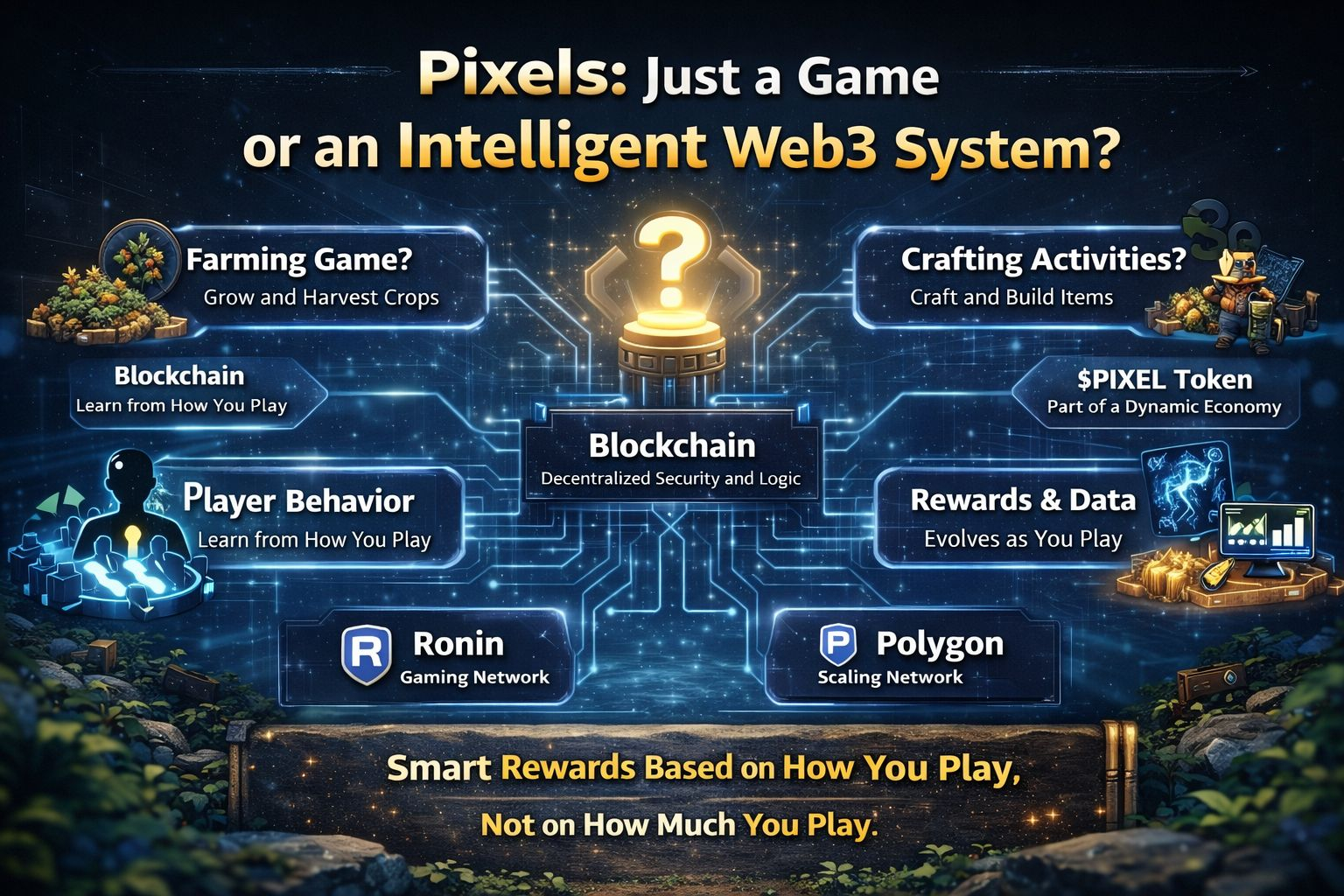
But after spending some time in the game, something doesn’t feel the same.
Not every action gives the same value.
Not every task moves you forward.
So I stopped and asked myself a simple question:
Am I actually progressing… or just repeating the same loop?
And that’s where everything started to change.
What is Pixels, really?
Is it just gameplay… or something happening behind it?
Pixels is not just a game.
It is a system.
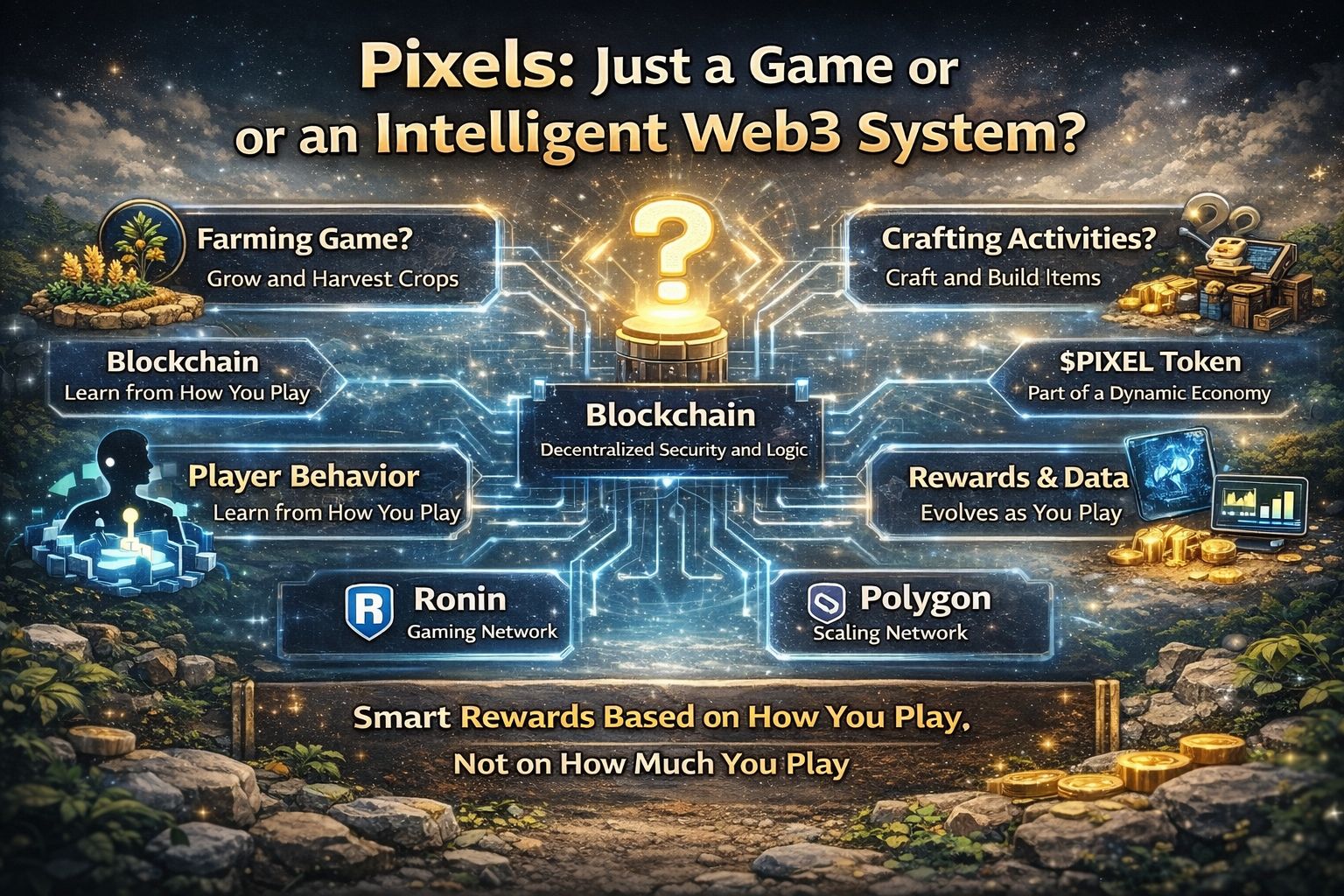
A system that observes how you play.
A system that tracks your actions.
A system that learns from your behavior.
But how does this system actually work?
Pixels runs on a Web3 structure.
It connects gameplay with blockchain logic, where actions, ownership, and rewards are linked together.
The $PIXEL token is not just a reward.
It is part of a live in-game economy.
So rewards are not random.
They depend on:
– What you do
– How you do it
– When you do it
In simple words… the system decides what matters.
Pixels is also connected with networks like Ronin and Polygon.
Ronin is a gaming-focused blockchain designed for fast and low-cost transactions.
Polygon is a scaling network that helps make transactions cheaper and more efficient.
These are not games or exchanges.
They are blockchain infrastructures that support how systems like Pixels run smoothly.
Now think about this.
If the system is observing behavior…
does doing more really help?
Most players believe:
More playtime = More rewards.
But Pixels doesn’t reward “busy.”
It rewards “value.”
And value is not fixed.
It keeps changing.
Sometimes farming matters more.
Sometimes crafting matters more.
Sometimes timing matters more than effort.
So the real question becomes:
Are you playing randomly… or playing with understanding?
This is where smart players stand out.
They don’t try to do everything.
They focus on what actually creates progress.
And because of that, they grow faster — even with less effort.
This is what makes pixels different from most Web3 games.
In many games, rewards are fixed.
In Pixels, rewards are dynamic.
They adapt based on behavior.
They evolve based on player data.
And over time, something powerful happens.
Better players create better actions.
Better actions create better data.
Better data improves the system.
And a better system attracts better players.
That’s how a real ecosystem grows.
But there is one important balance.
If everything becomes only about optimization, the game loses its fun.
And if the system becomes too controlled, players may lose interest.
So what’s the right way to approach it?
Play smart.
But stay natural.
Because in Pixels, real progress is not about how much you play…
it’s about how well you understand what actually creates value.