
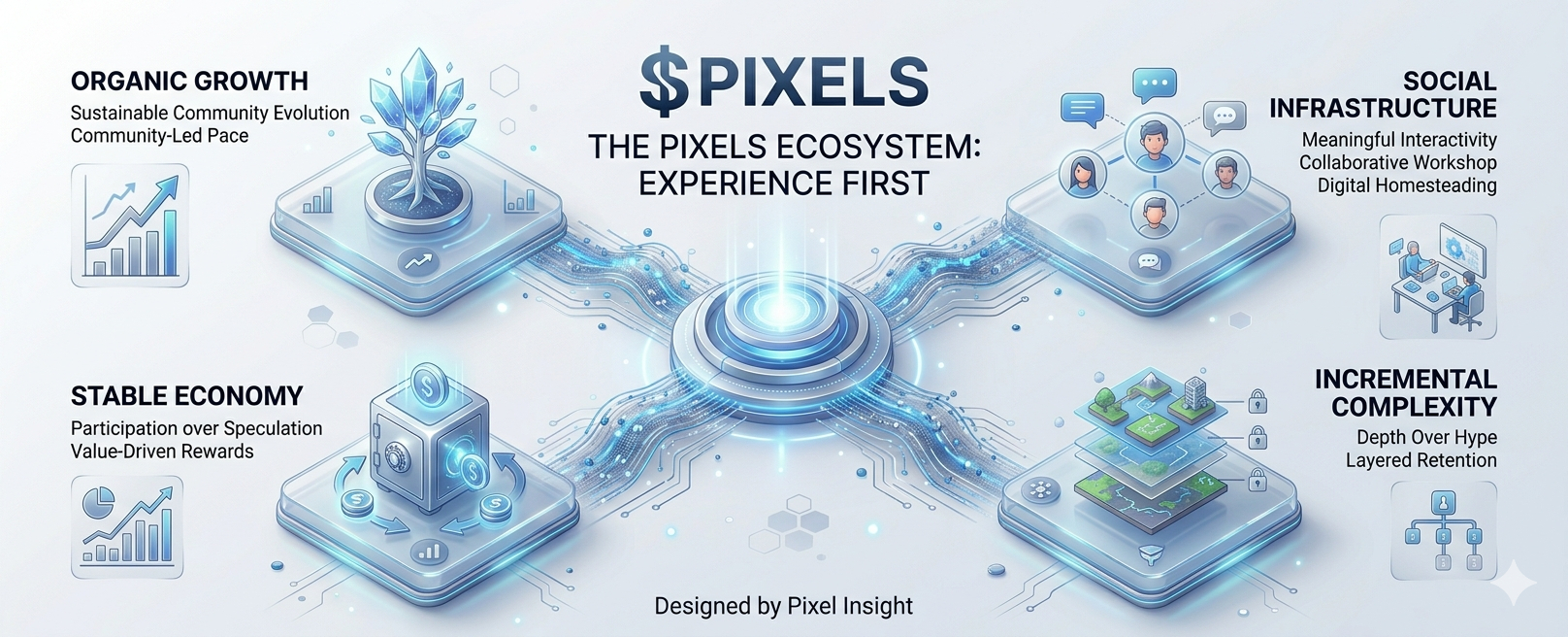
There was a moment when every Web3 project seemed to follow the same script. Loud announcements, fast token excitement, and communities built around temporary attention. For a while, visibility looked like success. If a project was trending, people assumed it was winning. But over time, the market began separating noise from direction, and that is where Pixels quietly started to feel different.
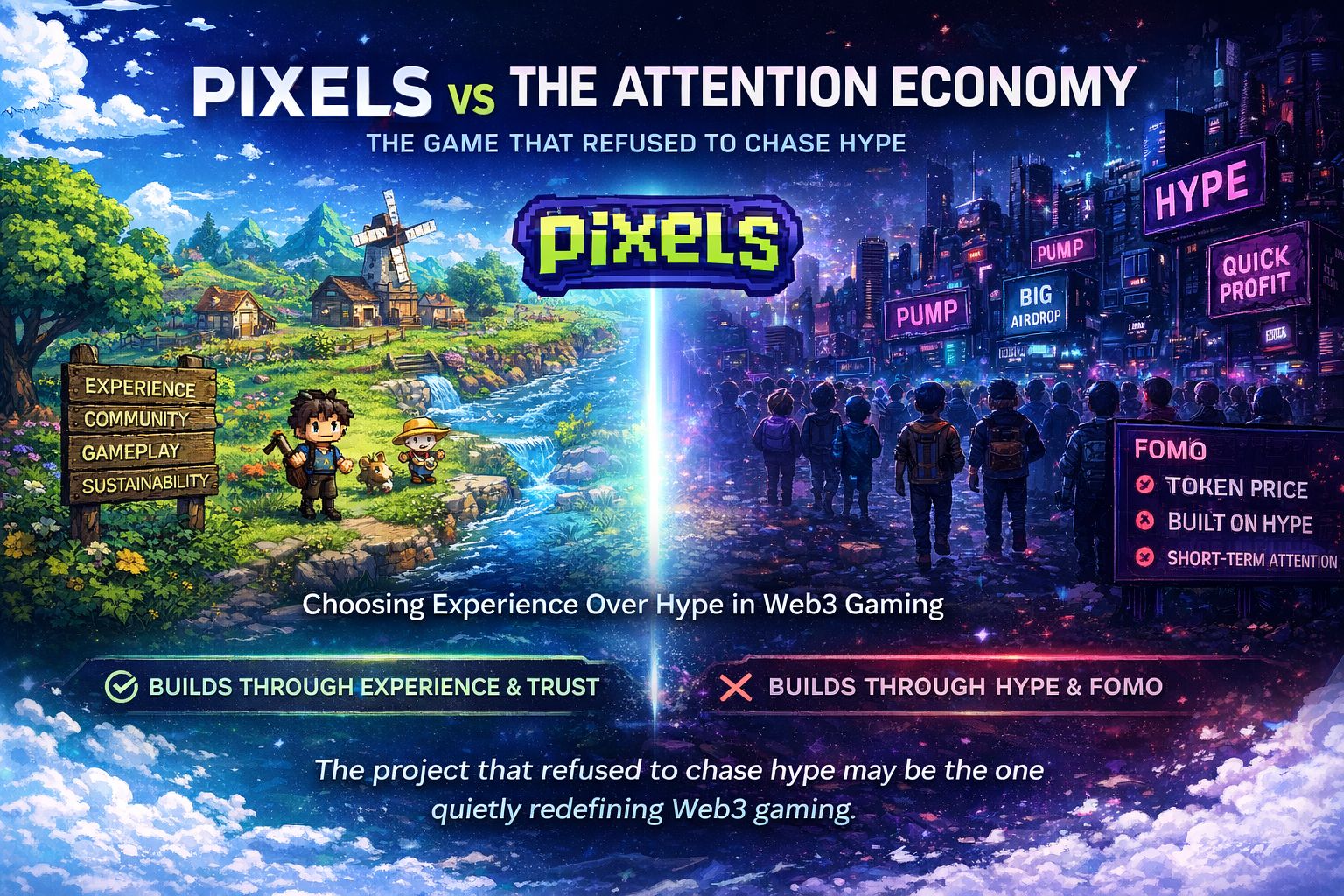
Pixels did not enter the space trying to dominate conversations overnight. Instead, it focused on something many projects ignored—experience before expectation. Players were invited to explore interact, and enjoy the environment long before economics became the main discussion. That subtle decision changed how people connected with the ecosystem. Instead of chasing rewards users stayed because they wanted to return.
What makes Pixels interesting today is not sudden hype but consistent presence. While many projects depend on momentum spikes Pixels builds through continuity. Communities grow naturally when interaction feels meaningful rather than forced The platform feels less like a campaign and more like a living digital world evolving alongside its players
Recently the broader crypto environment has shifted again. Attention moves faster than ever, yet trust forms more slowly. In this environment, projects built on gameplay social interaction, and gradual progression begin to stand out. Pixels reflect this transition perfectly. It represents a model where engagement comes from participation rather than speculation and
Another reason Pixels attracts long-term observers is its balance between simplicity and depth. New users can enter without pressure, while experienced participants discover layers that expand over time. This creates a cycle where curiosity turns into retention and retention quietly becomes growth. 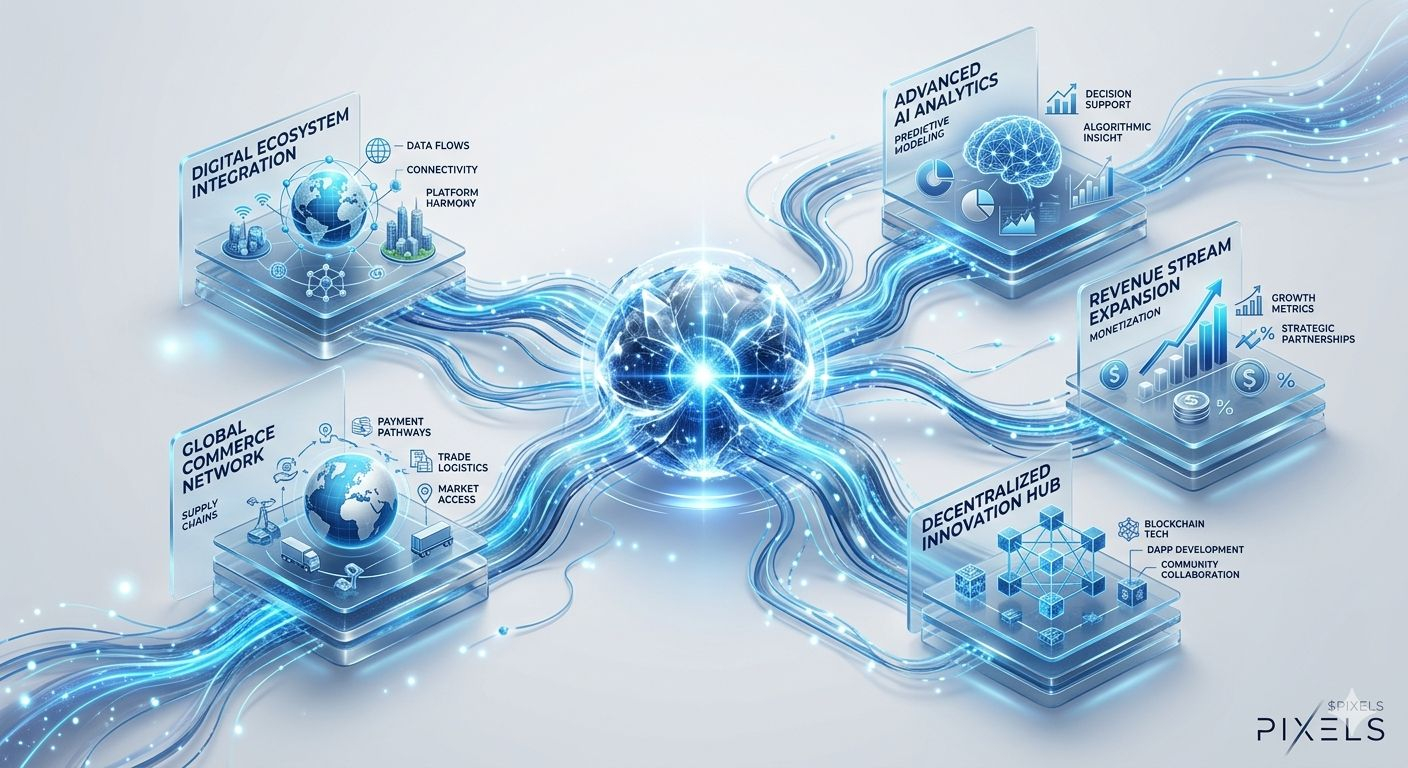
The real story of Pixels is not about competing for headlines but redefining what sustainability looks like in Web3 gaming Instead of asking how quickly attention can be captured the project asks how long users choose to stay. That difference may appear small, yet it changes everything about long-term adoption.
As the digital economy matures, projects that prioritise experience over excitement begin shaping the future. Pixels feels less like a temporary trend and more like an ecosystem learning to grow at its own pace. And sometimes, the platforms that refuse to chase hype are the ones that end up defining the next phase of innovation.