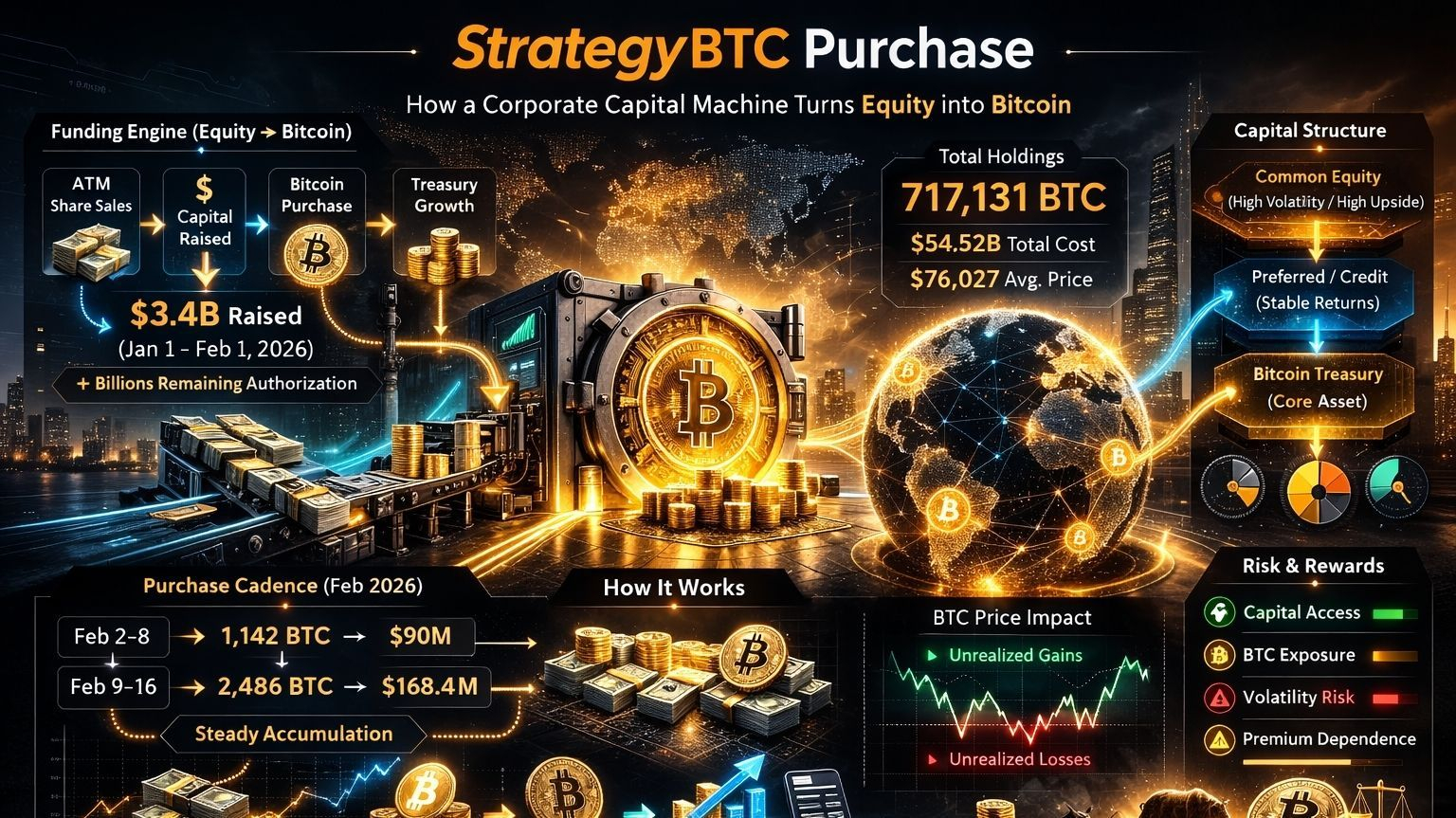
However, I think that there is even more of a dynamic happening regarding the actual process of accumulations. For many years, the mantra was quite simple – buy the dip. Now, the emerging concept called strategy BTC purchase is moving towards the notion of discipline. It starts resembling portfolio engineering more than retail speculation. To me, this is one of the key signs of crypto market maturity. While looking at earlier market cycles, we can clearly spot the prevailing narrative at each moment – smart contracts, DeFi, the development of layer 2 ecosystems. They were all driven by certain innovations which triggered huge inflows of money to particular products, platforms, and assets. This time around, the prevailing theme seems to be a bit different. Instead of new primitives which attract fresh capital, it has to do more with the management of capital over time. In other words, the current trend in accumulations has to do more with institutional behaviors rather than with speculation. In fact, one doesn't need to follow only the developments in private funds and trading desks. There is enough evidence that many retail investors are switching from emotionally-driven accumulation systems to something more systematic. The distribution of BTC purchases across various volatility zones, liquidity pockets, and macro-driven dislocations seems to become more common in practice. Moreover, it is usually not driven by the market narrative per se – the same applies to retail investors. In this case, it becomes more and more evident how important exchange ecosystem exposure has become. The mere visibility in such an environment as Binance Square helps certain narratives to gain traction very quickly. In fact, one can see how many theories and behavioral systems move from discussions to implementation almost instantly after gaining traction. Narrative vs Implementation As I said above, there is one major point which deserves our attention – narrative vs implementation. Many retail traders know how to accumulate BTC for the long run. Yet, very few people actually manage to implement those plans effectively and consistently. In this case, we should remember about the fact that structured BTC purchasing systems are behavioral constraints rather than concepts. To make those constraints work efficiently, one should stick to those rules and guidelines strictly – regardless of emotions. Thus, the problem with accumulating BTC over the long-term cycle comes to the inability of traders to adhere to some behavioral restrictions – they always try to make decisions based on their current mood. In addition to that, time aspect matters a lot. In previous cycles, timing was the key factor – one could identify the bottom and accumulate. This time around, timing has nothing to do with hitting the bottom precisely – instead, persistence has much more to do with the current process. In fact, timing has changed its meaning significantly – it doesn't matter anymore when you start your accumulations, but how long they last. The main question is whether this change will play a critical role in upcoming cycles. If BTC will indeed continue developing as a macro asset, then it might happen that future cycles won't reward timing as such – they will rather reward consistent accumulations in the face of volatility. It remains to be seen if this assumption holds true or not.#StrategyBTCPurchase #Write2Earn