

I’ll be honest. When I first got into $PIXEL , I thought I already understood it.
You log in, plant crops, complete tasks, and earn rewards. It feels simple. The more you play, the more you expect to grow.
But after spending some real time in the game, something didn’t feel right.
Not every action was helping. Sometimes I was doing more but moving forward less. That made me pause and ask myself a simple question.
What is #pixel actually rewarding here?
That question changed everything.
Pixels is not just a game you play. It is a system that reacts to how you play. It pays attention to your choices, your timing, and your consistency. It does not just track activity. It understands behavior.
When you farm, craft, or complete tasks, you are not just playing. You are feeding signals into a system. And that system decides which actions create value at that moment.
That is why two players can spend the same amount of time in the game and still get very different results.
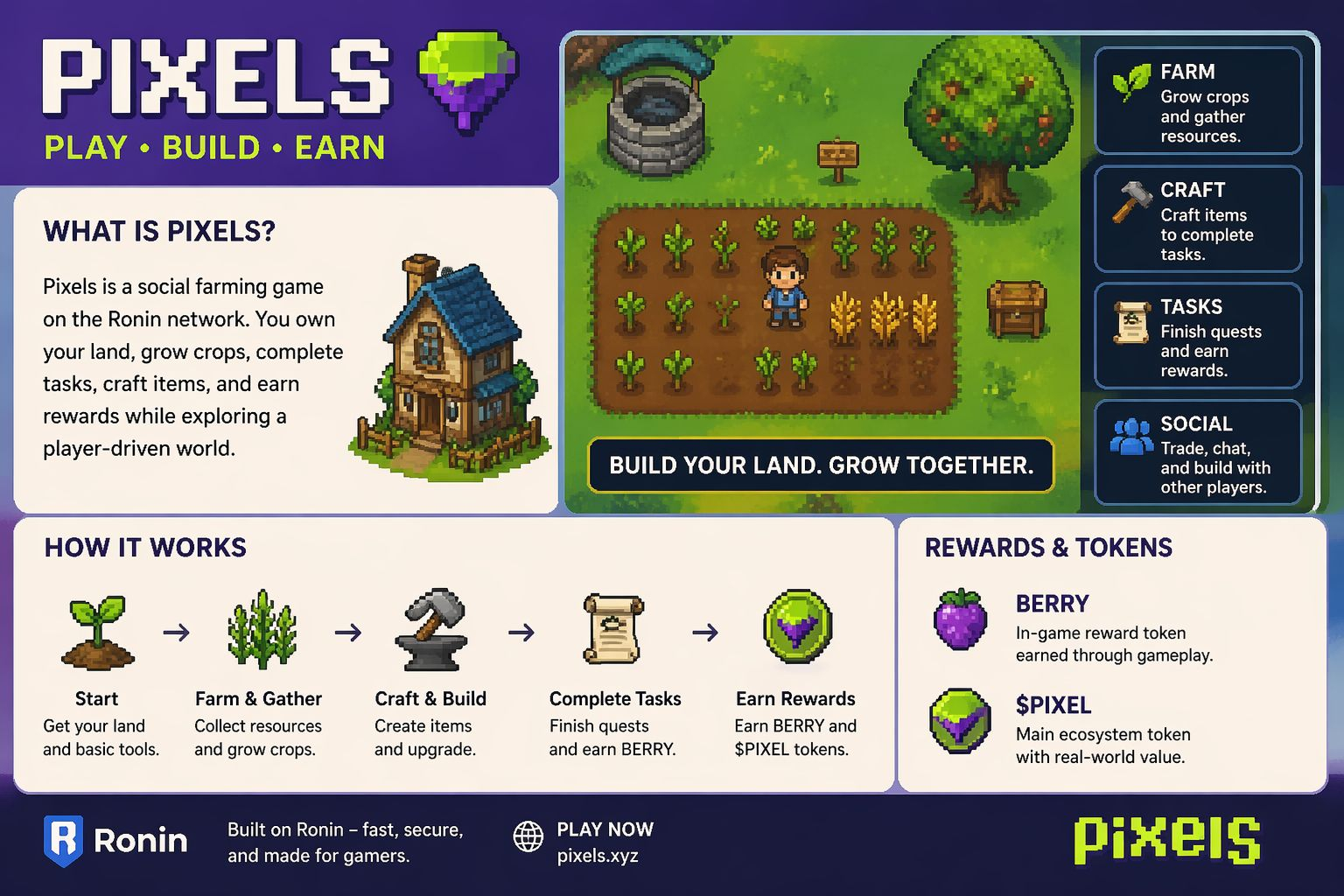
One important part of this system is how rewards work. Pixels uses a mix of in-game rewards and tokens. You might have heard about BERRY. It is a gameplay reward that reflects your activity and connects your effort to value inside the game.
Then there is the main token, $PIXEL, which is part of the game’s Web3 ecosystem. It represents real value and connects Pixels to the broader crypto world.
So now the real question is not how much you play.
Are your actions aligned with what the system actually needs right now?
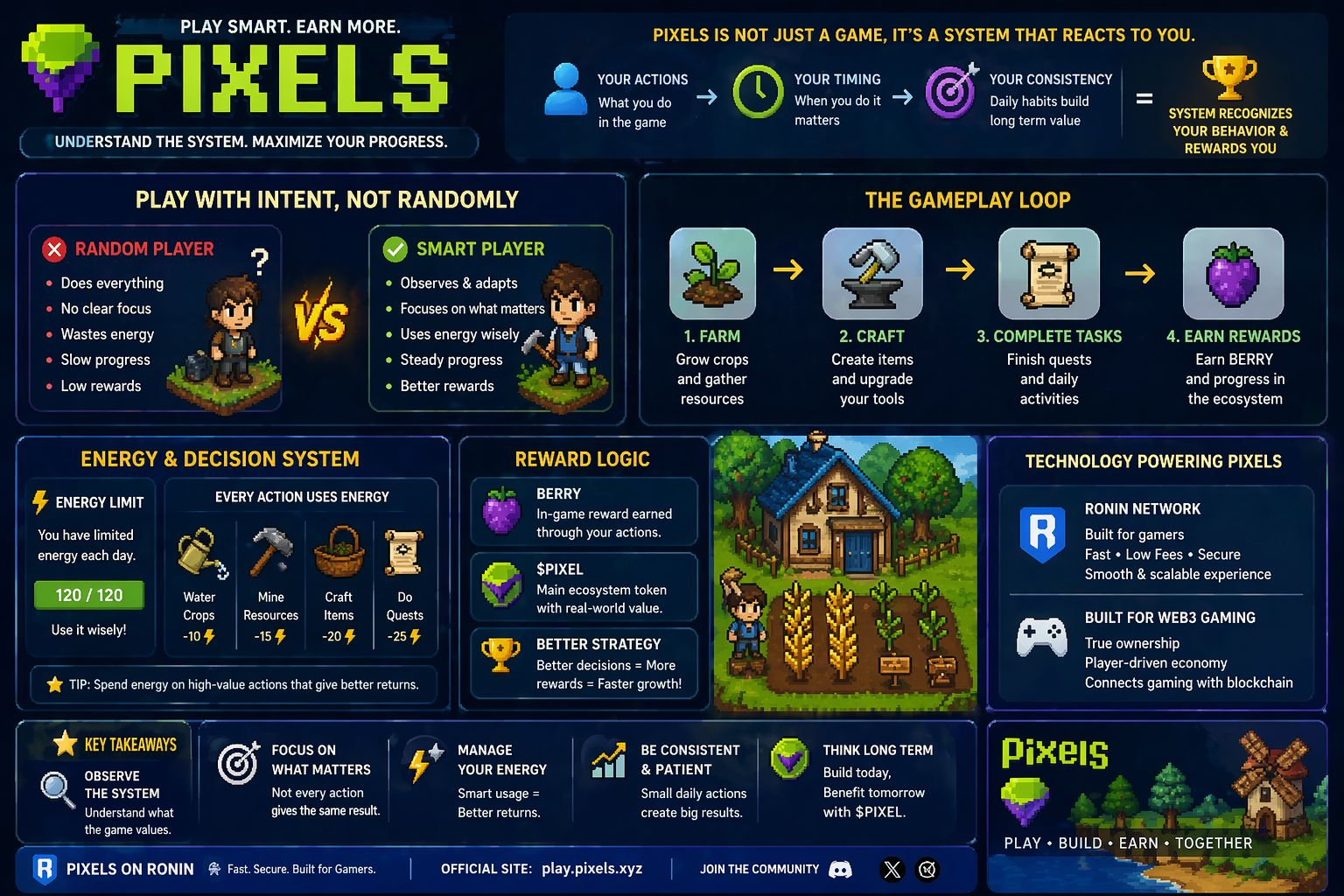
Another layer that makes Pixels interesting is the technology behind it. The game runs on Ronin, a blockchain built for gaming. It allows fast and low-cost transactions, which keeps the experience smooth and responsive.
Earlier, systems like Polygon were also used to support scalability and efficiency. These technologies work in the background, but they shape how the game economy functions.
If you look at Pixels only as a farming game, you will miss its real depth.
The game is designed in a way where players who observe and adapt perform better than those who just stay busy. I have seen this myself. When I stopped trying to do everything and started focusing on what actually matters, my progress became more consistent.
This is where most players go wrong. They believe more effort always leads to more reward. But in @Pixels , effort without understanding does not always work.
You need to notice patterns. You need to ask the right questions. What matters right now? Which actions are actually useful? Is your time going in the right direction?
Once you start thinking like this, your approach changes.
You stop playing randomly. You start playing with intent.
And that is the moment when Pixels stops feeling like a simple game and starts feeling like a system you are learning to understand.
In my view, that is what makes Pixels different.
It is not just about earning. It is about how you create value through your actions.
And once you truly understand that, you do not need to do everything.
You just need to do what actually matters.